
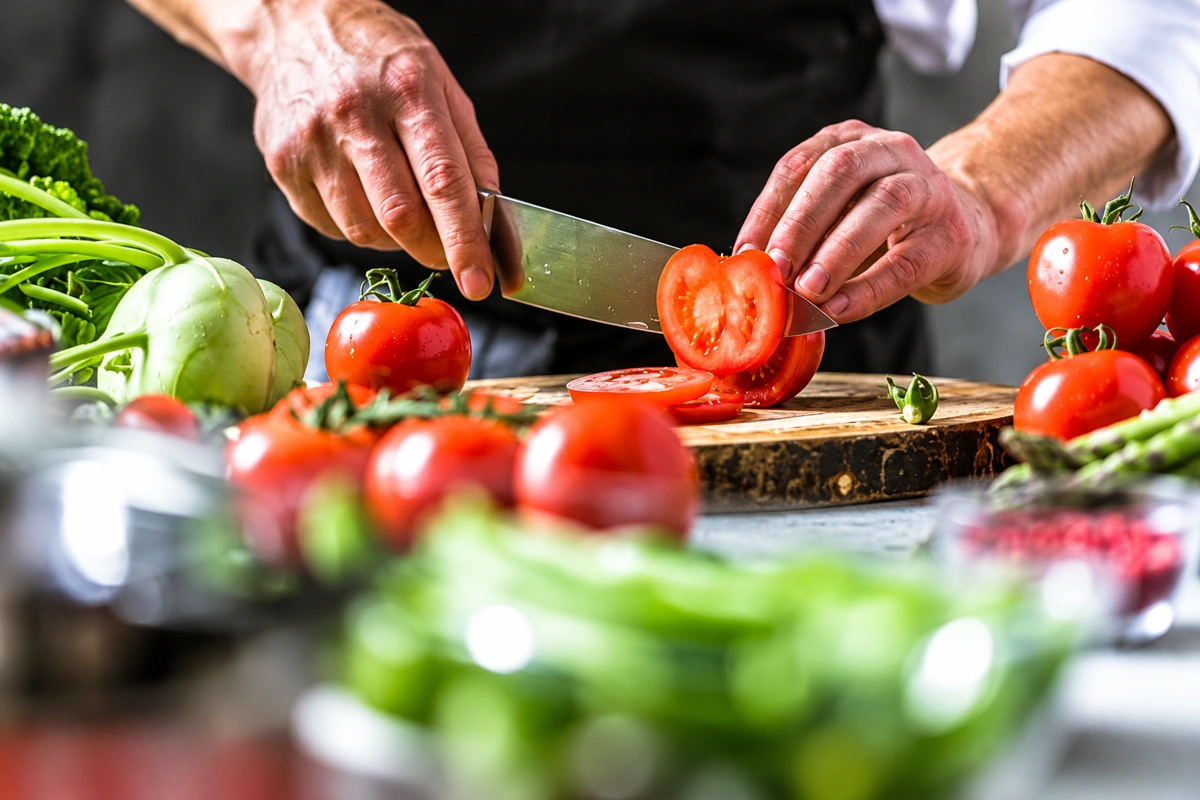
Remember “Eat your vegetables!”? That was a command. Somebody had to make you, because whoever cooked that broccoli boiled it until it gave up and died on the plate. This page exists so nobody ever has to say it to anyone eating your food.
You’ve done the homework. You know what you’re holding, you know what heat does to it, and you know how to buy it and keep it alive until it hits the pan. Now it’s time to cook.
Every recipe here is organized by cooking method, because the method is the lesson. The roasting recipes teach you to drive off water and build browning. The blanching recipe teaches you to protect that green color. The braise teaches you to turn a tough, bitter leaf into something people go back for seconds of. Master the method, and you’re not stuck with one recipe. You can take that technique to any vegetable in the walk-in.
Each section links back to the matching method in the cooking guide, so if something goes sideways, you can figure out why. Cook it, taste it, and ask yourself the only question that matters: would somebody eat this without being told to?
Cook by method
Blanching

Blanching is the quiet workhorse behind half the green vegetables you've ever loved. That snappy green bean in a French salade niçoise? Blanched. Haricots verts amandine: blanched, then tossed in butter with toasted almonds. Korean sigeumchi-namul: spinach blanched for a few seconds, squeezed dry, and dressed with sesame oil and garlic. Cantonese restaurants blanch gai lan (Chinese broccoli) and finish it with oyster sauce, and Italian cooks blanch bitter broccoli rabe before it ever hits the sauté pan. Different kitchens, same move: a fast dunk in boiling water, then get it out before the green turns into olive-drab sadness.
That's your job here. Nail the timing, shock it, and you've got the starting point for a dozen dishes. (How blanching works.)

Blanched Broccoli
Instructions
- Cut the broccoli: Cut the broccoli florets into uniform pieces for even cooking. Peel, trim, and chop any tough stalks if you plan to cook them

- Boil water: Bring a large pot of salted water to a rolling boil. You'll want the water to be salty—about 1 to 2 tablespoons of salt per gallon to help season the broccoli and maintain its color.
- Cook the broccoli: Add the broccoli to the boiling water and cook for 2 to 3 minutes (less for florets and more for stalks), or until the pieces turn bright green and are tender-crisp when you pierce them with a knife.
- Drain the broccoli: As soon as the broccoli turns bright green and is at your desired tenderness, drain well.
- Shock in ice water: Quickly (and carefully!) transfer the cooked broccoli to a large bowl of ice water. This stops the cooking process and locks in their color and texture.
- Drain: After the broccoli is cool to the touch, drain in a colander to remove excess liquid. Jiggle the colander gently to release any excess water.
- Dry: If you are going to be refrigerating the blanched broccoli for more than a day, store it DRY. Arrange the blanched veggies on a half sheet pan lined with paper towels to remove excess moisture before using. If necessary, pat dry with paper towels.


Roasting and Baking

Roasting
Roasting is how you turn a vegetable people tolerate into one they fight over. Greek patates lemonates are potatoes roasted in lemon, olive oil, and oregano until the edges go crisp. Catalonia has escalivada: eggplant, peppers, and onions roasted until they slump, then peeled and dressed in olive oil. Smoky baba ghanoush starts with an eggplant charred until it collapses. And the whole roasted cauliflower that took over restaurant menus? Just a head of cauliflower, olive oil, salt, and a hot oven doing its thing.
The Brussels sprouts below are the vegetable everybody claims to hate, until they're roasted right. Dry them, give them space, and let the browning do the talking. (Why a crowded, wet pan never browns.)

Roast Brussels Sprouts
Ingredients
- 1 ½ pound Brussels sprouts
- 3 tablespoons extra virgin olive oil EVO
- ½ teaspoon salt
- 1 teaspoon black pepper
- 1 teaspoon garlic powder
- ¼ cup parmesan
Instructions
- Preheat oven to 400
- Start 2 quarts well-salted water boiling
- Trim root bottoms and peel off any yellow leaves
- Make a small “x” in the base of each with a paring knife
- Parboil for exactly 2 minutes.
- Drain completely and chill for storage or continue cooking
- Mix in a bowl with remained of ingredients. Pour on a sheet pan lined with aluminum foil and roast for 15 minutes. Remove from oven and flip. Bake for an additional 15 minutes, until crisp with some dark brown edges and tender on the inside.
- Taste, add more salt and pepper if necessary.
Baking
Baking is roasting's more patient cousin, and it's where vegetables become the whole show. Greek gemista are tomatoes and peppers stuffed with herbed rice and baked until they collapse into themselves. French tomates à la provençale get topped with garlic, herbs, and breadcrumbs and baked until golden. Turkish imam bayildi is an eggplant stuffed with onions, tomatoes, and garlic and cooked down in olive oil. The name translates to "the imam fainted." Legend says it was that good.
These stuffed artichokes come from the same tradition, a favorite in Italian-American kitchens. They're steamed first, then packed with buttery, garlicky breadcrumbs and baked until the top goes crisp. It's two cooking methods in one dish. (Roasting and baking in the cooking guide.)
Baked, Stuffed Artichokes
Ingredients
- 1 artichokes washed, drained, trimmed, and cored
- juice of 2 lemons divided (about 1/4 cup)
- 1/3 cup unsalted butter
- 3 tablespoons shallots finely chopped
- 1 ½ tablespoons garlic minced
- ⅓ cup vegetable stock
- 1 ½ cups fresh breadcrumbs
- ¼ cup Italian parsley washed, dried, finely chopped
- 2 tablespoons Parmesan cheese finely grated, plus more for topping
- EVO for drizzling on top
- sea salt and freshly ground black pepper to taste
Instructions
Prep Artichokes
- Fill a steamer pot with a few inches of water, and place a steamer basket on top. Cover the pot and bring the water to a boil. Turn the heat to low and let it simmer.
- Use a Chef’s knife to cut off about 1-inch from the top of each artichoke, and enough off of the bottom to form a nice base. Remove any especially tough outer leaves and discard them. Then use kitchen scissors to cut off the sharp tips of the leaves.
- Using your hands, carefully pull the leaves away from the middle of the artichoke — just enough so that you can see down to the choke. Now use a spoon to reach down and gently scrape away and discard all of the fuzz, to reveal a clean heart. Drizzle about 1 tablespoon of the lemon juice inside and over each one.
- Place the artichoke, stem-end up, in the steamer basket, cover, and steam until they are almost tender, about 15 minutes. Check for doneness by pulling off an outer leaf — it should come off fairly easily. Set them aside to cool or refrigerate overnight.
- Preheat the oven to 375 degrees F.
Make Stuffing
- Melt the butter in a large sauté pan over low-medium heat. Let it simmer until it begins to brown, about 3 minutes. Add the shallots and garlic and cook until soft, about 3 minutes. Pour in the remaining lemon juice and the vegetable stock. Stir and let this simmer on low heat for about 4 minutes. Add the bread crumbs and parsley, stir to blend and remove from the heat. Season to taste with salt and pepper. Stir in parmesan cheese and reserve.
Assemble and Bake
- Place the artichokes, sitting on their bases, in a baking dish.
- Use a spoon and/or your hands to carefully fill the center of each artichoke with the stuffing — fill it to maximum capacity! (If you think there’s too much stuffing, don’t worry just pack it in.) Then fill all of the spaces between the leaves as much as possible. Sprinkle the top of each one with 1 tablespoon of the Parmesan. Drizzle with EVO.
- Place the stuffed artichokes in preheated 375 degree F oven and bake until the breadcrumbs are golden and the cheese has melted, 15 to 20 minutes (if allowed to cool), 25-35 minutes (if refrigerated overnight).
Pan-Frying

Pan-frying is about one thing: a crisp outside and a cooked inside, at the same moment. Jewish latkes are shredded potato pancakes fried in a shallow layer of oil until shatteringly crisp. Swiss rösti is a potato cake pan-fried golden on both sides. Korean hobak-jeon is zucchini dipped in flour and egg and pan-fried into soft, golden coins. And every great eggplant parmigiana starts with eggplant slices pan-fried before they're ever layered with sauce and cheese.
Then there are fried green tomatoes. Everybody calls them classic Southern food, and today they absolutely are, but food historians have found them in Jewish and Midwestern cookbooks long before the South claimed them. The 1991 movie Fried Green Tomatoes made them a Southern icon. Unripe tomatoes are firm and tart, so they hold their shape in hot fat, and the cornmeal crust gives them a crunch a ripe tomato could never survive. (Pan-frying in the cooking guide.)
Fried Green Tomatoes
Ingredients
- 4 large green tomatoes
- 2 eggs
- ½ cup buttermilk
- 1 cup all-purpose flour
- ½ cup cornmeal
- ½ cup bread crumbs
- 2 teaspoons coarse kosher salt
- ¼ teaspoon ground black pepper
- 1 quart vegetable oil for frying
Instructions
- Slice tomatoes 1/2 inch thick. Discard the ends.
Setup Batter Station
- Whisk eggs and buttermilk together in a medium-size bowl.
- Scoop flour into a second bowl.
- Mix cornmeal, bread crumbs and salt and pepper in a third bowl. Set out a tray or plate to hold the battered tomatoes.
Fry Tomatoes
- Dip tomatoes into flour to coat and shake off excess. Then dip the tomatoes into buttermilk and egg mixture. Dredge in cornmeal/ breadcrumbs to completely coat. Reserve.
- In a large skillet, pour vegetable oil (enough so that there is 1/2 inch of oil in the pan) and heat over a medium heat.
- Gently lower tomatoes into hot oil, making sure not to drop into pan and splash oil on yourself (or others). Do not crowd the tomatoes, they should not touch each other.
- Fry over medium heat until golden brown. Turn and fry the second side until golden brown, watching carefully to make sure the tomatoes don't burn.
- Drain and season while still hot. Serve with Cajun Remoulade.
Deep-Frying

If you ever need proof that vegetables can be the most craveable thing on the table, look at the deep fryer. Japanese tempura coats sweet potato, squash, and green beans in a batter so light it barely holds together. Indian onion bhaji are spiced chickpea-flour fritters packed with sliced onion. Belgian frites are fried twice for a crisp shell and a fluffy center. Mexican chiles rellenos are roasted poblanos stuffed with cheese, battered, and fried. Southern kitchens do it to okra, and the result converts people who swear they hate okra.
Onion rings are the classic for good reason. Water is the enemy here: dry onions, hot oil, small batches, and a crust that stays crunchy because you didn't pile them up and steam them soft. (Deep-frying in the cooking guide.)

Fried Onion Rings
Ingredients
- 2 cups vegetable oil for frying
- ½ cup all-purpose flour
- ¼ cup cornstarch
- 2 tablespoons dry potato flakes
- ⅛ teaspoon cayenne pepper or to taste
- 1 cup chilled club soda
- 2 cups panko bread crumbs or as needed
- 2 large onions cut into 1/4-inch thick slices and separated into rings
- fine salt to taste
Instructions
- Heat oil in a large saucepan to 350* F.
- Whisk together flour, cornstarch, potato flakes, and cayenne pepper in a large bowl. Whisk in club soda to make a smooth batter. Place bread crumbs in a shallow pan.
- Working in batches, dip onion rings into batter, then press in bread crumbs to coat.
- Cook coated onion rings, a few at a time, in hot oil until golden brown, 2 to 3 minutes. Transfer to a cooling rack set over paper towels to drain.
- Season with fine salt and serve hot.
Braising

Braising is how cooks all over the world turn tough, bitter, cheap vegetables into something worth fighting over. In the South, that means collard greens simmered low and slow with smoked pork, and the leftover broth, pot likker, is so good people drink it straight. Ethiopian cooks braise collards too, in gomen, with garlic, ginger, and spiced butter. Provence gives you ratatouille: eggplant, zucchini, peppers, and tomatoes cooked down until they melt together. Sicily has caponata, a sweet-and-sour eggplant stew. Germany has Rotkohl, red cabbage braised with apples and vinegar, which also keeps it a gorgeous red. (Here's why.)
These collards won't be bright green, and they're not supposed to be. You're trading color for tenderness and deep, smoky flavor, and that's a trade worth making. (Braising in the cooking guide.)
Tennessee-Style Collard Greens with Smoked Ham Hocks and Bacon
Ingredients
- 6 slices of bacon
- 1 large onion chopped
- 3 clove garlic minced
- 2 to matoes chopped
- 2 smoked ham hocks
- 1 lb collard greens thoroughly washed, dried, and cut into 2 inch pieces
- 3 cup chicken broth
- 1½ tsp red pepper flakes
- 2 tbsp cider vinegar
- 1 tbsp brown sugar
- 1 tsp sea salt or to taste
- 1 tsp black pepper freshly ground
Instructions
- Add bacon to a large pot and cook over medium-high heat until crisp. Remove from the pot, crumble, and return to the pot.
- Add onion and cook until tender, about 5 minutes.
- Add garlic, and cook until just fragrant.
- Add collard greens and fry until they start to wilt.
- Add chicken broth, tomatoes, ham hocks, sea salt, black pepper, red pepper flakes, cider vinegar, and brown sugar
- Reduce heat to low, cover, and simmer for 45 minutes or until the greens are tender.
- Taste and adjust salt and pepper.
Glazing

Glazing is how you make a humble root vegetable look like it belongs at a holiday table. France gave us carottes Vichy, carrots cooked in butter and sugar until every coin shines, and petits oignons glacés, tiny pearl onions glazed until glossy. British cooks serve honey-glazed parsnips with the holiday roast, and Southern tables wouldn't be complete without candied sweet potatoes dripping with brown sugar and butter.
These brown sugar carrots teach you to manage two things at once: a carrot getting tender and a liquid reducing to a glaze. Get them to finish at the same time, and you've got it. (Glazing in the cooking guide.)
Brown Sugar Glazed Carrots
Ingredients
- 16 ounces carrots
- 2 tablespoons butter
- 1/3 cup brown sugar packed
- 1 cup water
- pinch cayenne pepper
- Salt & Pepper to taste
Instructions
- Combine the carrots with the butter, brown sugar, cayenne, and water in a medium saucepan. Stir to blend the ingredients thoroughly.
- Bring the mixture to a boil over high heat. Reduce the heat to medium-low and continue boiling (uncovered) for about 20 to 25 minutes, or until carrots are tender and the liquid has evaporated. Check and stir frequently to avoid scorching. Add more water, as needed.
- Season to taste with salt and pepper.
Puréeing (No Heat Required)
Not every great vegetable dish needs a burner. Spain is the champion here. Gazpacho comes from Andalusia, where blazing summers made a cold soup a survival strategy. Córdoba makes salmorejo, a thicker, creamier cousin built on tomatoes, bread, and olive oil. Málaga makes ajo blanco, a "white gazpacho" of almonds, garlic, and bread with no tomatoes at all. Mexico mashes raw avocados into guacamole, and the Italian city of Genoa pounds basil, garlic, and pine nuts into pesto.
Gazpacho teaches you that a purée is all about texture and balance. Blend until smooth, stream in the oil, strain it, chill it hard, and season it cold. Cold food needs more seasoning than you think. (Puréeing in the cooking guide.)
Gazpacho
Ingredients
- About 2 pounds ripe red tomatoes cored and roughly cut into chunks
- 1 Italian frying cubanelle pepper or another long, light green pepper, such as Anaheim, cored, seeded and roughly cut into chunks
- 1 cucumber about 8 inches long, peeled and roughly cut into chunks
- 1 small mild onion white or red, peeled and roughly cut into chunks
- 1 clove garlic
- 2 teaspoons sherry vinegar
- 1 teaspoon Lime juice
- 1/2 teaspoon ground cumin
- 1 pinch dried oregano
- 1 pinch cayenne pepper
- 1 teaspoon Worcestershire sauce
- ½ cup extra-virgin olive oil more to taste, plus more for drizzling
- Salt & black pepper to taste
Instructions
- Combine tomatoes, pepper, cucumber, onion and garlic in a blender or, if using a hand blender, in a deep bowl. (If necessary, work in batches.) Blend at high speed until very smooth, at least 2 minutes, pausing occasionally to scrape down the sides with a rubber spatula.
- With the motor running, add the vinegar and 2 teaspoons salt. Slowly drizzle in the olive oil. The mixture will turn bright orange or dark pink and become smooth and emulsified, like a salad dressing. If it still seems watery, drizzle in more olive oil until texture is creamy.
- Strain the mixture through a strainer or a food mill, pushing all the liquid through with a spatula or the back of a ladle. Discard the solids. Transfer to a large pitcher (preferably glass) and chill until very cold, at least 6 hours or overnight.
- Before serving, adjust the seasonings with salt and vinegar. If soup is very thick, stir in a few tablespoons ice water.
Bonus: Simmering It Down
Cook a vegetable long and slow enough, and the water leaves and the flavor stays. That's how the world got ketchup, the most famous reduced tomato product on the planet. Indian tomato chutney simmers tomatoes with ginger, chilies, and spices into something sweet, sour, and hot. Moroccan matbucha cooks tomatoes and roasted peppers down for hours into a spreadable salad. And sweet onions cooked down for hours become onion jam.
Tomato jam is the same idea: simmer until thick, taste, adjust, and you've got a condiment that makes a grilled cheese or a burger taste like it came from somewhere expensive. (Why evaporation concentrates flavor.)
Tomato Jam
Ingredients
- 1 ½ pounds ripe, concassed tomatoes peeled, cored, seeded, and chopped
- 1 cup sugar
- 2 tablespoons lime juice freshly squeezed
- 1 tablespoon grated ginger
- 1 teaspoon ground cumin
- ¼ teaspoon ground cinnamon
- ⅛ teaspoon ground cloves
- 1 teaspoon salt
- 1 fresno chili or other red peppers stemmed, seeded and minced
Instructions
- Combine all ingredients in a heavy medium saucepan, Bring to a boil over medium heat, stirring often.
- Reduce heat and simmer, stirring occasionally, until mixture has consistency of thick jam, about 1 hour 15 minutes. Taste and adjust seasoning, then cool and refrigerate until ready to use.
- CCP: Store safely for 7 days
Photograph credits
Fried green tomatoes: ninjapoodles / Wikimedia Commons. CC BY 2.0. Resized only.

Ratatouille: Benoit5656 / Wikimedia Commons. Public domain. Resized only.
