
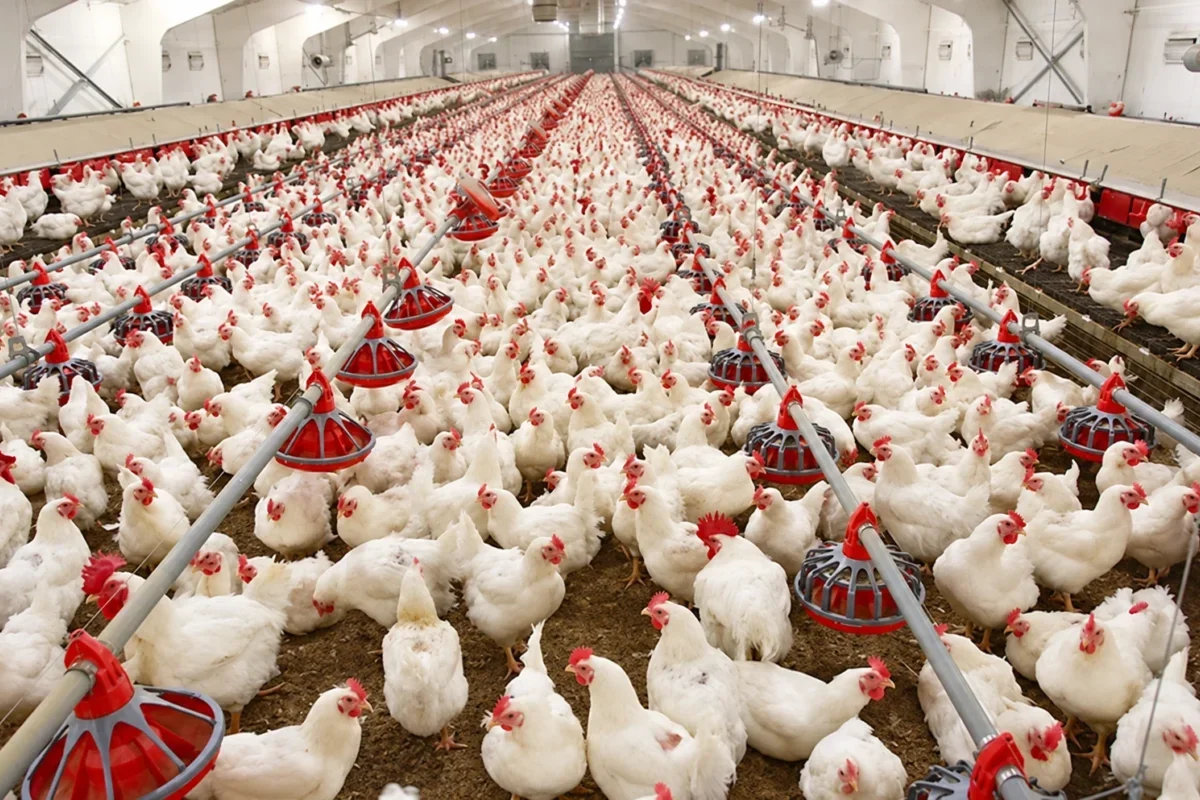

In June 1948, the little town of Georgetown, Delaware threw a parade for chickens. There were floats. There was a Chicken of Tomorrow Queen. And the guest of honor was a wax model of the perfect broiler chicken, broad-breasted and meaty. Here’s the funny part: the chicken didn’t exist yet.
America’s biggest grocery chain at the time had spent three years trying to breed for their perfect chicken and their party? A few years premature. The chicken sitting in your walk-in right now? It’s what came out of that contest. And the next time you order a chicken sandwich at Chick-Fil-A, that bird they were celebrating is the great-great-great-great Grandmother.
These days, American farms raise about 9.4 billion broilers a year. That’s 62.2 billion pounds of chicken, worth about $44.6 billion. On average, each and every American ate about 104 pounds of chicken, more than any other protein.
The Chicken of Tomorrow
Before World War II, a meat chicken was a skinny, bony afterthought of the egg business. Then the war ended, everybody wanted cheap protein, and A&P, the biggest grocery chain in America, decided to build a better chicken. Literally. They teamed up with the USDA and threw a nationwide breeding contest called the Chicken of Tomorrow, and the birds were judged on three things: how fast they grew, how little they ate doing it, and how much meat they carried.
Vantress Hatchery of California won in 1948 with a meaty Cornish cross, and Arbor Acres of Connecticut won the purebred category with White Plymouth Rocks. Breeders eventually crossed the two, and their great-great-great-(a lot of greats)-grandchicks are probably for sale at your local Publix Grocery store right now.
But chicken companies weren’t done tinkering with America’s most popular protein.
Back in 1948, the winning chicken took 12 weeks to reach 4 pounds. Nowadays, that same type of broiler chicken hits 5 pounds in half that time, on less feed. And no, that’s NOT hormones. Hormones are banned in poultry, period, so a “no hormones added” sticker on chicken is like a bottle of water bragging that it’s fat-free. While we’re on labels, “free range” just means the birds had access to the outdoors. That’s it. That’s the whole rule.
Less impressive than you thought, isn’t it?
Who Actually Raises the Chicken
Here’s something most people don’t know: chicken farmers rarely own their chickens.

Almost every chicken you’ve ever eaten was raised under contract for a big poultry company like Tyson, Pilgrim’s Pride, Wayne-Sanderson Farms or Perdue. The company owns the chicks, the feed, the trucks, and the processing plant. The farmer borrows a pile of money to build chicken houses to the company’s specs, pays the electric bill, does the work, and carries the loan. When the flock hits market weight, the company shows up and takes its chickens back.
But the bad deal doesn’t end there.
Farmers get paid through something the industry calls a tournament, which sounds fun, right? It isn’t. Every flock gets ranked against the other flocks the company processed that week. Raise yours cheaper than average and you get a bonus; raise them more expensively and you get docked. But the company picked the chicks, the feed, and the pickup date, so a farmer can finish near the bottom because of a bad batch of chicks they had no say in. A typical grower gets paid only a few cents for every pound of live chicken. The electric bill, the labor, and the loan payment all come out of that, and the loan is due every month no matter how the flock ranked. The contract can be as short as one flock at a time, while the loan runs for years. And if the company drops the contract or demands upgrades, the farmer is still stuck paying for buildings that are really only good for raising one company’s chickens.
Why Breasts Cost More Than Thighs
Americans are obsessed with chicken breasts. That didn’t happen by accident: the industry spent years selling white meat as the premium, healthy cut, and we bought it. The breast is only about a third of the bird, but it costs way more than the legs. So the Chicken of Tomorrow got bred for bigger and bigger breasts, because that’s where the money is. All of this is why buying a whole bird and fabricating it into parts is economical—unless you don’t have any use for the thighs and wings. In which case, what’s wrong with you? Dark meat is delicious. You can explore this a bit more in Fresh Doesn’t Mean What You Think: Buying, Receiving, and Storing Poultry.
The Welfare Debate

The same breeding that made chicken cheap has a downside. Researchers have found leg problems and other health issues in fast-growing broilers, so animal-welfare groups want restaurants and food companies to switch to slower-growing breeds with more space and natural light. The industry says slower birds eat more feed, cost more, and use more water, and the National Chicken Council disputes the claim that fast-growing birds are less healthy. In the UK, several restaurant chains signed on to the switch and then backed out because they couldn’t buy enough of the slower birds.
At the meat case, that whole fight turns into labels. “Free range” means the chickens can go for a walk, and “pasture-raised” has no USDA definition at all. Either one only means something when a third-party certifier like Certified Humane sets the rules and actually inspects the farm.
Don’t ask me which is better. Most shoppers believe free range is worth more money, but very few of them can tell the difference. Seems like a lot more marketing and spin than reality.
Numbers at a Glance
| Measure | Figure |
|---|---|
| Broilers raised, 2025 | 9.40 billionFigure |
| Live weight, 2025 | 62.2 billion lbFigure |
| Value of production, 2025 | $44.6 billionFigure |
| Chicken marketed, ready-to-cook, 2025 | Over 48 billion lbFigure |
| Consumption per person, 2025 | 104.3 lb (includes fowl)Figure |
| Family farms under contract | About 20,000Figure |
| Share of broilers raised under contract | About 95% of birds (NCC); 99.5% of value (USDA ERS, 2020)Figure |
| Share of U.S. production exported | About 14%Figure |
| U.S. rank among broiler exporters | Second, behind BrazilFigure |
| Top states by live weight, 2025 | North Carolina, Georgia, Arkansas, Alabama, Texas, MississippiFigure |
Key Terms
Broiler
A young chicken raised for meat.
Contract grower
A farmer who raises birds for a poultry company under an agreement that sets the work and payment terms.
Integrator
The poultry company that coordinates stages such as breeding, feed, growing, processing, and distribution.
Tournament system
A payment system that compares a grower’s flock performance with other flocks processed by the company.
Feed conversion
How much feed it takes to produce a given amount of weight gain. Lower feed use for the same gain means better conversion.