
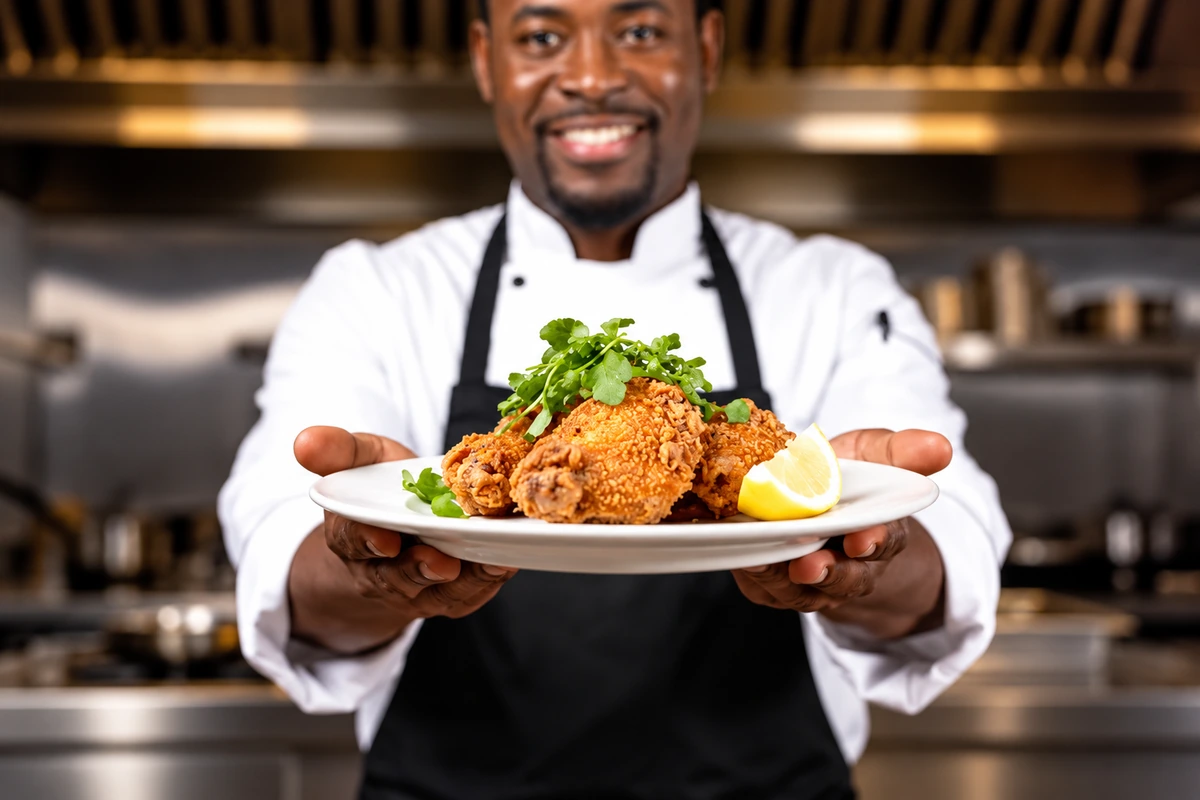
Every night around 5:40, somewhere in America, somebody is standing in front of an open refrigerator, staring at a pack of chicken breasts and googling “super easy chicken dinner I can actually make so my family won’t hate me.” In a raw panic. Twenty minutes before dinner. Don’t be that person. Americans eat more chicken than any other protein, by FAR, about 104 pounds per person every year. That means chicken is going to be on almost every menu you ever cook from, and knowing how to cook it well is one of the clearest lines between a culinary professional and a frantic home cook.
I’m not going to lie: doing this right takes some work. There are techniques to practice and things you’ll have to understand, like why a thigh and a breast want totally different treatment, and what you’re actually buying when you order a case of chicken. But once you get the basics down, you’ll have the foundation to cook just about any chicken dish there is, without ever googling in desperation again.
Finish the Field Guide and You’ll Know:
- The grades and market forms of poultry
- How to buy it, store it, and break down a whole bird into delicious pieces-parts
- All the basic cooking techniques used to prepare poultry
- How to apply specific methods to different dishes and different types of poultry
The Poultry Field Guide

Where chicken came from, why it went from Sunday luxury to weeknight staple, and what separates a broiler from a stewing hen, white meat from dark. Start here, then dig into the industry, purchasing, fabrication, and cooking.

In 1948, a Delaware town threw a parade for a chicken that didn’t exist yet. The contest behind it built the modern broiler and explains who owns the birds, how farmers get paid, and why breasts cost more than thighs.

“Fresh” chicken can arrive at 26°F, and the Grade A shield says nothing about safety. Inspection vs. grading, market forms, what free-range really promises, whole-bird yield, and what to check when the truck backs up to the door.

The French named two of the best bites on a chicken after the cooks who throw them away. Learn the anatomy, break down a bird into eight pieces, understand the airline breast, and get it ready for heat: wishbone, trussing, brining, and stuffing safely.

Clear juices once came out of a chicken breast that was only 145°F. Here’s what actually happens when poultry meets heat: carryover cooking, why breasts and thighs need different finish lines, crisp skin, every cooking method, and what to do when it goes wrong.