
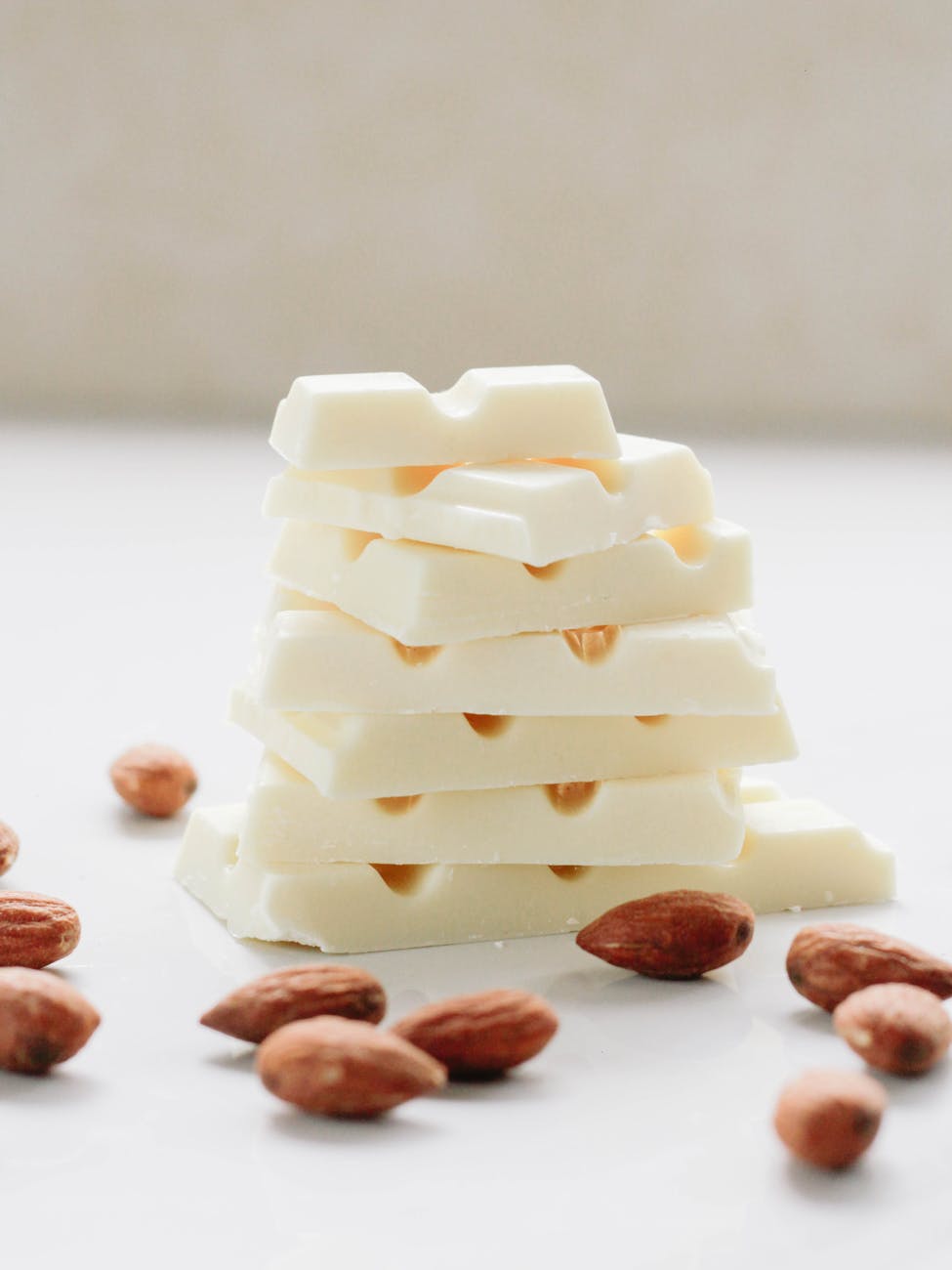
History of White Chocolate
According to Nestlé, white chocolate was originally created as a way to use excess cocoa butter (although the company does not specify who created it—a detail perhaps lost in history). The first mass-distributed white chocolate in the U.S. was Nestlé’s Alpine White chocolate bar, introduced around 1948. It included almonds and had a good run through the 1990s (it is now discontinued, to the chagrin of many fans). Competitor Hershey’s didn’t make Hugs, a.k.a. white chocolate Kisses, until 1993, and has since made white-chocolate versions of Reese’s Cups and Twix.
Today, just about every major chocolate maker produces a bar (usually plain, but sometimes flavored), and many a pastry chef spins white chocolate cake, ice cream and mousse from large blocks of white couverture. Its ivory color makes it a lovely contrast against dark chocolate backgrounds of cakes and bonbons. Certain flavors marry better with white chocolate than they do with dark chocolate—lavender, for example—which leads to new flavor combinations and recipes. Over the last few decades, the world has become a more sophisticated marketplace for fine chocolate. In 2002, the FDA amended its standards of identity, enabling white chocolate to be called chocolate if, among other requirements, it is made from a minimum of 20% cocoa butter (by weight), a minimum of 15% milk powder and a maximum of 55% sweetener (generally sugar or maltitol for high-quality sugar-free chocolate). Any other formulation must still be called confectionary or summer coating.
Getting ready to make it yourself? Watch this first
Recipes
White Chocolate
Ingredients
- 16 oz Cocoa butter melted to 150*F
- 14 oz whole milk powder
- 14 oz sugar
- 1 t lecithin
- flavorings (Vanilla, lemon, orange, etc) depends on strength and concentration; use carefully and sparingly
Instructions
- Preheat the melanger in a 140 oven for 15 minutes; you want the granite warm (be careful not to melt the plastic!)
- Melt the cocoa butter to approximately 110–120°F.
- Warm sugar by spreading it out on a half sheet pan in a low oven – you're warming the sugar, not cooking it
- With the grinder running, add 1/2 the melted Cocoa butter. Gradually add the sugar, allowing it to become thoroughly incorporated. Add a little more cocoa butter if the mixture becomes too thick for the machine.
- Add the remaining cocoa butter, then gradually introduce the whole milk powder.
- Process until the chocolate is smooth, checking texture periodically. Expect approximately 8–10 hours, but adjust according to the equipment and results.
- Add lecithin, if using, and any suitable oil-based flavorings near the end of processing. Continue mixing until uniformly incorporated.
- Temper the finished white chocolate and deposit it into clean, dry molds.
- Allow the chocolate to crystallize in a cool, dry environment. Refrigeration can be used briefly when necessary, but avoid condensation and temperature shocks.