
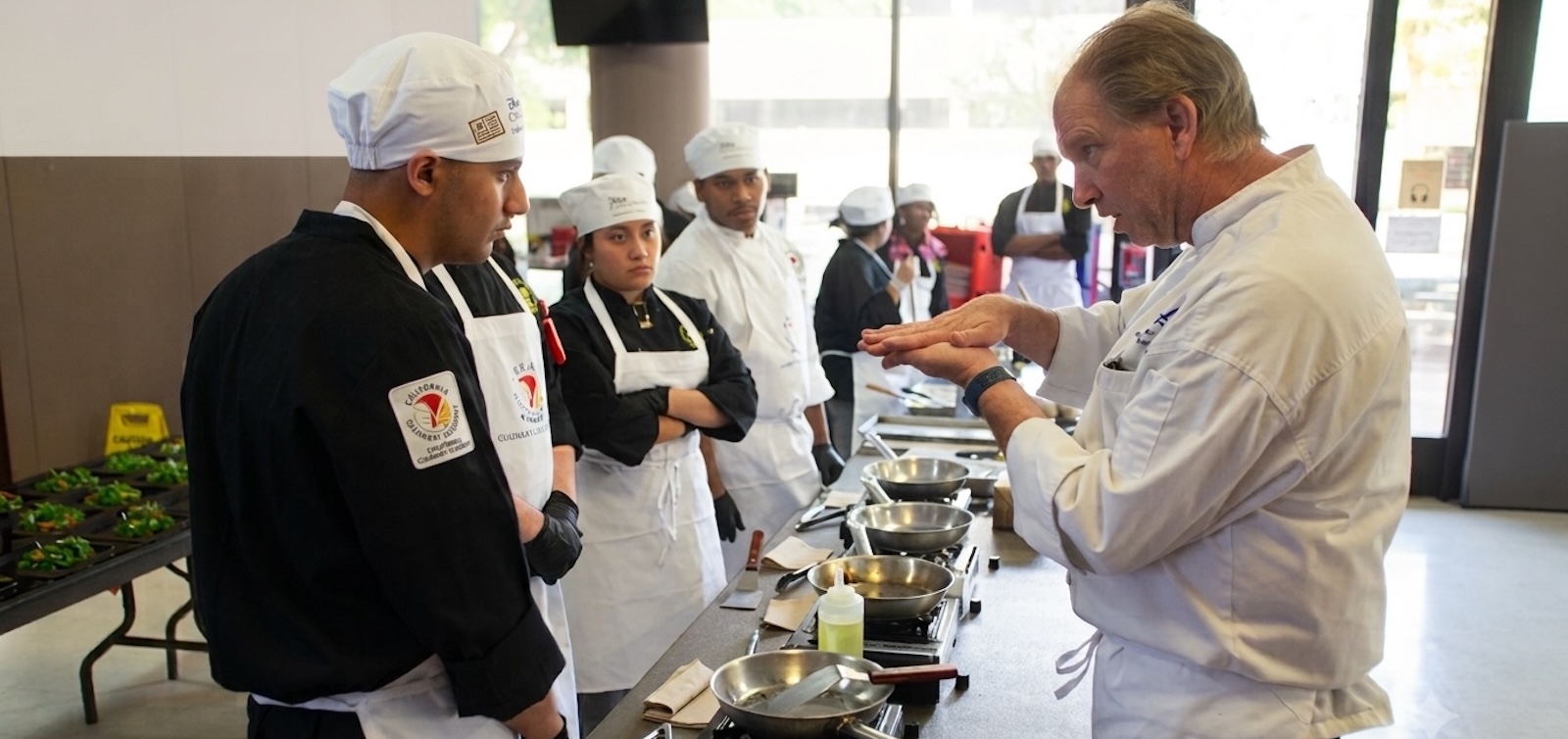
Got a question? Chances are another student has already asked it. Here’s the rundown on what new and returning students want to know before they ever set foot in the kitchen.
What can I expect during the first few weeks?
The first few weeks are settling-in time, not cooking time yet. Students need to gather supplies, get scheduling sorted with guidance counselors, and pass the annual food and personal safety training before anyone touches a range. Use this window to get grease-resistant, non-slip cooking shoes — close-toed shoes are allowed in the meantime, but flip-flops, slides, and sandals are never allowed in the teaching kitchen, for any reason, no exceptions. That one’s a Department of Health rule, not a preference.
How often do we eat?
We cook to learn, not cook to eat. You’ll be encouraged to taste everything you make, and especially in Culinary 1, you’ll frequently get to enjoy full meals. But the further you progress, the more of what you make gets sold through the Mustang Café to keep the program funded — so don’t sign up expecting free lunch every day.
Smart move for everyone: bring a plastic container on days you know you’ll be cooking; the program doesn’t provide to-go containers for your snacks.
Do I get to keep my chef coat?
Culinary 2, 3, and 4 students are issued a coat at the start of the year that’s yours to keep for the duration of your time in the program — we don’t “loan out” coats. You’re responsible for washing and caring for it (Wednesday is coat day, the one day you can wash it in the kitchen), and you’ll return it at the end of the year for maintenance. Lose it, damage it, or return it dirty, and there’s a fee. A big one. Be careful.

What happens if I’m late to class?
You get a short prep window after the passing bell to get changed and ready. After that, you’re late, and your chef decides whether you cook that day. Rack up too many tardies in a quarter and you’ll land on probation — good attendance really is the difference between an A and a much harder semester.
What if I miss a cooking day?
Missed labs get made up at home: you cook the recipe yourself, record it, and upload it for your chef to review. Missed prep or demo days can sometimes be made up with after-school kitchen cleaning or helping with an event. Either way, there’s a deadline — don’t let it slide.
How much does the class cost, and is there help if I can’t afford it?
There’s an annual supply fee ($50 for Culinary 1, $100 for Culinary 2-4), which covers the food and raw materials you’ll actually cook with. If cost is a barrier, need-based scholarships are available — ask your chef instructor for an application. No student should have to sit out because of money.
What do I need to bring every day?
Culinary 1 students just need close-toed shoes and hair covering. Everyone else needs a pair of kitchen-safe shoes, a probe thermometer, a sharpie, your chef coat, plus a hair restraint. These are your responsibility to bring — the program can’t loan out extra tools, so use your locker and plan ahead.
How many catering events do I have to work?
It scales by level: 4 events/16 hours in Culinary 1, up to 10 events/40 hours in Culinary 4. Once you sign up for an event, show up and stay for the whole thing — leaving early or not showing means losing the credit, and there’s no substitute assignment for it.

Can I use my phone in the kitchen?
Only with your chef’s permission — even just to check a recipe or snap a photo of your finished plate. Earbuds are a hard no, always.
Can I try out for the competition team?
Yes, and you should if you’re serious about this. Spots are limited since more students want in than there are competitions to fill, but team members get real perks: Mustang Café lunch access, first pick of field trips, and first dibs on job and internship opportunities.
What if I forget my laptop?
It’s not excused. Wekiva is a 1-to-1 school, so a charged laptop is expected every day — no laptop usually means a late-work penalty on anything you can’t complete.
Is there a summer internship?
Each summer, ten students (rising sophomores or juniors, 16 or older) get a paid summer position at the Wekiva Youth Camp kitchen — a great way to build real resume experience early. Last year, 20 students applied (so don’t wait till the last minute!)

What happens if I get hurt in the kitchen?
Tell your chef immediately, no matter how small it seems. The kitchen is stocked and staffed to handle minor cuts, burns, and falls, and if there’s ever any doubt about how serious something is, the nurse gets called right away.
I get really hungry in-between classes. Can I eat food from the fridge or leftovers?
Not without asking first. If it wasn’t offered to you directly, it’s not yours to eat — ask before you assume. A lot of times, the food that’s in the kitchen belongs to another period (a multi-day lab they’re working on) or belongs to an upcoming catering event. In either case, you should NEVER go grocery shopping in the kitchen supplies. There are harsh penalties for stealing.
Isn’t this just a cooking class?
No — this isn’t Home Ec, and it isn’t about learning to cook for your own family. Culinary Arts and Hospitality Management is commercial cooking: the science behind why recipes work, cost and menu management, and how restaurants, catering companies, and resorts cook at volume. That’s why there’s so much emphasis on the business side — it’s the actual industry you’re training for.
If I love Culinary, how do I make sure I get into the program or move up next year?
Space is limited, and not every interested student can get in or move up every year. The only guaranteed path is to register as a magnet student your freshman year. If that’s not possible, volunteer for catering events and fundraisers, keep a solid 3.0 GPA, try out for the competition team, and study for certification exams. Magnet students ALWAYS get in and competition team members/ students who are active in after-school events and caterin get first right of application when spots open up.
Still have a question that’s not covered here? Check the full Syllabus and Safety Contract, or ask Chef Bates directly.