
A guest tells your server, “I can’t have gluten.” Another says, “I’m allergic to peanuts.” A third says, “Dairy doesn’t agree with me.” All three sound like the same kind of request — avoid an ingredient.
They are not. Treating them as identical can genuinely hurt someone.
What makes everything more complicated is that people going out to eat are frequently not entirely sure what they’ve got. They confuse disliking something with having an intolerance, they googled some symptoms after a few drinks, and now they’re convinced they’re allergic to cumin.
Dummies.
But we take every one of them seriously anyway — because from across the dining room, there’s no way to tell who did their homework and who didn’t. Meanwhile, there are guests who went to the hospital at age two after eating a strawberry for the first time. Guests who’ll spend the rest of the meal wishing they’d skipped the cream sauce because dairy just doesn’t sit right with them. Guests who’d better have an EpiPen within reach if they accidentally eat a shrimp.
It’s our job to know the difference and guide guests toward something they’ll actually enjoy — not send them to the bathroom for the next few hours, or worse, the hospital. We have to understand what’s actually going on and have a process in place to keep them safe.
Why This Page Exists
Most food safety training stops at “food allergies.” But a working restaurant deals with three distinct conditions that all show up as “please don’t put that in my food”: true allergies, intolerances, and celiac disease. They come from completely different things happening inside a person’s body, which means they carry different levels of risk if your kitchen gets it wrong.
Food Allergies
A food allergen is a naturally occurring protein in a food that some people’s immune systems mistakenly treat as a threat. When someone with the allergy is exposed to that protein, their immune system reacts to it — and that immune response is the allergic reaction.
Symptoms can include nausea, wheezing or shortness of breath, hives or itchy rashes, swelling of the face, eyes, hands, or feet, vomiting, diarrhea, abdominal pain, and an itchy throat. Symptoms can begin within minutes or several hours after eating, and a reaction that starts mild can become severe quickly. The most severe reaction, anaphylaxis, can be fatal.
Manager decision: if a guest shows signs of a severe allergic reaction, call the emergency number immediately and let them know you suspect an allergic reaction. This is not a “wait and see” situation — anaphylaxis can progress in minutes.
The Big Nine
Nine allergens are responsible for the overwhelming majority of food allergy reactions in the U.S.:

Milk · Eggs · Fish · Crustacean shellfish · Peanuts · Tree nuts · Wheat · Soybeans · Sesame
The Big Nine — and What the Law Requires
Sesame is the newest addition to the list. Older food safety training materials referred to the “Big Eight,” but on January 1, 2023, sesame officially became the ninth major food allergen recognized under federal law.
Knowing the Big Nine isn’t just good practice. There are legal requirements for identifying them.
If you make packaged food, major allergens have to be declared on the label. You may see the allergen identified as part of the ingredient name — “buttermilk,” for example — or listed separately in a “Contains: Milk” statement. That labeling matters in a restaurant because those packages are one of the places cooks and managers check when determining whether an ingredient is safe for a guest.
Restaurants have a responsibility, too. Major allergens in unpackaged foods offered for sale must be identified in writing. Depending on the operation, that information might appear directly on the menu, on a posted notice, or through another method allowed by the regulatory authority.
So think of the law as following the food:
The manufacturer tells the restaurant what’s in the package. The restaurant tells the guest what’s in the food.
And neither one gets to guess.
DID YOU KNOW? Peanuts aren’t nuts. They’re legumes — closer cousins to peas and lentils than to almonds or walnuts. Whoever split “peanuts” and “tree nuts” into two separate categories on the Big Nine didn’t do it for botany reasons. They did it because your immune system doesn’t care what a food is — it only cares what protein it sees. Two totally different plants, same overreaction.
Food Intolerances: A Different Kind of Reaction
An intolerance is different from a food allergy — it is not an allergic immune response. The most common example is lactose intolerance: the body is missing an enzyme needed to fully digest a food component (in this case, lactose, the sugar in milk), which leads to digestive discomfort like cramping, bloating, or diarrhea.
The key differences a food handler should understand:
- Intolerances are often dose-dependent. A small amount might cause no reaction at all, while a large amount causes real discomfort. This is different from an allergy, where even a trace amount can trigger a reaction in someone with a severe allergy.
- Intolerances do not cause allergic anaphylaxis. Symptoms are often gastrointestinal and can depend on how much of the problem food is eaten. That makes the immediate risk different from a severe food allergy — but it does not give a food handler permission to decide how much is “safe” for a guest.
- The guest determines what they can tolerate; the cook doesn’t. A guest managing an intolerance still deserves an accurate answer about what’s in a dish, and their stated limit is the one that counts — not your assumption about how sensitive “an intolerance” usually is.
Celiac Disease: Its Own Category
Celiac disease doesn’t fit neatly into “allergy” or “intolerance” — it’s an autoimmune condition. When someone with celiac disease eats gluten (a protein in wheat, barley, and rye), their immune system attacks the lining of their own small intestine. Unlike an allergy, this isn’t an immediate, dramatic reaction — it’s ongoing internal damage that can happen with no obvious symptoms at all, which is part of what makes it dangerous to underestimate.
Two things are important for a food handler to know:
- People with celiac disease are generally not at risk of anaphylaxis the way a severe allergy sufferer is — but repeated exposure to even small amounts of gluten can contribute to intestinal injury, whether or not the person notices immediate symptoms.
- Because celiac disease requires strict, lifelong gluten avoidance, a guest who says “I have celiac disease” is not being dramatic or making a lifestyle choice — they’re describing a medical requirement with the same seriousness as an allergy, even though the immediate danger looks different.
Different medical conditions do not give the cook permission to rank the guest’s request. Your job isn’t to decide whether an allergy, intolerance, or celiac disease is “serious enough.” Your job is to know what’s in the food, prevent cross-contact when required, and tell the truth about what your kitchen can safely prepare.
How does all this come together when a server needs to take an order and serve food?
Same Question From the Guest,
Three Different Answers From You
Tap a question below. Watch how the answer changes as it moves down the rail — same question, three completely different tickets.
“I’m allergic to peanuts.”
“Dairy doesn’t agree with me.”
“I can’t have gluten.”
Focus mode shows one question at a time so it’s easier to study. Tap “View full ticket” to see all four rows on each ticket at once — handy for a quick review before the exam.
The takeaway: three different guest statements, three different underlying mechanisms, but one identical obligation from you — know exactly what’s in what you serve, and be honest and precise when you answer.
Front-of-House and Back-of-House: Two Different Jobs, One Goal
The server who is taking the order gets the ol’ allergy ball rolling, so-to-speak, but just making a note on the order that “this guy’s allergic to nuts” is SIMPLY not enough to keep our guests safe.
Allergen safety only works if the front of the house (hosts, servers, food runners, managers) and the back of the house (prep cooks, line cooks, expediters, and kitchen managers) are working together — actually communicating — not just each doing their own thing. So let’s trace what should happen from the moment a guest mentions an allergy until the correct plate lands safely in front of them.
It starts with the server. Listen carefully, write down the allergy, and read it back to the guest. If she says she’s allergic to peanuts and you write down “nuts,” you’ve already changed the information. With an allergy, close enough isn’t close enough.
Next, figure out whether the dish can actually be prepared safely. Know what’s in it — including sauces, marinades, garnishes, and those hidden ingredients nobody thinks about until there’s a problem. If you don’t know, don’t guess. Ask the kitchen. Check the recipe and ingredient label. If there’s still a question about an ingredient or substitution, somebody needs to verify it with the supplier or manufacturer before promising the guest that the food is safe.
When the order goes in, the allergy has to travel with the ticket. Clearly mark the allergy in writing, but don’t assume typing PEANUT ALLERGY into the POS means your job is finished. Tell the kitchen verbally too. The point isn’t that you technically entered the information somewhere. The cook preparing that food needs to know there’s an allergy.
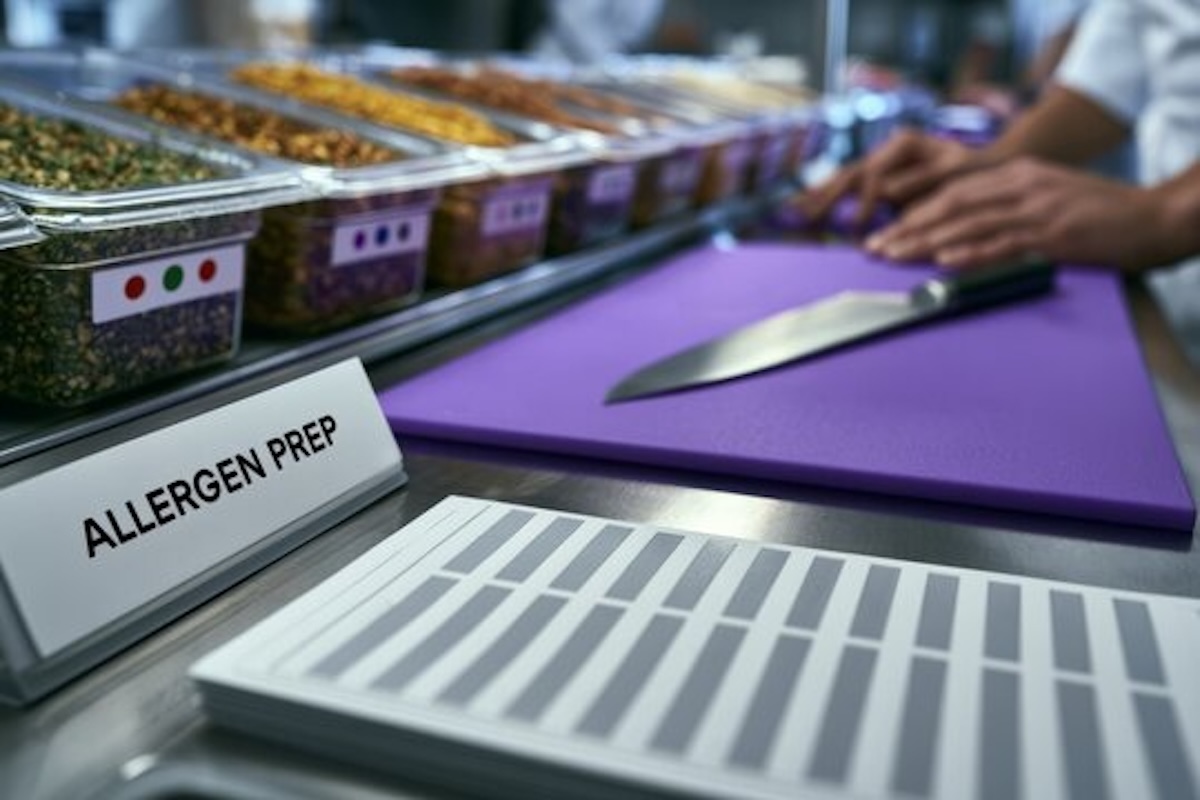
Now the kitchen owns its part of the journey. Check the ingredients. Wash your hands and change gloves. Clean and sanitize the workstation, equipment, and utensils, and use new, clean tools for that order. Protect the food from cross-contact while you’re making it. Depending on the operation, that may mean preparing the allergy order in a separate location away from the regular production happening around it.
And if something goes wrong, stop. Wrong utensil touched it? Wrong garnish went on? Somebody put the bun on the plate and then remembered the wheat allergy? Don’t pick it off, scrape it away, or decide it’s probably fine. Discard the food and start over.
When the finished plate hits the pass, the handoff goes back to the front of the house. The server, food runner, or FOH manager needs to check the plate against the ticket and verbally confirm with the kitchen that this is the allergen special order. Don’t grab the salmon that looks right because you’re weeded and Table 12 has been waiting fifteen minutes. Keep the allergy order protected from the other food as it travels through the dining room, put it in front of the correct guest, and confirm what it is when you serve it.
And don’t forget the dining room itself. Cross-contact doesn’t magically stop at the kitchen door. Tables, chairs, condiment containers, crumbs, and other food left behind during a sloppy reset can undo everything the kitchen just did.
That’s the whole journey: LISTEN → CHECK → COMMUNICATE → PROTECT → STOP IF CONTAMINATED → CONFIRM. From the moment the guest tells you about the allergy until that plate reaches the table, everybody who touches that order owns a piece of keeping that guest safe.

This section is so important, I’m adding another way of looking at the same list of responsibilities, this time divided by WHO does WHAT:
Front-of-house responsibilities:
- Describe how dishes are actually prepared — sauces, marinades, and garnishes hide allergens more often than you’d expect (peanut butter used as a thickener is a classic example)
- Tell the guest directly if a menu item contains something they’re allergic to
- Clearly mark the order for the kitchen so the allergy travels with the ticket
- Prevent cross-contact during service — don’t let plates, utensils, garnishes, or hands transfer allergens to the guest’s food
- Deliver the allergen-safe dish separately from other food
- Confirm the order with the guest when it arrives at the table
Back-of-house responsibilities:
- Check recipes and ingredient labels to confirm the allergen genuinely isn’t present
- Wash, rinse, and sanitize cookware and equipment before prepping — use a completely separate utensil set for allergen orders where possible, and clean and sanitize the workstation between orders
- Make sure the allergen never touches anything meant for that guest — food, drinks, utensils, equipment, or gloves
- Wash hands and change gloves before prepping an allergen order
- Do not use shared fryer oil when the allergen could have been introduced by other foods cooked in it; use a dedicated fryer or oil when the order requires it
- Review the menu for Big Nine allergens ahead of time, and test and note any substitutions in advance
- Receive and store ingredients correctly, watching for substitutions or cross-contact
- Follow recipes exactly, using only approved substitutes
- If cross-contact happens, discard the food. Don’t serve anything that can’t be prepared safely.
COMMON CONFUSION — allergen-free vs. “I picked the nuts off.” Removing a visible ingredient does not remove the risk. If peanuts were cooked into the sauce, picking the visible pieces out doesn’t make the sauce safe — the allergen is already distributed through it. The lesson on Cross Contamination versus Cross Contact covers this exact mechanism in full.
What You Actually Need to Remember
- The Big Nine allergens: milk, eggs, fish, crustacean shellfish, peanuts, tree nuts, wheat, soybeans, sesame.
- A food allergy is an immune response and can be life-threatening (anaphylaxis) even from trace amounts.
- A food intolerance is not an allergic immune response, is often dose-dependent, and does not cause allergic anaphylaxis — but the guest’s stated limit still deserves an accurate answer, not your guess about what “should” be tolerable.
- Celiac disease is an autoimmune condition triggered by gluten; it usually isn’t life-threatening in the moment, but gluten exposure can cause intestinal damage even without obvious symptoms, and requires strict avoidance.
- If an allergen or gluten cross-contacts a dish for a guest who must avoid it, discard the food — don’t serve it, don’t scrape it off, and don’t decide it’s “probably fine.” For an intolerance, follow the guest’s stated restriction exactly rather than deciding for them what amount they can tolerate.
Glossary additions: food allergen, anaphylaxis, cross-contact, food intolerance, celiac disease, Big Nine