
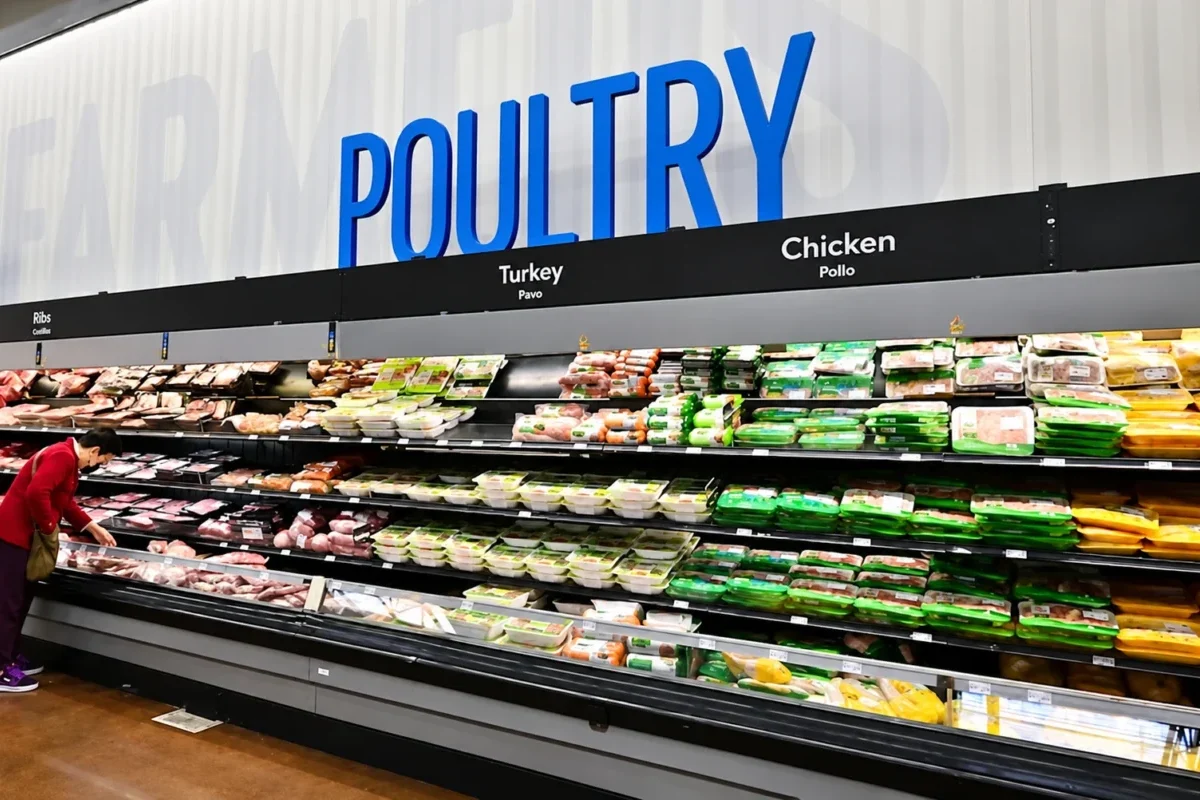
Until 1997, a chicken could be frozen hard as a bowling ball and still be sold as “fresh.” Federal policy let any raw poultry kept above 0°F wear the label, so birds chilled rock-solid by processors in the South rode trucks across the country and landed in California meat cases with the same label as birds raised down the road. California’s growers were not happy about it. The fight went all the way to Congress, and the USDA finally drew the line at 26°F, the point where chicken gets hard to the touch. Almost every word on a case of poultry has a fight like that behind it, and some of them promise a lot less than you’d think.
Inspection and Grading of Poultry
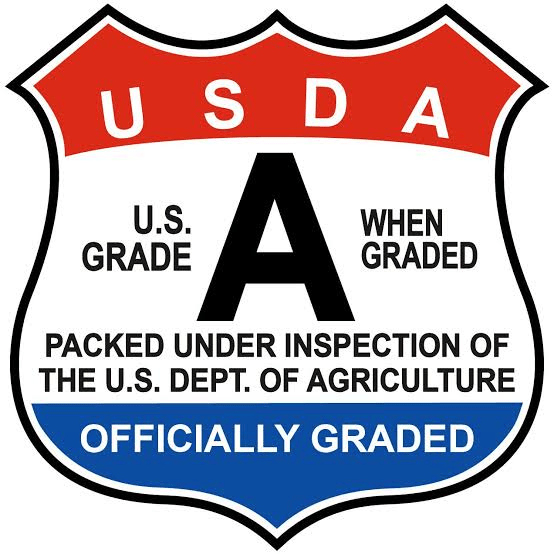
Every chicken, turkey, duck, goose, guinea fowl, and pigeon sold in this country goes through the USDA, and the USDA does two separate things to it: it inspects the bird and it can grade it. The inspection stamp means the bird passed the wholesomeness check. The grade, A, B, or C, is about quality, and it applies to whole birds, roasts, tenderloins, and parts, fresh or frozen, skin-on or skinless, bone-in or boneless.
To earn a grade, the bird has to look like a normal chicken, with no bent legs or crooked backbones. Graders also look at how much meat and fat it carries, how cleanly the feathers came off, and whether there’s any discoloration, broken or dislocated bones, or freezer damage. A boneless roast has to be truly boneless, with no bone, cartilage, tendon, bruising, or blood clots. Tenderloins get a pass on one thing. That little white tendon running through each tenderloin is allowed to stay, and the USDA doesn’t care how long it is.
You’ll be cooking with Grade A chicken exclusively. Grades B and C never make it to the supermarket. They’re headed to manufacturing plants to become canned soup, chicken nuggets, and anything else where the meat gets cut up, chopped, or ground.
Don’t expect to see a grade at the store, though. Retail chicken usually doesn’t carry one, and some parts don’t have grade standards at all: necks, wing tips, tails, and the giblets (the heart, liver, and gizzard). Every one of them still has to be inspected.
Inspection Is Not Grading
People mix these two up all the time, but they’re different jobs done by two different USDA agencies. Inspection is about safety. Every chicken sold across state lines has to be inspected by the Food Safety and Inspection Service (FSIS). It’s mandatory, your tax dollars pay for it, and that round inspection mark means the bird was wholesome when it left the plant. Grading is about quality, and it’s optional. A processor who wants a grade has to pay the Agricultural Marketing Service (AMS) for it, and only birds that already passed inspection can be graded. So that shiny shield-shaped Grade A mark is really a selling point the producer paid for. A chicken can be perfectly safe and never get graded at all.

Buying Poultry: What the Label Tells You

Chicken is easy to find and cheaper than most other meat, and these days you’ll see a lot more free-range birds in the case. On a poultry label, “free range” just means the producer showed the USDA the birds had access to the outdoors. Trained taste testers can pick up a slightly stronger flavor, but regular shoppers can’t. They’ll reach for the free-range package in the store, then can’t tell it apart on the plate.
Why Does It Taste Like That?
The label on the package doesn’t tell you how the chicken is going to taste. That’s a matter of breed, age, diet and exercise.

Breed is the big one. Slower-growing breeds, the kind most often raised outdoors, have thicker muscle fibers and firmer meat, and trained tasters pick up more of that rich, dark-meat flavor. Age matters too, because flavor builds as a bird gets older. Then there’s diet. Birds that actually eat pasture can end up with yellower skin and more omega-3 fats in the breast.
All that walking around and living longer has a price, though. Trained panels have found free-range and organic thighs chewier and less tender than regular ones. Here’s the part I love: regular customers don’t notice any of it. In a University of Arkansas study, a trained panel of tasters picked up the differences in flavor and texture, but the consumer panel liked the chicken about the same whether it came from slow- or fast-growing birds, raised indoors or out.
Game Birds
We’ve always liked duck. That’s not new. What is new is the growing interest in the rest of the game birds: partridge, pheasant, squab, goose, and quail. Most of these are farm-raised year-round in conditions a lot like free-range chicken, so they taste stronger than chicken but milder than the same bird shot in the woods. Except for duck and goose, they’re also leaner than chicken. Small, lean, and expensive means you have zero room for error.
Almost every duck in America is a Pekin, descended from a handful of birds that survived a 124-day voyage from China to New York in 1873 and ended up on Long Island. That’s why “Long Island duckling” still shows up on menus, even though most American duck comes from Indiana now. Ducks actually fly, and they fly a LONG way, so the whole bird is dark meat, and a good duck breast eats more like steak than chicken. Duck also has a thick layer of fat between the skin and the meat, and cooking duck is mostly about getting that fat out. Score the skin, start the breast skin side down in a COLD pan, and let the fat slowly render out while the skin crisps. Then save the fat. Fry potatoes in duck fat once and you’ll understand why chefs hoard it. The legs are perfect for confit, cooked low and slow in their own fat until they fall apart.
Goose is duck turned up to eleven: bigger, fattier, and the classic old-school holiday roast. Squab is young pigeon (not the ones at the bus stop), farm-raised and harvested before it ever flies, at about a pound, so it’s one bird per plate. Quail are tiny, about 4 to 5 ounces each, and they’re made for fast, high heat. Pheasant and partridge are lean and dry out fast, so roast young birds with their breasts protected, and braise the older ones, just like the class chart says for chicken.

Choosing Poultry
Before you order anything, figure out what the dish actually needs: which bird, which form, and how much of it. When the truck shows up, a good bird has soft, smooth, pliable skin, a breastbone with some bend in it, and tender flesh. Don’t get hung up on fresh versus frozen, either. Good frozen poultry looks just like good fresh poultry. Freezer burn and other damage usually means somebody handled it badly, and that’s a delivery you send back.
Then there’s cost. Chickens are small and easy to break down, so a lot of kitchens buy whole birds and fabricate them in-house. You get control over portion size and quality, and the trim goes into stocks, soups, sauces, hors d’oeuvres, and forcemeat (finely chopped, highly seasoned meat, sometimes used as stuffing). But it only saves money if what you get off the bird is worth more than the labor it took. The math is coming up in Whole Bird or Parts? Start With Yield.
Market Forms: How Chicken Is Sold
The USDA spells out exactly what each cut has to include, so a leg quarter from one supplier is the same as a leg quarter from another. Further-processed chicken, like ground, breaded, marinated, or fully cooked, costs more because somebody else already did the work, and you’re paying them for it.
Whole bird
A ready-to-cook bird. “WOG” means without giblets. A whole bird with giblets has them packed inside the cavity.

Halves
The bird split down the back and breast into right and left sides.
Quarters
Four parts, without the neck. A breast quarter is half a breast with the wing and some back attached. A leg quarter is the thigh and drumstick with some back attached.
Breasts
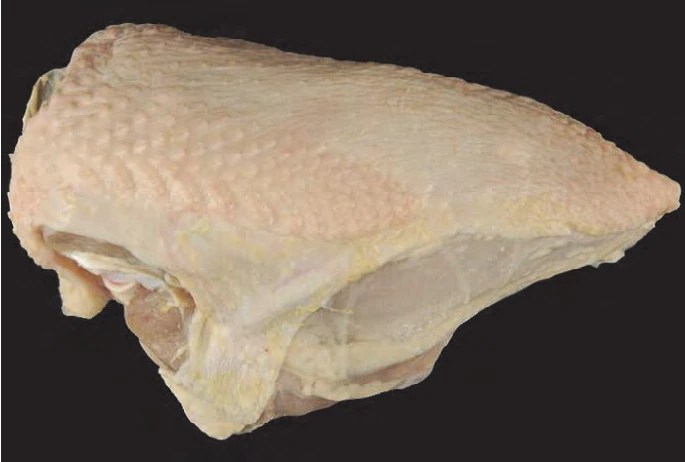
Cut from the back at the shoulder joint. They may be split into halves along the breastbone.

Tenderloins
The small, separate muscle on the underside of each breast.

Legs, thighs, drumsticks
A leg is the thigh plus the drumstick. The drumstick is cut off at the knee joint, and the thigh is disjointed at the hip.


Wings
The whole wing, or its parts: the drummette (upper wing) and the wing portion (the flat, with or without the tip).

Backs and necks
Stock and soup material.
Giblets
Hearts, gizzards, and livers in roughly equal numbers.
Fresh, Hard-Chilled, and Frozen
Remember the bowling-ball chicken? Here’s where that fight ended up. “Fresh” means the meat has never been colder than 26°F, the point where enough of the water turns to ice that the bird goes hard. Chicken held at 0°F or below has to say “frozen” or “previously frozen.” Anything in between, chilled below 26°F but never down to 0°F, is what the trade calls hard-chilled. It can’t be called fresh, it doesn’t have to say frozen, and it doesn’t need any special label at all.
Whole Bird or Parts? Start With Yield

A whole chicken almost always costs less per pound than boneless breasts, but you’re not serving pounds of chicken, you’re serving the meat. A ready-to-cook bird is only about 60 percent meat. The other 40 percent is skin and bone, and the meat that is there is split up between the breasts, legs, and wings. The only yield number that counts is the one YOUR kitchen gets: weigh the birds, break them down, weigh the boneless, skinless breast meat, and divide. Bird size, breed, and how good the cook is with a boning knife all move that number.
Breast yield = weight of boneless, skinless breast meat ÷ weight of whole birds
Cost per usable pound = (whole-bird price per pound ÷ breast yield as a decimal) + fabrication labor per pound of recovered breast meat
Say a 5-pound chicken costs $2 a pound, so $10, and you get 1.5 pounds of boneless, skinless breast off it. That’s a 30 percent yield. Charge the whole bird to those breasts and they cost $6.67 a pound ($2 ÷ 0.30) before anybody picks up a knife. Add the cook’s time, then compare that number to the boneless breast price on this week’s invoice.
That math assumes the rest of the bird is garbage, though, and it shouldn’t be. You’ve still got two legs, two wings, and a carcass for stock. If the menu uses them, they carry part of the cost and the breasts get cheaper. If they go in the trash, the breasts really do carry the whole bill.
Criteria for Accepting or Rejecting a Shipment of Poultry
When the chicken truck backs up to the door, you’re the last line of defense. Whatever you sign for is now your problem, so don’t let the driver rush you. Before anything goes in the walk-in, stick a thermometer in it. Fresh poultry has to be 41°F or lower, and frozen poultry has to be frozen solid. If it isn’t, it goes back on the truck. Then open the cases and use your eyes, your hands, and your nose. Bad chicken is usually pretty easy to spot if you take a sniff and actually look:
| CHARACTERISTIC | ACCEPT | REJECT |
|---|---|---|
| Color | No discolorationACCEPT | Purple or green discoloration around the neck; dark wingtips (red tips are acceptable)REJECT |
| Texture | Firm flesh that springs back when touchedACCEPT | Stickiness under the wings and around the jointsREJECT |
| Odor | No odorACCEPT | Abnormal, unpleasant odorREJECT |
| Packaging | Clean and intactACCEPT | Broken cartons; dirty wrappers; torn packaging; vacuum packaging with broken sealREJECT |
| Frozen items | Frozen solid; no signs of frost, ice, or leakageACCEPT | Any signs of frost, ice, or leakage of the packageREJECT |
If you’re not sure, send it back. Turning away a questionable case costs a phone call, and serving bad chicken can cost a lot more than that.
Once you’ve signed for it, get it put away fast. Fresh chicken must stay at 41°F or lower, and frozen chicken stays frozen. If you open the original packaging, rewrap it airtight or move it to an airtight container. Raw chicken always goes on the bottom shelf, below everything else in the cooler, whole or ground, no exceptions. Raw chicken drips, and you don’t want it dripping on anything else. And rotate your stock: new deliveries go behind the old ones, so the oldest chicken gets used first. That’s FIFO, first in, first out.
Key Terms
Inspection
The required wholesomeness check. It is a different job from quality grading.
Grading
An optional, paid evaluation of poultry quality, shown by grades such as USDA Grade A.
WOG
Without giblets: a whole ready-to-cook bird without the heart, liver, and gizzard packed inside.
Hard-chilled
Poultry chilled below 26°F but never down to 0°F. It cannot be labeled fresh.
Yield
The usable product recovered from what you bought, often expressed as a percentage of the starting weight.
Fabrication labor
The cook’s time and associated cost for turning a whole bird into usable cuts.
Giblets
The heart, liver, and gizzard.
FIFO
First in, first out. Put new deliveries behind older stock so the oldest usable product gets used first.