
When you eat something, your taste buds are only registering 5–7 basic flavor compounds — sweet, salty, sour, bitter, umami, maybe fat, maybe dairy. That’s it. That’s the whole list.
So here’s the question that should be bothering you: if that’s ALL your tongue can detect, why does chocolate taste like chocolate and not just “generically sweet and a little bitter”? Why does a strawberry taste like a strawberry and not just “sweet and a little sour”?
Because most of what you think you’re tasting isn’t taste at all. It’s smell.
Only about 25% of what you perceive as “taste” actually comes from your taste buds. The other 75%? That’s this post. Let’s answer how aroma gets from that piece of chocolate to your brain in such a way that you can “taste” a smell, how many “smells” there actually are, and where they come from — plus two more senses hiding in your mouth that have nothing to do with your tongue at all: temperature and texture.

Delicious Olfaction
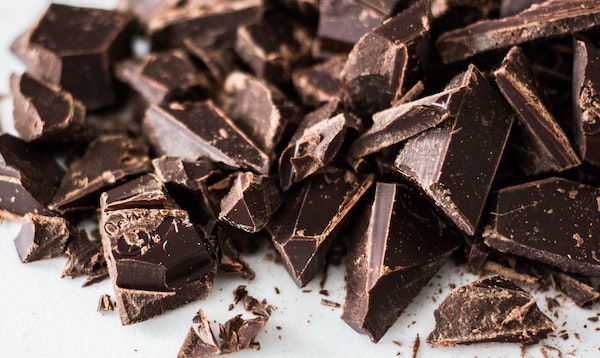
Next time you pick up a piece of solid chocolate to taste it, give the bar a good ol’ sniff. This is called orthonasal olfaction — smelling something with your nose. You won’t get much aromatic information from chocolate this way (as opposed to other foods like hot coffee or a grilled steak). That’s because the volatile flavor compounds in chocolate aren’t terribly active at room temperature. Remember your 6th grade science class? All molecules move when warmed. Volatile flavor compounds need a little heat to get going.

What IS a volatile flavor compound? Simply put, a VFC is a small molecule with a high tendency to evaporate, especially when warmed. Volatiles are naturally produced by plants (flowers, fruits, vegetables, herbs) or animals. The flavors we’re concerned with in cooking are almost ALL produced either by manufacture or by the normal chemical reactions that happen while we’re cooking. Each VFC has a distinct aroma, and flavorists have identified roughly 2,000 of them!
What’s all this mean for chocolate? Bake that chocolate in a cake, put it in some cookies, just warm it up a little… and suddenly the smell of warm chocolate will set your mouth salivating. The volatile flavor compounds got active, and now your nose can sense them.
For “eating chocolate,” like a candy bar, the warmth in your mouth and the physical action of your teeth are enough to spread those flavor molecules around. In other words, the majority of volatile flavor compounds in solid, room-temperature chocolate get released while you’re chewing. Smelling what’s in your mouth is called “retronasal olfaction,” and it is VITAL to how we taste chocolate — and everything else.
Important note: don’t mistake a handful of scientists IDENTIFYING a particular group of volatile flavor compounds with those same scientists UNDERSTANDING how the VFCs interact and combine to create flavor. Scientists have uncovered the basics, sure… but the field is way too new, and as of today, they’ve got no definitive answers on how it all combines.
– Associations of Volatile Compounds with Sensory Aroma and Flavor: The Complex Nature of Flavor
We learned in How Your Brain Interprets Flavor that the only question your taste buds can answer about chocolate is “I’m eating chocolate right now and it’s sweet, sour, bitter, salty, or rich.” While you’re chomping down on that slice of chocolate cheesecake, volatile flavor compounds are released and travel to the odor receptor sites in your nose via retronasal olfaction. Your brain decodes the smell message in the olfactory bulb and passes the information over to the gustatory cortex.

In other words, while you’re chewing, you’re also SMELLING what you’re TASTING. All of that information, put together into one big chunk via the gustatory pathway — ALL of it — is what we call “flavor.”
Big idea: volatile compounds in food are perceived by the odor receptor sites of the “smell” organ in your nasal cavity. They reach those receptors two ways — drawn in through the nose (orthonasal detection) and via the throat after being released by chewing (retronasal detection).

The Little Filiform That Could (Perceive Spice, Temperature, and Texture)
Aroma isn’t the only thing happening outside your taste buds. There’s a whole other category of information your mouth is sending to your brain that has nothing to do with taste OR smell — and it comes from the most numerous papillae on your tongue: filiform papillae.
For a very long time, most people thought the filiform papillae — those thousands of tiny bumps toward the front of your tongue — registered sweet things. Nope. The filiform papillae contain NO taste receptors at all. Instead, they register texture, spice, and temperature, and send that information to the brain for processing along the trigeminal nerve — a completely separate pathway from the gustatory one.
Some people with a superabundance of these receptors can’t tolerate mushy foods (undercooked eggs, rare steak), others can’t tolerate spicy foods, and still others need their food at a very specific temperature to enjoy it. There’s research suggesting filiform papillae may register other information about food too, but the results are inconclusive so far. Stay tuned.
A Word on Texture
Here’s something that’ll mess with your head a little: texture can make identical flavor compounds taste completely different. Take a fry straight out of the fryer — crispy, shattering, perfect. Let it sit for twenty minutes and go soggy. The oil is the same oil. The potato is the same potato. The actual flavor chemicals haven’t changed AT ALL. But you’ll swear that soggy fry “tastes worse,” and you’re not wrong to think so — your brain built an expectation the second it saw “fry,” and texture is what confirms or violates that expectation. Violate it, and the whole dish reads as wrong, even though nothing about its chemistry did.
This is why professional kitchens obsess over texture contrast — crunchy over creamy, crispy over soft. A crouton in soup isn’t there to add flavor. The soup already has plenty. It’s there because your mouth wants variety in what it’s feeling, not just what it’s tasting.
A Word on Spice
For some bizarre reason, “spicy” is not considered a taste, because there are ZERO taste receptors for the chemicals that make food taste spicy. You’ve probably heard of Capsaicin, found in many hot peppers. Here’s three more:
- Allyl isothiocyanate, found in wasabi, mustard, radish
- Piperine, found in white and black peppercorns
- Gingerol, found in ginger
While there aren’t taste receptors for hot sauce, the filiform papillae DO register the sensation as burning. Why do you sweat when you eat hot things? Your brain is LITERALLY trying to put out a fire. If you’re interested in how all THAT is happening, head over to the Hot Sauce post.
A Word on Temperature
Remember earlier in this post, when we said volatile flavor compounds need heat to get moving? That wasn’t just a fact about chocolate — it’s the whole reason temperature matters to flavor in the first place. Temperature isn’t just its own separate sense sitting in the filiform papillae. It’s ALSO the dial controlling how much aroma reaches you at all. A cold dish releases fewer VFCs than a hot one, full stop — which is exactly why cold food generally tastes flatter and less complex than the same dish served warm.
Temperature messes with taste directly too, not just aroma. Cold suppresses perceived sweetness — which is exactly why ice cream needs dramatically more sugar in the base than a dessert served warm. Taste it warm before it’s frozen and it’ll taste cloyingly sweet. Freeze it, and suddenly it’s balanced. Same sugar. Different temperature. Different sweetness, as far as your brain is concerned.
Temperature can also change what a dish IS, not just how it tastes. Vichyssoise and Potage Parmentier are the exact same potato-leek soup — one served cold, one served hot — and they’re treated as two completely different dishes with two different names. Full breakdown of that one, along with the American-vs-German potato salad example that makes the same point even harder to ignore, over in Balancing Flavors.
A Word on Astringency
One more sensation worth knowing, even though it’s not a true taste either: astringent. That dry, puckering feeling from black tea, red wine, or an unripe banana comes from tannins binding to proteins in your saliva, which is what makes your mouth suddenly feel like it’s lost all its moisture. Chefs generally treat astringency as something to soften rather than showcase — fat and sweetness both counteract it, which is exactly why red wine gets paired with fatty steak instead of a salad.
Quick review — the super-short version: everything we eat is, fundamentally, chemicals. Some of those chemicals get registered by our taste buds as sweet, sour, tangy, bitter, or savory. At the same time, texture, spice, and temperature sensors in our mouth are sending completely separate signals that don’t have anything to do with taste — they’re about the physical attributes of what we’re eating. And while THAT is happening, the aroma sensors in our nose are picking out hundreds of flavor compounds the taste buds can’t recognize at all, and sending that information into the brain too. Even the sound your mouth makes while chewing is being relayed to your brain by your inner ear. All of this combines together — not as separate facts, but as one instant assessment. Somewhere in the gustatory cortex, a judgment gets rendered: “how does this taste?”
Highlighting Flavors
In my post on Balancing Flavors, I talk a lot about how THIS flavor affects THAT flavor and how to add more or less to get them to sing the same song (in the same key). When we’re talking about aroma, though, it’s not so much about BALANCING as it is about HIGHLIGHTING.
Think about it. Sweet counteracts and balances heat, sure. But what counteracts and balances “grass”? Or “caramel”? Or “tea”? Nothing — that’s what. You can’t balance those flavor profiles. You can only highlight them or diminish them through the process of preparation. Want to bring out the dark, smoky, fresh cherry notes in a dish while diminishing the earthy, muddy ones? That’s not a balancing act — it’s a highlighting act.
How do you do that? Same way you’d highlight or diminish any flavor while cooking. Trial and error, baby.
Terms You Should Know From This Post
| Term | What It Means |
|---|---|
| Orthonasal olfaction | Smelling something through your nose from the outside — the ordinary act of sniffing. |
| Retronasal olfaction | Smelling something from inside your mouth while you chew, as aroma compounds travel up the back of your throat into your nasal cavity. This is where most of what you call “taste” actually comes from. |
| Volatile flavor compound (VFC) | A small molecule with a high tendency to evaporate, especially when warmed — the actual physical thing your nose is detecting when you smell food. Roughly 2,000 have been identified so far. |
| Olfactory bulb | The part of your brain that first receives and decodes smell signals, before that information gets passed along to the rest of the brain for further processing. |
| Filiform papillae | The most numerous papillae on your tongue. Contain zero taste receptors — instead, they register texture, spice, and temperature. |
| Trigeminal nerve | The nerve pathway that carries texture, spice, and temperature information to your brain. |
| Gustatory pathway | The separate nerve pathway that carries actual taste information (sweet, salty, sour, bitter, umami) to your brain. Covered in full in How Your Brain Interprets Flavor — the trigeminal nerve above is a completely different route than this one. |
| Capsaicin | The chemical compound in hot peppers responsible for the “spicy” burning sensation. Not a taste — there are no taste receptors for it. |
| Allyl isothiocyanate | The chemical compound responsible for the “spicy” burn in wasabi, mustard, and radish. Same burning mechanism as capsaicin, different source. |
| Piperine | The chemical compound responsible for the “spicy” bite in white and black peppercorns. |
| Gingerol | The chemical compound responsible for the “spicy” warmth in ginger. |