
Pests Are Not Just Gross
When I was growing up, I had two younger brothers and a younger sister. At thirteen, I considered all three of them pests and would have been perfectly happy to eliminate them from my environment.
That is the problem with the word pest. In normal English, it can mean something annoying. In a restaurant, that is nowhere near strong enough.
Restaurant pests destroy food, contaminate linens, chew wiring, turn disposable supplies into homes, and move into walls, storage areas, furniture, and equipment. A mouse can travel through garbage, drains, floors, and other contaminated areas, then leave urine or droppings near food or food-contact surfaces. Rodents can carry pathogens, including Salmonella. Cockroaches travel through drains, grease, garbage, sewers, bathrooms, equipment cracks, and decaying material, then move across food and food-contact surfaces. And if somebody gets the wrong photo at the wrong moment and posts it online, the damage can go way beyond the food.
So no, we are not trying to keep bugs and rodents out because they are icky. We are protecting food, protecting the building, and controlling contamination risk.
A few years ago, I took my students to Baltimore for nationals. One night, we were eating late at a restaurant built right over the waterfront. We were one of the last tables in the dining room, and the staff was already starting to close around us when one of my students pointed toward the banquettes about ten feet away.
A small mouse was scampering across the top.
“Ew!” my kids said in chorus. “That’s so nasssssty!”
I rolled my eyes at the teenage angst and wild over-reaction.
“This restaurant is literally built on a pier over the water. The people who built this restaurant put it in their territory. Restaurants are not hermetically sealed. They are not laboratory bubbles.”
That does not mean the restaurant gets a pass. It means pest control starts with understanding the environment you are operating in.
I have worked in restaurants along the Intracoastal in Fort Lauderdale and in Orlando beside parks, with wide-open patios surrounded by landscaping. Every one of them had to deal with pest pressure because restaurants are almost perfect little pest resorts: warm, moist, full of food, water, crumbs, grease, cardboard, drains, dark spaces, deliveries, garbage, and doors opening all day long.
To a pest, we might as well hang up a neon sign:
FOOD. WATER. SHELTER. COME ON IN.
That is the game. Bugs and rodents are going to try to get in. Our job is to make that difficult, make staying even harder, and catch the evidence before a visitor turns into a resident.
That is what this lesson is about: constant vigilance, a mitigation mindset, and an operation that gives pests as little reason as possible to stay.

Quick Recall
Remember cross-contamination: pathogens moving from something contaminated onto food or a food-contact surface.
Pests are very good at it. A cockroach or a mouse does not wash its feet between the drain, the dumpster, and your prep table.
Five Terms Before We Start
There are five terms you’re going to see a lot in this lesson, so we’re going to do a fast introduction before we go any further. You do not need to master every detail yet. I just want you to recognize the language when it starts showing up: IPM, PCO, certified applicator, infestation, and pesticide
Integrated Pest Management (IPM) is the overall system a restaurant uses to prevent and control pest problems. When you see IPM, think: the whole pest-management program — keeping pests out, making the operation a terrible place for them to live, and controlling the problem when prevention is not enough.
A pest control operator (PCO) is the licensed pest-management professional or company an operation works with to inspect, monitor, prevent, and control pest problems. We’re going to call them the PCO from here on out.
At my house, Massey Pest Control is my PCO. They send out a representative once a month. Mr. Massey — the president and CEO — doesn’t come to my house to spray chemicals. That would be Henry.
In ServSafe language, Henry is a certified applicator: the person qualified to apply pesticides. Sometimes a restaurant’s PCO and certified applicator are the same person, and sometimes they’re not. The important thing is that the terms do not mean exactly the same thing.
An infestation means pests have established themselves in the operation in large numbers. Think tourist vs. resident: one cockroach might have hitchhiked in on a delivery, and one mouse might have wandered through an open door. An infestation means they have moved in and made themselves at home.
A pesticide is a chemical used to control or destroy pests. Pesticides matter, and we’ll talk about them later, but don’t make the mistake of thinking pest management = spraying chemicals. Pesticides are only one piece of a much bigger system.
That’s enough vocabulary to get us moving. Now we can use IPM, PCO, certified applicator, infestation, and pesticide without stopping every few paragraphs to translate them.
The Three-Part Strategy
Now that the vocabulary is out of the way, the actual IPM system is pretty simple. It comes down to three jobs that have to work together:
- Deny access.
- Deny food, water, and shelter.
- Work with a licensed PCO.
The first two are mostly about the environment. Keep pests from getting in, then make the place as unrewarding and uncomfortable as possible if they do. The third is about knowing when the problem has moved beyond ordinary prevention and needs professional control.
Notice what is not first: pesticides. Pest management does not begin with a spray can. By the time you’re treating pests chemically, prevention has already missed something.
That is the whole structure for the rest of the lesson.
Rule 1: Deny Access
Pests get into a restaurant in two basic ways: they find an opening, or we carry them in with something else. So the first job controls both the building and what comes through the door.
Deliveries
Deliveries are one of the easiest ways to accidentally bring pests inside. Boxes, bags, produce cases, and other packaging can carry insects or signs that insects have been there.
Use approved, reputable suppliers. Inspect deliveries before they disappear into storage, and refuse shipments that show pests or signs of pest activity. We’ll get very specific later about what those signs actually look like.
The Building Itself
Start with screens. A screen is basically a sheet of fine mesh with tiny openings that let air through while making it harder for insects to get through. ServSafe’s recognition standard is 16 mesh to 1 inch. Think window screen, not chicken wire.
Exterior doors also need protection. A door sweep is the flexible strip attached along the bottom edge of a door. If you can see daylight under the door, a pest sees an entrance. Think of it like a rubber windshield-wiper blade sealing the gap. A self-closing door is exactly what it sounds like: a hinge or mechanism pulls the door shut after someone goes through. That matters because a back door propped open for a delivery is not a small gap anymore. It is a giant opening.
Then there is the air curtain. My grocery store has one of these: a super-powered blower mounted over the sliding glass exterior door. When the door slides open, it pushes a strong sheet of air straight down, messes up my hair, and makes it a whole lot harder for little flying buggers to get inside. ServSafe also calls these air doors or fly fans.
Pipes, cables, and utility lines create another problem. If somebody runs a one-inch pipe through a two-inch hole in the wall and leaves the rest of the hole open, you may see “just a gap.” A pest sees a doorway. Seal those penetrations with durable material.
The same thing happens in places you probably never look at. Ventilation pipes and ducts on the roof need screens so they do not become entrances from above. Floor drains need hinged grates — the metal covers over the drain openings — so water can still flow while pests have a harder time getting through. And here’s the slightly disturbing part: that grate isn’t there to keep pests from going down the drain. It’s there to help keep them from coming up. Cracks in floors and walls matter for the same reason. A gap that looks like “just a cosmetic problem” can be shelter or a travel route to something much smaller.
The memory trick is simple: Screen the holes. Sweep the gap. Blow the doors. Seal the cracks.
BE CAREFUL: A propped-open exterior door “just for five minutes” doesn’t know it’s only five minutes. Neither does a fly.

Rule 2: Deny Food, Water, and Shelter
Getting inside is only step one. For pests to stay, they need the same basic things we do: something to eat, something to drink, and somewhere protected to live. So if something gets through the door despite everything we just talked about, the restaurant should be as unrewarding and uncomfortable as possible. That means taking away three things: food, water, and shelter.
FOOD: Don’t Feed Them
This starts with the obvious stuff: clean up food and beverage spills, crumbs, grease, and scraps immediately. Stick to the master cleaning schedule instead of waiting until something looks dirty enough to bother with, and use FIFO so old product doesn’t sit forgotten in the back of storage long enough to become dinner — or a home — for something else.
Food and supplies need to be stored correctly, away from walls and at least six inches off the floor. That spacing is not just there because ServSafe likes measuring things. Roaches climb. Rodents hug walls. If cases are sitting directly on the floor or shelving is jammed tight against the wall, you’ve created a dark little highway where crumbs, droppings, egg cases, and actual pests can sit out of sight.
Six inches up gives the mop, broom, flashlight, and your eyeballs somewhere to go. Keeping storage a few inches away from the wall means you can actually see and clean what’s happening back there. If you can’t get a broom, a flashlight, or your eyeballs into the space, your pest-control program can’t do much there either.
WATER: Don’t Give Them a Drinking Fountain
Pests need water — just like humans. Unlike us, they don’t need much of it. A dripping pipe, condensation under a refrigerator, or a bucket left overnight? Those things are like an oasis in the desert to a pest. Fix leaks instead of living with them. Empty standing water, and keep drains and other wet areas clean and maintained. A mouse does not need a water bowl, and a cockroach does not need a swimming pool. A slow drip can be enough.
SHELTER: Don’t Give Them Somewhere to Move In
Dark, quiet, undisturbed spaces are valuable real estate to pests. Clutter, damaged packaging, unused equipment, cracks, and forgotten storage give them places to hide while everybody else is working. And then there’s cardboard. Corrugated cardboard gives cockroaches dark channels to hide in, and they can feed on the paper and glue. Rats and mice will chew straight through it to get to whatever smells good inside, then happily use the shredded cardboard as nesting material. In other words, a stack of old boxes can become food, shelter, and construction material all at once.
That’s why broken-down cardboard sitting around the back room is basically sticks of pest dynamite. Break it down, yes — but then get it out. We’re trying to eliminate places where something can eat, hide, breed, and multiply. Unnoticed.
Garbage Gives Them Almost Everything
Garbage deserves its own conversation because it can give pests food, moisture, odor, and shelter all at once. And odor matters. To us, it smells like trash. To a pest, it’s basically a blinking neon sign that says, “Come on in — plenty of space!” That’s why ServSafe gets so specific about how garbage has to be handled.
Inside the operation, remove garbage promptly and be careful while doing it. A garbage bag does not belong on a prep table — obviously. Never allow the chore of taking out the trash to become the thing that contaminates your worktable or the food you’re prepping.
And we need to get honest about the trash cans themselves: they have to be leakproof, nonabsorbent, resistant to insects and rodents, and easy to clean. ’Cause you’re going to need to wash these things. Frequently. And if your kitchen only uses a trash receptacle every now and then instead of ALL THE TIME, keep it covered.
Here’s one of those ServSafe details that feels oddly specific until it appears on an exam: women’s restrooms must have a covered receptacle for sanitary napkins. Don’t let the mental image of pests crawling into that space enter your brain or you won’t be sleeping tonight.
Here’s another weird one: you know how to treat general trash — what Starbucks calls Landfill Waste. What you may not know is that recyclables have to be treated the same way. Just because the cans and bottles and papers are going to be recycled does not entitle them to non-trash status. They still have to be stored away from food and food-contact surfaces and handled so they do not create a nuisance or public-health hazard.
Back Dock Manners
Wherever you store your trash, it cannot become a nuisance or a public-health hazard. In normal-person language: the area behind your restaurant — you know, the back dock? It can’t turn into a leaking, stinking, pest-filled disaster that everybody pinches their nose, holds their breath, and rushes past because “that’s just where the dumpsters are.” Let’s get specific. Garbage dumpsters and containers belong on a smooth, durable, nonabsorbent surface — not gravel, sand, or dirt. ServSafe gives asphalt and concrete as examples. The dumpster has to have tight-fitting lids, and they need to stay covered.
And here’s something you might not know about: dumpsters have drain plugs — little screw-in numbers near the bottom that help keep whatever liquid is inside from leaking all over the dumpster pad and the walkway leading to your restaurant’s employee door. Those drain plugs have to stay in place. You do NOT want garbage juice draining onto the pavement and turning the dumpster pad into a feeding and watering station for that Disney mouse who likes to cook. What’s his name? Ratatatty?
Here’s a very practical problem with an easy fix: if your dumpster is regularly overfilled, the lid will not close, bags start piling up around it, and pests suddenly have easy access to everything you were trying to contain… you’ve got a simple solution: increase the frequency of garbage pickup. Don’t overthink this one: We make a lot of trash. We need a bigger dumpster or more frequent pickups. This scenario is likely to show up on a food-safety exam. ServSafe specifically notes managers may need to increase pickup frequency to prevent contamination/pests and check local regulatory authority requirements.

Recognizing the Signs
Pests are sneaky. Most of the time, you do not catch them standing in the middle of the kitchen waiting to be identified.
You catch the evidence they leave behind.
A good manager learns to read that evidence the same way a cook reads a dirty cutting board, a broken refrigerator gasket, or a thermometer that suddenly starts giving suspicious numbers. Something is telling you there is a problem before the problem introduces itself.
Cockroaches
Cockroaches like dark, warm, moist, protected places.
Think behind coolers and stoves, around drains and plumbing, near motors and electrical components, under mats and shelf liners, inside cracks and seams, and in delivery bags and corrugated cardboard.
You may notice:
- a strong oily or musty odor
- droppings that can look like grains of black pepper
- capsule-shaped egg cases, usually brown to dark in color
You may never see the roach itself. But if you move a piece of equipment and find pepper-looking droppings, an egg case, or that distinctive odor, the kitchen is telling you something.
Rodents
Rats and mice leave a different kind of evidence.
Look for:
- gnaw marks
- urine stains, which may be easier to see under ultraviolet light
- droppings that are shiny and black when fresh and become gray as they age
- tracks
- greasy rub marks along walls or travel paths
- nesting material such as shredded paper, cloth, hair, or other soft material
- holes in quiet areas, especially near food, water, walls, and the outside of the building
Rodents like to run the same protected routes over and over, especially along walls. After enough trips, the oils and dirt in their fur can leave dark, greasy streaks where their bodies keep brushing the same surface. Also… and obviously…. rodents are chewers. If a bag, box, piece of wood, or wall suddenly looks like something has been working on it with a tiny set of teeth… something probably has.
Flies
Flies are less about memorizing a species list and more about recognizing the pattern.
Repeated adult flies around garbage, drains, or wet food debris — or larvae in decaying material — tell you there is a feeding or breeding source nearby that needs attention.

One Pest Doesn’t Automatically Mean an Infestation
Seeing one cockroach or one mouse matters. It is evidence, and it deserves a response. What it does not automatically prove is that you have an infestation.
Remember the vocabulary: an infestation means pests have established themselves in the operation in large numbers. Think tourist vs. resident. A cockroach can hitchhike in on a delivery. A mouse can wander through an open door. That is the tourist possibility.
But if you start finding droppings in multiple places, egg cases, greasy rub marks, nesting material, repeated sightings, or other signs that keep showing up over time, now you are looking at something very different. Those are signs that pests may have moved in and made themselves at home. There is no magic number of roaches that suddenly turns a sighting into an infestation.
One live roach matters. One dead roach matters. Droppings matter. Egg cases matter. And if you find a roach that has obviously been partially eaten, that may mean something else was there feeding on it. None of those clues, by itself, gives you a reliable head count. You’re looking for a pattern of evidence.
The mistake works both ways. Do not see one pest and instantly declare the building infested. But do not shrug and say, “It was only one,” either. One sighting means investigate. Repeated evidence means start thinking resident, not tourist.
And if you pull out a reach-in refrigerator and it looks like Night of the Living Dead — thousands scattering in all directions while you hop on a stool and scream like a Girl Scout whose cookies have been stolen — call your PCO.
Rule 3: Work With a Licensed Pest Control Operator
At some point, pest control stops being a mop-and-broom problem. You can clean, seal, inspect, rotate stock, fix leaks, manage garbage, and make the operation miserable for pests. But when the evidence shows that you are dealing with an actual pest problem, the manager’s job is not to start playing exterminator.
Why? Because chefs make lousy pest-control people.
We panic. We overspray. We use too much of the wrong chemical. Sometimes we grab something that was never meant to be used around food in the first place. And we do all of it because we’re trying to save a few bucks and because, somewhere deep down, we have this completely unearned belief that we know what we’re doing.
We don’t. Call a professional. Do not go to Home Depot, load up on bug spray and traps, and decide you’re going to “handle it yourself.”
Your PCO is there to inspect the operation, figure out what kind of activity you have, identify where pests may be entering or living, recommend corrections, monitor the problem, and decide what control measures are appropriate.
A single sighting still deserves an operational response and a look for additional evidence. It does not automatically mean you have an infestation, and it does not automatically mean you need to call the PCO out for a special visit. If you find a pattern or evidence of an actual pest problem, that is when the PCO becomes part of the active response. If an isolated sighting produces no additional evidence, document it, keep watching, and mention it at the next routine service.
Those professional control measures may include glue boards or snap traps, and the PCO determines where those devices should be placed.
Pesticides: Know Your Lane
Pesticides are designed to kill things. That should probably be enough of a reason not to start spraying them around a kitchen because you saw a cockroach.
Used correctly, pesticides are an important pest-control tool. Used incorrectly — the wrong chemical, too much of it, sprayed in the wrong place, or used around exposed food and equipment — they can create an entirely new food-safety problem while you’re trying to solve the first one.
That’s why ServSafe draws a hard line here: pesticides should only be applied by a certified applicator.
And remember the distinction we made earlier: your PCO manages the pest problem. The certified applicator is the person qualified to apply the pesticide. Sometimes that may be the same person. Sometimes it is not.
Either way, this is not the moment to improvise.
Bug Night
If you have worked in restaurants for a while, you probably know bug night.
The first time I went through one, I remember thinking the whole thing was a little insane. At one restaurant, a few times a year everybody stayed a couple of hours after closing, then had to come back a couple of hours early the next morning.
And I mean clean. Deep, deeeeeeeep clean.
Equipment got moved. Food got put away or protected. Plates, utensils, and smallwares got wrapped up or moved out of the kitchen. We cleaned underneath things that had probably not seen daylight since the restaurant opened.
Then everybody left.
The pest-control guys came in and went to work.
The first time you see this, it feels backwards. We just spent hours making the kitchen cleaner than it has been in months — and now we are leaving so somebody can come in with pesticides?
But that is exactly the point.
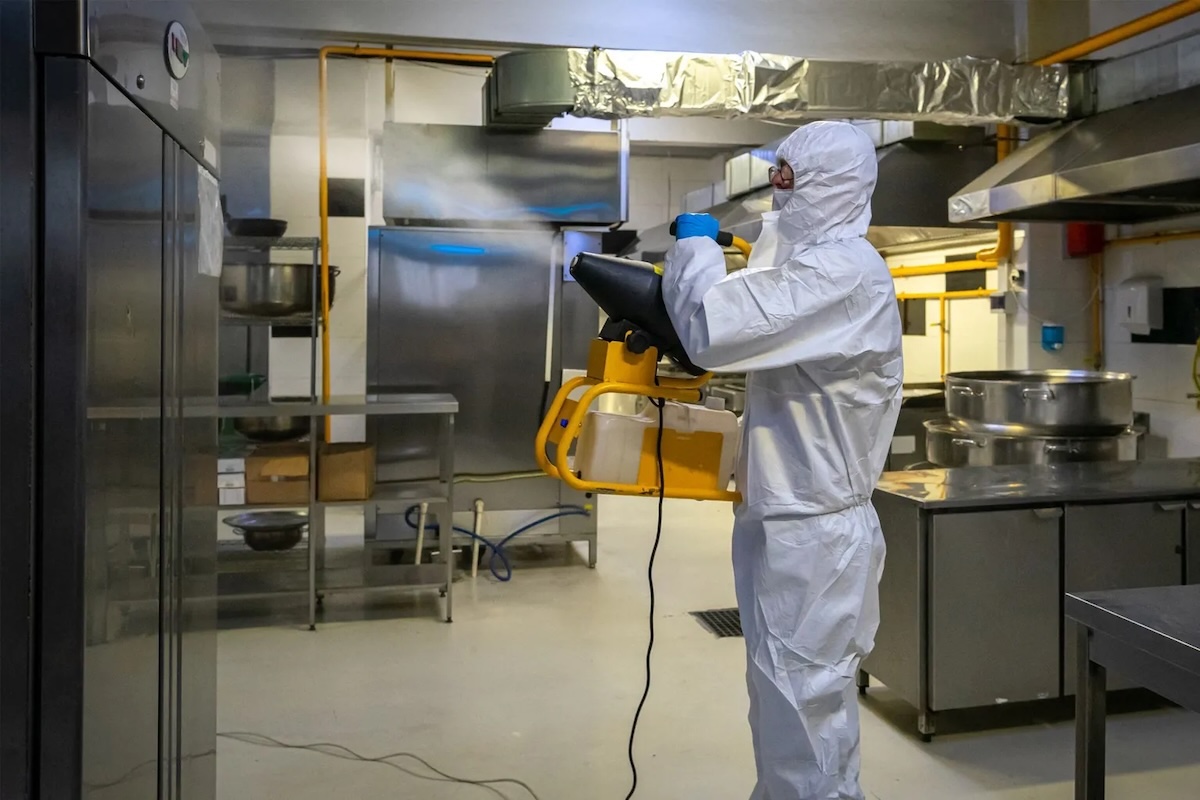
Pesticides are chemicals designed to kill pests. We do not want those chemicals getting onto food or food-contact surfaces. Before treatment, food has to be removed or protected, and food-contact items and surfaces have to be protected from exposure. Afterward, anything that may have been exposed has to be handled properly before the kitchen goes back into service.
That is why bug night looks so strange. The cleaning, wrapping, moving, and early-morning reset are not theater. They are what lets the PCO treat the operation without creating a new food-safety problem while solving the pest problem.

And pesticides do not become harmless just because nobody is actively spraying them. Keep them in their original containers and store them securely, away from food, utensils, and equipment. The SDS — Safety Data Sheet — needs to be available so the people responsible for the chemical know exactly what they are dealing with.
Before a pesticide is applied, remove or cover food and food-contact surfaces so the treatment does not contaminate them. After the application, any affected food-contact surfaces need to be washed, rinsed, and sanitized before they go back into service.
Call the professional. Let them decide what needs to be used, where it needs to be used, and how it needs to be applied safely.
Animals on the Premises
Before we close out the section, shift your mental perspective a bit. We need to talk about much friendlier living creatures — the kind we actually like and enjoy having around: service animals.
Restaurant people can get a little twitchy about animals in the building. We spend our careers keeping dogs, cats, birds, rodents, insects, and assorted wildlife away from food, and then somebody walks through the front door with Goldie, their seeing-eye dog.

Goldie is different.
She is not somebody’s pet who happened to come along for lunch. She is working. She is there because the person she is with relies on her for assistance.
That does not mean Goldie gets to escort her owner on a tour of the line to “get a feel for what it’s like back there.” Goldie doesn’t get to lick the bacon grease off your sous chef’s fingers.
Service animals stay in the customer-accessible parts of the operation, not in food-preparation, storage, or warewashing areas.
Outside of those restricted areas, though, a service animal is there to do its job. Treat it like what it is: part of the assistance that customer relies on.
And then there are patio dogs. Different issue.
Some jurisdictions allow Spot the Wonder Poodle to sit beside his owner while he chugs a beer in an outdoor dining area; some do not.
That one is simple: check with your local regulatory authority.
And just because your local rules allow pet dogs on the patio does not mean your restaurant has to invite them. If you don’t want pet dogs in your outdoor dining area, you don’t have to allow them.
Bring It Together
Pest management is not about pretending bugs and rodents are never going to try to get into a restaurant.
They will. The job is to make their lives difficult.
- Keep them out. Screen openings, close gaps, protect doors, inspect deliveries, and maintain the building so pests do not get easy access.
- Make them hate living there. Take away food, water, shelter, clutter, cardboard, standing water, and garbage conditions that make the operation comfortable.
- Pay attention to the evidence. Droppings, egg cases, gnaw marks, rub marks, odors, nesting material, and repeated sightings are all clues. One pest means investigate. A pattern of evidence starts looking a lot more like resident than tourist.
And when the problem moves beyond prevention, call your PCO. Chefs make lousy exterminators. Let the pest-control professional handle pest control, and let certified applicators handle pesticides.
The memory hooks are simple:
Screen the holes. Sweep the gap. Blow the doors. Seal the cracks.
No food. No water. No comfortable place to hide. Make them hate the neighborhood.
Tourist or resident? Look for the pattern.
And if the reach-in turns into Night of the Living Dead… call your PCO.
Closing Side Work

CHEF’S EXPLANATION
The cook’s idea about throwing away everything on the line might sound reasonable. It’s not. It’s stupid. The roach ran across the floor. Nothing in this scenario says it touched exposed food, utensils, equipment, or a food-contact surface. Being four feet away from a cockroach does not contaminate dinner. The sous got that part right.
He got the receiving decision wrong. A live cockroach came out of that case during receiving. The inner bags may look perfectly fine, but that does not erase the fact that the shipment showed pest activity. This is exactly why we inspect deliveries before they disappear into storage. Reject the affected case. Tell the driver and the supplier, but do not throw away the cardboard and keep the pasta just because you need it for dinner.
Then there is the roach that got away. Maybe it really did hitchhike in on the delivery. Maybe it was already in the building and happened to appear while the case was being handled. One roach does not automatically mean you have an infestation, and it does not automatically mean you call the PCO. But “we have kill juice around the perimeter” is not a reason to pretend the sighting never happened either.
Inspect the receiving and nearby storage areas for additional signs of pest activity. Look for droppings, egg cases, repeated sightings, or other evidence that helps tell you whether this was a tourist or whether something has moved into the neighborhood. If the evidence starts showing you an actual pest problem or pattern, then the operation’s pest-management plan — and the PCO — comes into play. If you don’t see additional signs of pests, it would still be smart to mention it to your PCO the next time they come to service the facility. Let them know what happened, but don’t have them make a special trip because you spotted Vinnie, the Wonder Roach.
That is the real decision here. You may have a bad delivery. You may have pest activity already inside the operation. You may have both. You do not have enough evidence yet to know, but you do have enough evidence to act: reject the delivery, don’t invent an infestation that didn’t happen. On the other hand: don’t ignore the escaped pest, and do look for evidence of a problem.
TL;DR — The Least You Need to Know
If all you remember from this lesson is the stuff most likely to save you on the line — or on a food-safety exam — remember this:
- Use Integrated Pest Management (IPM): deny access, deny food/water/shelter, and work with a licensed PCO.
- Inspect deliveries and reject shipments with pests or signs of pest activity.
- Protect exterior openings with screens, self-closing doors, door sweeps, air curtains, sealed penetrations, screened roof vents/ducts, hinged floor-drain grates, and repaired cracks.
- ServSafe’s screen-recognition standard is 16 mesh to 1 inch.
- Store food and supplies at least six inches off the floor and away from walls.
- Eliminate food debris, spills, standing water, leaks, clutter, and cardboard.
- Indoor garbage containers must be appropriate for the job and covered when not in constant use.
- Women’s restrooms must have a covered receptacle for sanitary napkins.
- Keep waste and recyclables away from food and food-contact surfaces.
- Outdoor garbage containers belong on a smooth, durable, nonabsorbent surface, need tight-fitting lids, and need their drain plugs in place.
- If garbage routinely overfills the dumpster, increase pickup frequency and check local requirements.
- Learn the evidence: cockroach droppings and egg cases; rodent gnawing, droppings, urine stains, tracks, nesting material, holes, and greasy rub marks.
- One pest is evidence, not automatically an infestation. Look for a pattern.
- A single sighting means investigate and look for a pattern. If evidence shows an actual pest problem, bring in the PCO; an isolated sighting with no additional evidence does not automatically require a special service call.
- Glue boards and snap traps may be used; the PCO determines placement.
- Pesticides should only be applied by a certified applicator. Keep them in original containers, store them securely away from food/utensils/equipment, keep the SDS available, remove or cover food and food-contact surfaces before application, and wash/rinse/sanitize affected food-contact surfaces afterward.
- Service animals stay in customer-accessible areas, not food-preparation, storage, or warewashing areas.
- Patio-dog rules depend on the local regulatory authority.
Terms From This Lesson
Air curtain / air door / fly fan — A strong stream of air used across an exterior doorway to make it harder for flying insects to enter.
Certified applicator — A person qualified to apply pesticides.
Cross-contamination — The transfer of pathogens from a contaminated source to food or a food-contact surface.
Door sweep — A flexible strip along the bottom of a door that closes the gap between the door and the floor or threshold.
Drain plug — A removable plug in an outdoor garbage container or dumpster that helps keep liquid waste from leaking out.
Greasy rub marks — Dark, oily streaks left where rodents repeatedly travel along walls or other protected routes.
Hinged grate — A metal cover over a floor drain that still allows drainage while helping block pest entry from below.
Infestation — A condition in which pests have established themselves in an operation in large numbers.
Integrated Pest Management (IPM) — A pest-management system that combines prevention, environmental control, monitoring, and professional control measures.
Pest control operator (PCO) — The licensed pest-management professional or company that inspects, monitors, prevents, and controls pest problems.
Pesticide — A chemical used to control or destroy pests.
Service animal — An animal trained to perform work or tasks for a person who relies on that assistance.
16 mesh to 1 inch — ServSafe’s recognition standard for screening used to help block pest entry.