
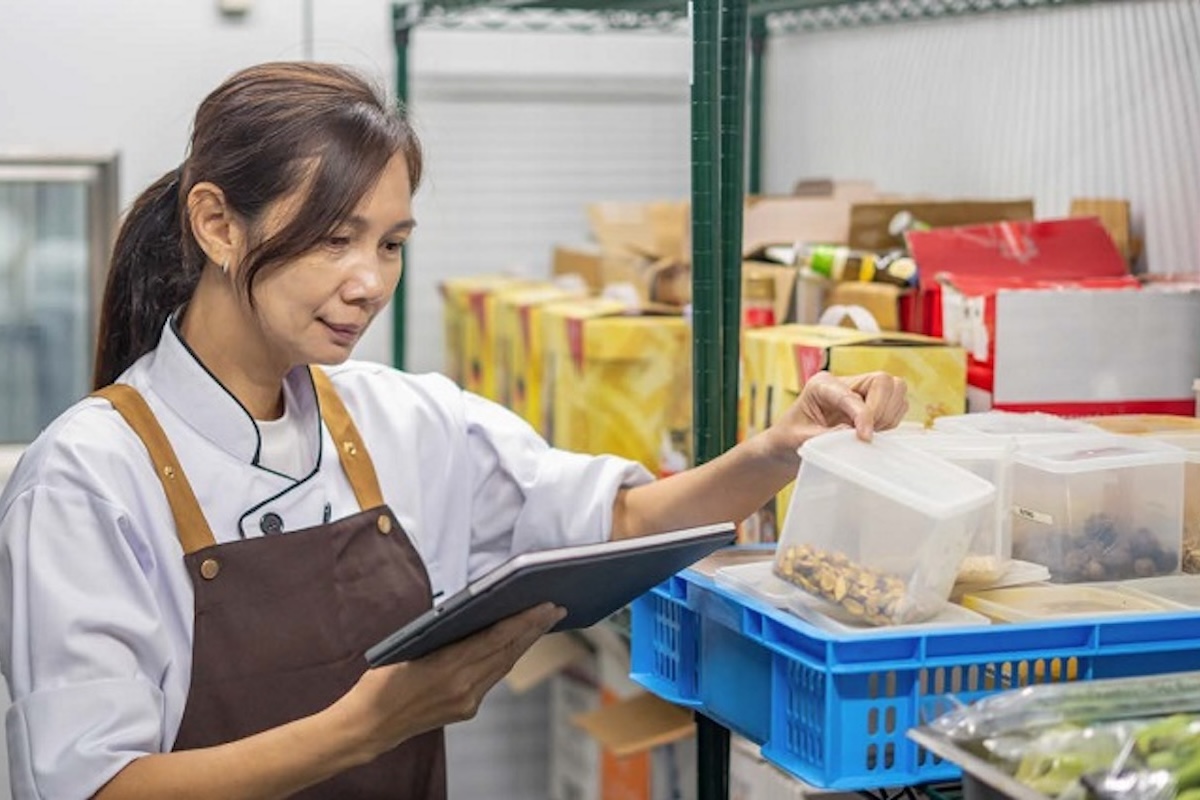

The strawberries arrived frozen. The cases were intact. They came from an approved supplier, passed receiving, and went into storage.
Three days later, the vendor contacts you.
Those strawberries have been recalled.
Nothing was necessarily missed at receiving. The problem was discovered after the product had already shipped, and your operation has information now that it didn’t have when the delivery arrived.
So now what?
What a Recall Actually Is
A recall is a request to remove a specific food product from use because it may be unsafe, contaminated, mislabeled, or otherwise not safe to sell or serve.
The problem may not be discovered until after thousands of cases have already left the manufacturer and been shipped to restaurants, grocery stores, schools, hospitals, and other operations.
A recall might happen because:
- Testing finds a pathogen such as Salmonella or Listeria.
- A product contains an allergen that wasn’t declared on the label.
- Metal, plastic, glass, or another foreign material may have gotten into the food.
- A packaging or labeling problem could make the product unsafe.
- An illness investigation points investigators toward a particular food.
- A manufacturer discovers that something went wrong during production.
By the time anyone discovers the problem, the food may already be scattered across hundreds or thousands of kitchens. That’s why recalls exist: once a problem is discovered, the affected food has to be found and taken out of use.
You may hear about a recall from your vendor or distributor, your company’s internal alert system, an industry source, the news, or an FDA or USDA announcement. However you hear about it, the next question is the same: is the product in your operation part of the recall?
Is It Actually YOUR Product?
Suppose you hear that IQF frozen strawberries have been recalled. That does not automatically mean every case of frozen strawberries in every kitchen is affected. In the world. Let’s not go crazy quite yet.
A recall notice identifies the specific product involved. Depending on the recall, that information may include:
- Brand and product name
- Package or container size
- Lot number
- Product or production code
- Production date
- Use-by or other identifying date
A lot number identifies a particular production batch. It helps separate the product involved in the recall from similar products that aren’t affected.
That’s why the question is never, “Do we use IQF frozen strawberries?” It’s: “Are the IQF strawberries in our freezer the same brand, package size, and lot number as the recalled product?”
Compare the recall information against the product on your shelves. If the identifying information matches, you’ve got affected product. Now you have to do something about it.

BE CAREFUL: Stay Aware, Then Verify
Your vendor, distributor, or sales representative should be a major part of your recall communication system. They’re connected to what your operation actually purchased and should notify you when products they sold you are affected.
But managers also need to stay reasonably aware of recall news. You may hear about a recall through an industry newsletter, trade publication, news report, company communication, or FDA or USDA announcement before you’ve heard directly from your vendor.
If that happens, don’t ignore it because nobody called me, and don’t try to guess whether your product is affected based on a headline.
Start with the identifying information you’ve already learned to check — brand, package size, lot or production code, and relevant dates. If you heard about the recall somewhere else and your vendor hasn’t contacted you, call your vendor or sales representative too. Tell them what you’ve heard, identify the product you purchased, and confirm whether what they sold you is affected and what you need to do next.
The rule is simple: Stay aware. Verify the product. Then act.
The Safety Decision and the Recovery Problem Are Two Different Things
Pulling recalled food solves the immediate food-safety problem. It may also create an operational mess.
Imagine the recalled strawberries aren’t just sitting unopened in the freezer. They’re the berries you use for a sauce on tonight’s dessert, and you’ve already started production. Now the affected product has to come out, along with anything made from it. If you can’t determine whether a prepared food contains the recalled product, you don’t get to assume it doesn’t.
Somebody asks the question every chef knows is coming:
“Okay. What are we using instead?”
That’s a legitimate problem. It’s just a different problem.

Maybe your regular distributor has unaffected product and can send it over. Maybe everything in the warehouse came from the affected lot, and now you’re calling another one of your vendors. And maybe, just maybe, nobody can deliver what you need by the time you need it, and somebody (probably YOU) is making an emergency run to Publix with a shopping cart and a very bad attitude.
Sometimes there simply isn’t a safe replacement available in time. Change the menu. 86 an item or two, redo prep, and tell the front of the house what’s unavailable. Some guests may be disappointed, and service may be rough.
Who are we kidding? Service is GOING to be rough.
Those are the regular, everyday operational problems we live for, the reason we get to wear the fancy coat, and why people think we’re mad all the time. This is what a life running the back of the house looks like.
What we can’t do? Use recalled food. It isn’t EVER one of the solutions.
That’s the distinction to remember: whether you use the recalled product is a food-safety decision, and that decision is already made. How you recover from losing it is the operational problem you solve next.
BUT WHAT IF the Food Was Already Served?
Sometimes a recall arrives after some of the affected product has already been served. At that point, you’re dealing with more than an inventory problem. You don’t have a lot of options on this one, just headaches. Document what you know, notify the appropriate people in your operation, follow the recall instructions, and follow your operation’s foodborne-illness and outbreak-response procedures. Don’t try to guess your way through it.
Closing Side Work

First off… here’s what you DON’T do: you don’t automatically dump the sauce just because recalled strawberries are in the building, and you don’t automatically serve it because somebody is almost positive they used the other brand. First, you verify.
Find the packaging or other identifying information and determine which strawberries actually went into the sauce. If you can verify that unaffected product was used, the sauce isn’t part of the recall. If you determine that the recalled product was used, the sauce goes down the drain.
If you can’t establish which product was used, you can’t establish that the sauce is unaffected. It stays out of service. It’s garbage.
Then you solve the second problem. Find replacement strawberries from an approved source, change the dessert, redo the prep, or start making phone calls.
The recall settles what you can safely use. Everything after that is management.
TLDR: The Least You Need to Know
- A recall removes a specific product from use because information has been discovered showing that it may be unsafe, contaminated, mislabeled, or otherwise unsafe to serve.
- Don’t assume every similar product is affected. Match the recall information against the actual brand, package information, lot number, codes, and dates in your operation.
- For recalled food, remember: IDENTIFY → REMOVE → SEPARATE → LABEL → INFORM → FOLLOW INSTRUCTIONS. If you’ve already made food with the recalled ingredient, that prepared food comes out of service too.
- Mark recalled product DO NOT USE / DO NOT DISCARD and follow the instructions for return, pickup, or disposal.
- Stay aware of recall news. If you hear about a recall involving something you use and your vendor hasn’t contacted you, check the identifying information and call the vendor or sales representative to verify whether your product is affected and what you need to do next.
- Losing a recalled ingredient may wreck prep, force substitutions, send you looking for replacement product, or make you change the menu. Those problems never make recalled food acceptable to serve.
- If affected food may already have been served, document what you know and follow the appropriate foodborne-illness and outbreak-response procedure.
Key Terms to Know
- Recall — a request to remove a specific food product from use because it may be unsafe, contaminated, mislabeled, or otherwise not safe to serve.
- Recall notice — a notification that identifies the recalled product and provides information needed to determine whether an operation has affected food and what should be done with it.
- Lot number — a code identifying a specific production batch. During a recall, it can help determine whether a product in your operation is part of the affected batch.
- Affected product — the specific food included in a recall based on identifying information such as the product name, package size, lot or production code, and relevant dates.
- “Do Not Use / Do Not Discard” label — the label used to keep recalled food out of service while also preventing someone from throwing it away before the recall instructions for return, pickup, or disposal have been followed.