
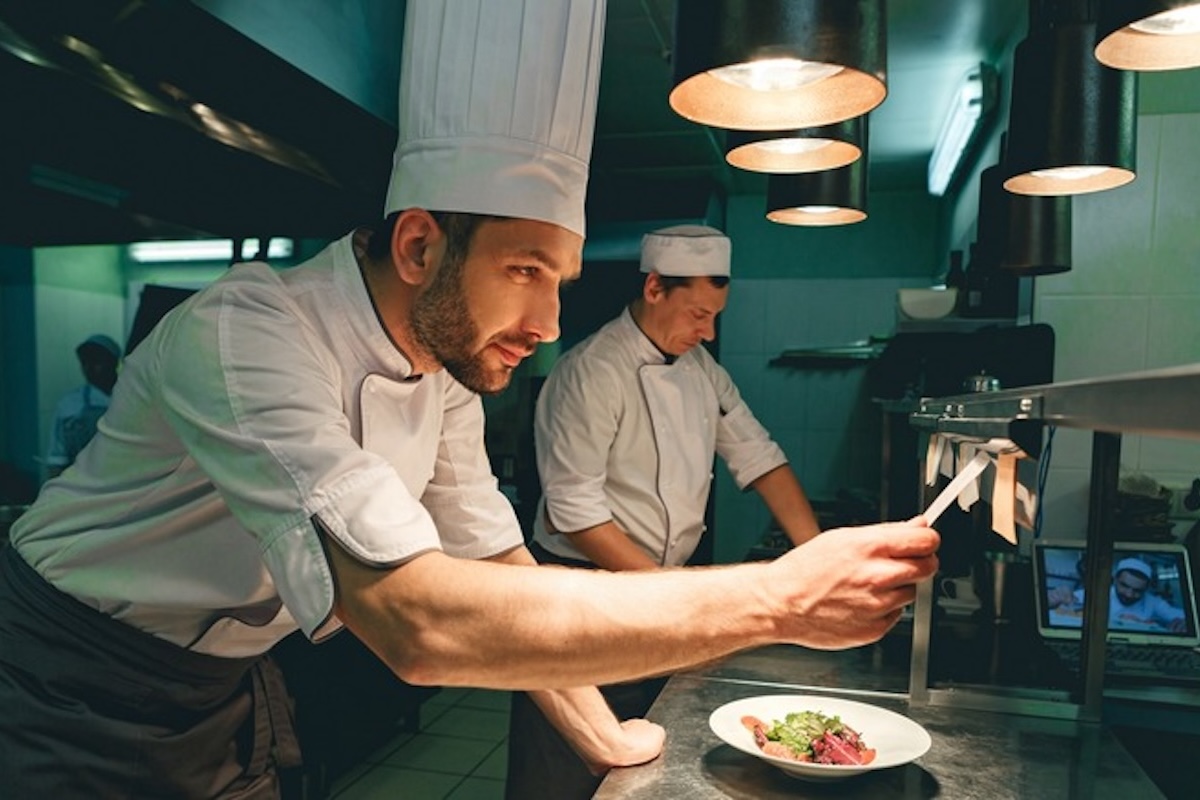
A line cook wipes raw chicken juice off a cutting board with a rag, then uses that same board to slice tomatoes for a salad. A different cook uses a clean cutting board to make a peanut sauce, then uses the same board — wiped with sanitizer but not washed, rinsed, and sanitized — to cut vegetables for a customer with a peanut allergy.
Both cooks just made a mistake. But they’re not the same mistake — two completely different hazards just moved.
The first one is cross-contamination. The second is cross-contact. They sound almost identical, and that’s exactly why they get mixed up so often — including on the certification exam. This lesson keeps them separate for good.
Cross-Contamination: When Pathogens Move
Cross-contamination is the transfer of harmful microorganisms — bacteria, viruses, and other pathogens — from one surface or food to another.
Think back to what pathogens need to make someone sick: they need to get into food, and then that food needs to reach a customer’s plate. Cross-contamination is one of the main ways that happens. The raw chicken never had to touch the tomatoes directly — the pathogens hitched a ride on the cutting board.
Common ways cross-contamination happens:
- Contaminated ingredients get added to a food that won’t be cooked any further
- A ready-to-eat food touches a surface that’s already contaminated
- A food handler touches contaminated food, then touches ready-to-eat food without washing their hands in between
- A dirty wiping cloth touches a food-contact surface it shouldn’t
Notice the pattern: in every case, something contaminated touches something that’s about to be eaten as-is. That makes ready-to-eat food especially vulnerable: once contamination reaches it, there’s usually no cooking step left to destroy the pathogens before the food reaches the guest.
The consequence: foodborne illness. Unlike an allergen, the hazard isn’t limited to one group of guests — anyone who eats the contaminated food may get sick.
BUT WHAT IF the food-contact surface isn’t a cutting board or a plate — it’s ice? Ice counts. Scooping ice with a glass (instead of a scoop) can chip the glass into the ice, and any ice that’s been used to keep raw food or bottled drinks cold can’t turn around and go into a guest’s cup. It’s easy to picture cross-contamination as something that only happens on a cutting board, but any food-contact surface — including one made of frozen water — follows the same rule.
Cross-Contact: When an Allergen Moves
Cross-contact is the transfer of an allergen — a protein naturally found in certain foods — from a food or surface that contains it to a food that doesn’t.
This one works differently. There’s no pathogen involved, and often no dirt or visible mess at all. A cutting board can look perfectly clean and still cause cross-contact, because the allergen protein is invisible. Looking clean isn’t enough, and a quick wipe isn’t reliable either — the surface needs a full wash, rinse, and sanitize before it’s safe for an allergy order.
Common ways cross-contact happens:
- Shared equipment or utensils — a knife, cutting board, or prep table used for an allergen food, then used again without being washed, rinsed, and sanitized
- Shared fryers or cooking oil — food containing an allergen can leave allergen protein behind in the oil, which then contacts the next food cooked in that fryer
- Hands and gloves — touching an allergen food, then touching another food without washing hands and changing gloves
The consequence: an allergic reaction, which can range from mild symptoms to anaphylaxis — a severe, potentially fatal reaction. For someone with a food allergy, even a very small amount can cause a reaction. In a kitchen, you never decide that a little cross-contact is “small enough not to matter” — that call isn’t yours to make.
BUT WHAT IF the guest says, “It’s fine, just pick the nuts off”? Still no. Removing the visible allergen doesn’t remove the invisible protein already worked into the dish. Once an allergen has touched the food, you cannot make that food safe again by picking off the visible allergen. The allergen may already be on the food even if you can’t see it.
If the wrong ingredient went onto an allergy order, discard the food and remake the order from the beginning using clean and sanitized equipment, fresh ingredients, and the correct cross-contact controls. This isn’t about making the plate look right. It’s about whether the allergen ever touched the food.
Can you see the hazard? In all reality, the answer is simple: nope. You MIGHT be able to see a parasite in fish if it has gotten REALLY big (hint: do not google “worms in salmon at Costco”). But for the hazards we’re talking about here, the answer is basically nope. You have to rely on a standard cleaning and sanitation regimen to know your food is safe.
It’s also worth noticing that the prevention steps overlap a lot — washing hands, sanitizing surfaces, using separate equipment. That overlap is part of why the two get confused. The hazards and the guests at risk are different; many of the controls that stop them just happen to look similar.
One last thing and I want to make this crystal clear: students taking food safety exams get these two things confused all the time. Here’s my suggestion: ask yourself: “what actually moved?”
Pathogen moved? Cross-contamination. Allergen moved? Cross-contact.
What a Manager Does When It Happens
The response to both is nearly identical, and it’s simple:
- Discard the affected food. If a pathogen or an allergen has already reached the food itself, don’t try to rescue it — scraping off the contaminated part or removing the visible source doesn’t make the rest of the food safe again. Remake the order from scratch.
- Clean and sanitize any surface, utensil, or equipment involved — a full wash, rinse, and sanitize before it touches food again. Unlike contaminated food, contaminated equipment can be made safe again through proper cleaning.
For cross-contact specifically, timing matters. If it’s caught before the food leaves the kitchen, discard it and remake the order safely. If there’s any chance the affected food already reached the guest, tell the manager and the guest immediately.
BE CAREFUL: There’s a Third Term That Sounds the Same
There’s a third “cross-” term that gets tangled up with these two on the exam: cross-connection. It’s not a food hazard at all — it’s a plumbing and facilities issue, and you’ll cover it in full later in the course. For now, just keep the three straight by asking what’s actually contaminating what:
- Cross-contamination — a pathogen contaminates another food.
- Cross-contact — an allergen contaminates a food that doesn’t contain it.
- Cross-connection — a physical link lets contaminated water enter the clean (potable) water supply.
Three similar-sounding terms, three completely different things moving and putting people at risk. HINT: If a question mentions water, pipes, or a hose – it’s talking about a cross-connection (not any of the terms from this lesson).
What You Actually Need to Remember
- Cross-contamination moves a pathogen; cross-contact moves an allergen. Ask what moved.
- Cross-contamination can make any guest sick. Cross-contact puts guests with a specific food allergy at risk — and for them, even a small amount can matter.
- Neither hazard can be judged visually. A full wash, rinse, and sanitize is what actually makes a surface safe again — not a quick wipe.
- If the food itself is affected, discard it and start over — it can’t be rescued. Surfaces and equipment can be made safe again through proper cleaning.