
Why this page exists
You’re going to spend your whole career being told to cook chicken to 165°F, wash your hands for 20 seconds, and send sick coworkers home. This page is going to tell you WHY you need to do those things.
There are more than 250 known foodborne pathogens. Six of them get singled out by the FDA and ServSafe as the Big 6 — not because they cause the most illness of any kind, but because they’re highly infective and spread easily from an infected food worker into food. A diagnosis with any one of them puts specific reporting and response duties on both the employee and the manager.
The detailed rules for exactly when someone is excluded (sent home) versus restricted (can stay at work, but needs to get the hell out of the kitchen) live on Lesson 9. This page is about recognizing the six pathogens themselves: what they are, where they come from, what they do to the body, and what a manager watches for.
The Shared Foundation
Before you look at what makes each of the Big 6 different, know the three things that help controls them all. These three things, used together, form FDA’s core foundation for preventing these six pathogens from spreading from an infected food employee to a guest:
- Report and respond to employee illness. A Big 6 diagnosis must be reported to the person in charge — even without symptoms. Other symptoms and exposures can also trigger reporting requirements. What happens next depends on the specific pathogen, the symptoms, and whether the operation serves a highly susceptible population. Page 9 covers those rules in full.
- Wash your hands correctly, and at the right moments.
- Never touch ready-to-eat food with bare hands. Ready-to-eat food – that’s anything you consume that’ll get no more cooking before it reaches a guest.
These three rules are your foundation. But they’re not the whole story. Raw chicken brings different problems into a kitchen than a sick employee making sandwiches, so each pathogen has a few controls of its own. Let’s deal with them one-at-a-time.
Salmonella Typhi — Typhoid Fever
The kitchen problem: A food handler is diagnosed with typhoid fever.
Salmonella Typhi has what scientists call a human reservoir — which basically means… this sickness? It’s on us. Chickens don’t carry it. Cattle don’t carry it. People do. An infected person or carrier contaminates food or water, and another person consumes it. The infected person may not even have symptoms (in which case they’re called a carrier).
International travel is a genuine U.S. risk factor for exposure. People going on a cruise to countries with poor water santiation systems can bring this one back home. But you can get Salmonella Typhi at your favorite Burrito chain too… maybe not as easily as that cruise (but it CAN happen).
A diagnosis — not simply having traveled — is what requires a response.
- Spreads through: ready-to-eat food and beverages contaminated by an infected person
- Symptoms: high fever, weakness, abdominal pain, headache, loss of appetite, rash
- Onset: slow — typically 1–2 weeks (range 6–30 days)
- Manager’s move: enforce handwashing; prevent cross-contamination; report illness as required and follow the applicable exclusion procedure (Page 9)
Nontyphoidal Salmonella (NTS) — Salmonellosis
The kitchen problem: Raw chicken juice drips onto a cutting board that’s about to be reused for salad.
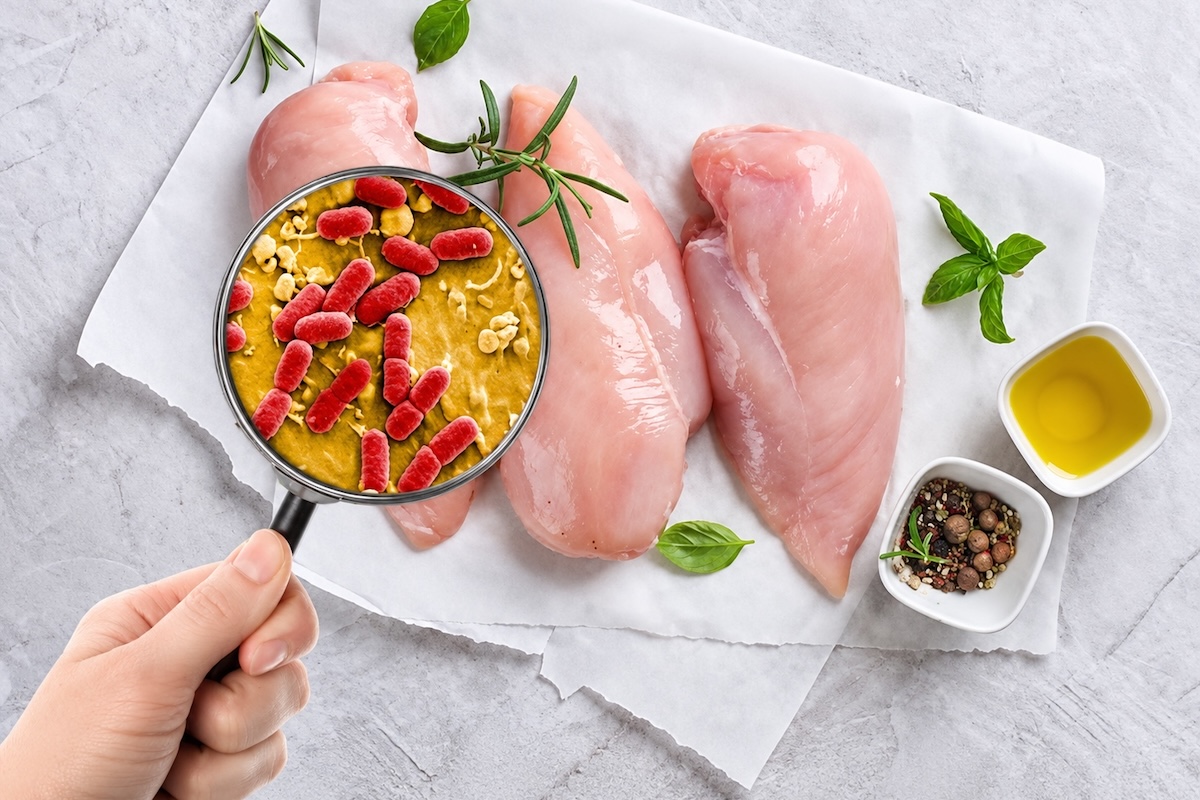
NTS lives naturally in many farm animals, so raw poultry, eggs, and meat can carry it before the food ever reaches your kitchen. In other words, raw chicken doesn’t have to “go bad” to carry Salmonella. It can arrive at your back door that way.
That’s why proper cooking and keeping raw animal food away from ready-to-eat food matter so much with this one.
- Spreads through: poultry and eggs, meat, dairy, and produce such as tomatoes, peppers, and cantaloupe — as well as contaminated water and direct animal contact
- Symptoms: diarrhea, abdominal cramps, vomiting, fever
- Onset: fast — commonly 6–72 hours
- Manager’s move: cook poultry and eggs to required minimum temperatures; keep raw poultry away from ready-to-eat food; report illness as required and follow the applicable exclusion/restriction procedure (Page 9)
Shigella spp. — Shigellosis
The kitchen problem: A cook uses the restroom, doesn’t wash thoroughly, and then makes chicken salad.
There’s no particularly polite way to explain this one: Shigella is largely a poop-to-food problem.
The professional term is fecal contamination. Shigella lives in human feces, and it takes only a tiny dose to cause illness. That’s why employee health, proper handwashing, and keeping contaminated hands away from food are such important controls.
- Spreads through: TCS salads (potato, tuna, shrimp, macaroni, chicken salad), and any food or water contaminated by feces — including via flies, which is why fly control indoors and out is one of ServSafe’s specific prevention measures for this pathogen
- Symptoms: bloody diarrhea, abdominal pain and cramping, occasional fever
- Onset: 1–2 days
- Manager’s move: enforce handwashing and personal hygiene; control flies inside and outside the building; report illness as required and follow the applicable exclusion/restriction procedure (Page 9)
Shiga Toxin-Producing E. coli (STEC) — Hemorrhagic Colitis
The kitchen problem: A burger comes off the grill pink in the middle.
STEC lives in cattle intestines and can contaminate meat during slaughter. And THAT’S why a delicious medium rare hamburger is more dangerous to eat than an overcooked steak: grinding a sirloin into a cheeseburger takes bacteria that WERE on the surface and MIXED them throughout the meat.
That’s exactly why ground beef has its own strict minimum cooking temperature.
- The strain you need to know by name: E. coli O157:H7. A few other non-O157 strains — O26:H11, O111:H8, O121:H19 — also cause illness and occasionally show up in ServSafe material, but O157:H7 is the one worth having memorized.
- Spreads through: raw or undercooked ground beef, and contaminated produce
- Symptoms: diarrhea that turns bloody, abdominal cramps; can progress to kidney failure in severe cases, especially in children and older adults
- Onset: commonly 3–4 days (but cases have shown up in a single day, others as long as 10 days)
- Manager’s move: cook ground beef to its required minimum temperature; buy produce from approved suppliers; prevent cross-contamination between raw meat and everything else; report illness as required and follow the applicable exclusion/restriction procedure (Page 9)
Hepatitis A
The kitchen problem: The employee looks fine. Feels fine. Works an entire shift.
That’s the problem.
Hepatitis A can be spreading for weeks before symptoms show up. An infected employee doesn’t necessarily look sick, which is one reason employee illness reporting matters even when someone feels perfectly capable of working.
- Spreads through: ready-to-eat food, and shellfish from contaminated water; transfers when an infected handler touches food or equipment with feces-contaminated fingers
- Symptoms: mild fever, weakness, nausea, abdominal pain, and — later, once the liver is affected — jaundice
- Onset: slow — typically 2–7 weeks (15–50 days, averaging about 4 weeks)
- Heat note: research shows HAV can be inactivated by heating food above 185°F for at least one minute — but that’s not a normal foodservice minimum cooking temperature, so it isn’t a practical control here. Most contamination happens on food that gets no further cooking anyway.
- Manager’s move: strict personal hygiene; avoid bare-hand contact with ready-to-eat food; buy shellfish only from approved suppliers; report illness or recent jaundice as required and follow the applicable exclusion procedure (Page 9)
Norovirus
The kitchen problem: One employee gets violently sick mid-shift, and by the next day three coworkers have it too.
Norovirus is extremely contagious. It doesn’t need much help — a very small amount can make someone sick, and once it starts moving through a kitchen, it can move fast.
- Spreads through: ready-to-eat food and contaminated shellfish, the same way as Hepatitis A — feces-contaminated fingers touching food or equipment
- Symptoms: vomiting, diarrhea, nausea, abdominal cramps
- Onset: the fastest of the Big 6 — usually 12–48 hours
- Heat note: CDC guidance is to cook shellfish thoroughly and specifically avoid quick steaming, since that method often doesn’t get hot enough to reliably stop the virus. This is a narrow control for shellfish, not a replacement for employee health and hygiene.
- Manager’s move: strict personal hygiene; avoid bare-hand contact with ready-to-eat food; cook shellfish thoroughly rather than quick-steaming it; buy shellfish only from approved suppliers; report illness as required and follow the applicable exclusion/restriction procedure (Page 9)
Chef’s Reality Check
Here’s the part my students tend to overthink: you are not training to become a microbiologist.
You’re training to become the person who recognizes a food-safety problem soon enough to do something about it.
Know the Big 6. Know the foods and symptoms commonly associated with them. Know the controls that matter. And know when an employee-health problem needs to move up the chain.
Nobody is asking you to diagnose typhoid fever in the prep kitchen. They’re asking you not to ignore the warning signs.
The Big 6 at a Glance

COMMON CONFUSION:
Salmonella Typhi and Nontyphoidal Salmonella sound like the same illness with a modifier — they aren’t. Typhoid fever is slow-building, rare in the U.S., and traces to an infected person or carrier with no animal source. Salmonellosis (NTS) hits fast, is far more common, and is commonly linked to raw animal food like poultry and eggs — where cooking temperature is an essential control.
Same bacterial genus, two very different threats.
What You Actually Need to Remember
- All six Big 6 pathogens share the same foundation for preventing spread from an infected food employee to a guest: report and respond to employee illness, wash hands correctly, and never touch ready-to-eat food with bare hands.
- Beyond those three shared rules, prevention is pathogen-specific. Use the Manager’s Move for each one rather than trying to memorize one rule that fits all six.
- There’s a reason “report illness” showed up six times on this page. You don’t have to diagnose the employee. You DO have to know when something needs to be reported to the manager. We’ll deal with exactly who gets sent home, who can stay, and who needs regulatory approval to come back in Lesson 9.
- The Big 6 aren’t “the six most common” foodborne illnesses. They’re singled out because they’re highly infective, can spread easily from an infected food worker into food, and come with specific employee-health reporting requirements.