
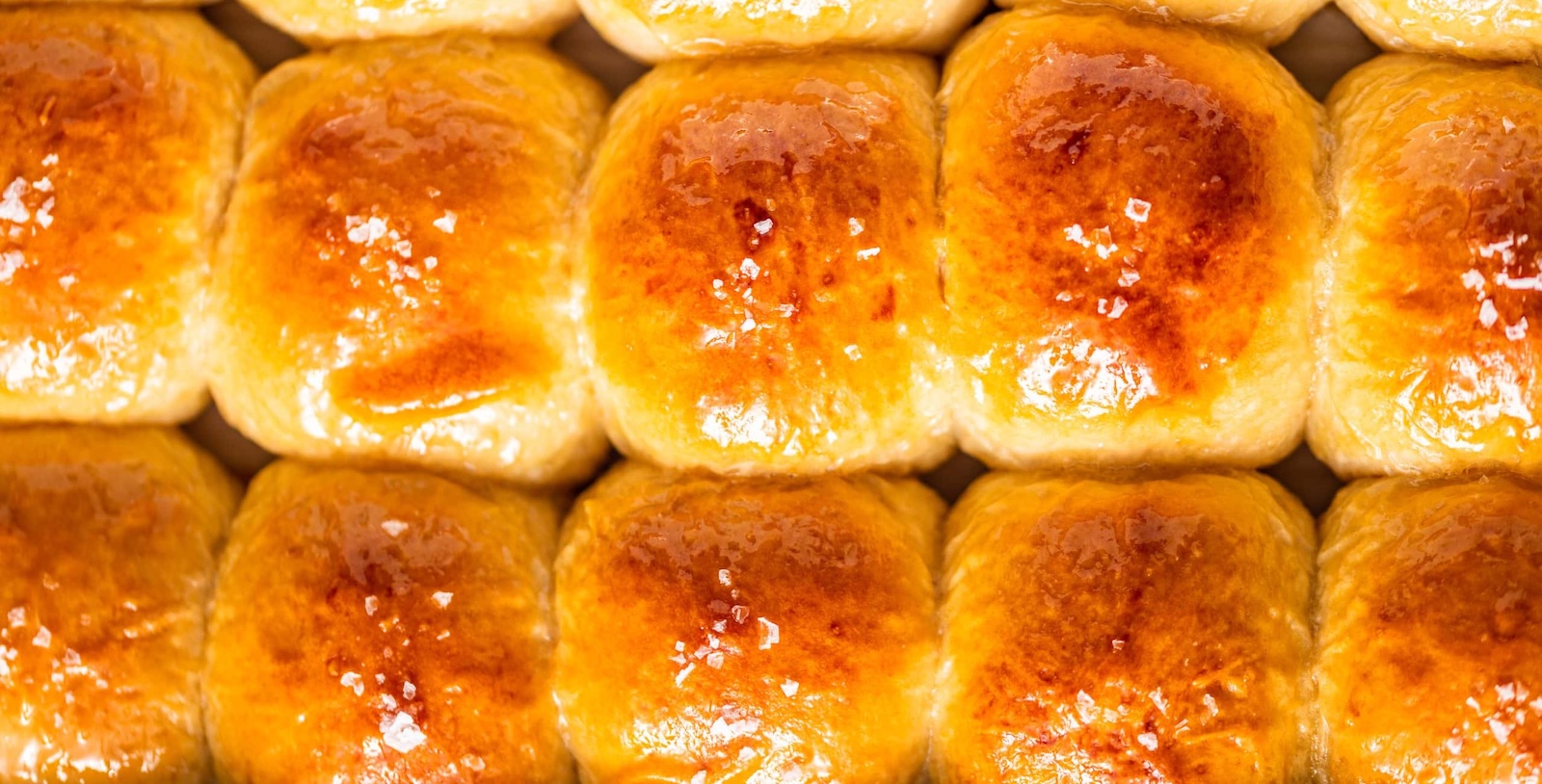
Bread is OLD. Like…. really, really, really old.
The first loaf of bread was probably a happy accident that occurred when some yeast living on grains began to ferment while some dough for flatbreads – like matzo or crackers – was being made. We know that neolithic farmers made bread 10,000 years ago.
The first recorded yeast bread was made by Egyptians 4,000 years ago. Bread was so important to the Egyptians that you can even find it in their tombs – the most famous of which is the tomb of Tutankhamun where archaeologists have found loaves of bread with coriander added to them.

Anywhere on the planet where wheat, rye or barley could be grown in sufficient quantities, bread became the basic food in most people’s diet. Jesus called himself the “bread of life” and the ancients called it the “staff of life.”
Leavened bread – (a fancy name for a baked bread with yeast in it) is now a staple in almost every culture on Earth. Bread is inexpensive, nutritious, delicious, portable and easy to share. And the one ingredient that separates real bread from flatbread, crackers, and quick breads is yeast.
What Yeast Actually Does
Yeast is a living, single-celled organism. When you mix it with flour and water, it wakes up and starts eating the sugars and starches in the flour. As it eats, it produces carbon dioxide gas — and that gas gets trapped inside the dough by strands of gluten, which is what makes your dough rise.
That’s it. That’s the whole trick. A living thing eats sugar, burps out gas, and the gas gets stuck. You’re not just baking — you’re farming a microorganism and eating the byproduct of its digestion. Cool, right?

Two Kinds of Dough
- Lean dough — just flour, yeast, water, and salt. Little to no fat or sugar. Chewy texture, crisp crust. Think: French bread.
- Rich (enriched) dough — the same base, plus butter, eggs, milk, or sugar. Softer, more cake-like texture. Think: dinner rolls.
You’re about to make a rich dough — the kind that turns into soft, pillowy rolls.
The 5-Step Version (You’ll Learn the Full 9 Later)
- Mix & knead — combine your ingredients, then work the dough until it’s smooth and stretchy. Kneading develops gluten, which is what traps the gas.
- First rise — let the dough sit somewhere warm until it roughly doubles in size. This is the yeast doing its thing.
- Shape — punch the air out and shape your dough into its final form (rolls, in your case).
- Second rise — let it rise again, shaped this time, until it’s puffy and ready to bake.
- Bake — the heat kills the yeast, sets the structure, and browns the crust. Congratulations, you made bread.
You’ll come back to yeast bread again in Culinary 2 and 3 — there’s a LOT more to learn about the exact same ingredient.
Ready to actually do it? Let’s make Big Fat Yeast Rolls and Hawaiian Rolls — two enriched doughs that’ll teach you the whole process hands-on.

Big Fat Yeast Rolls
Ingredients
- ½ cup very warm water 115 g
- 2 Tablespoons dry yeast 18 g
- ⅓ cup sugar 67 g
- 1 ⅔ cups warm whole milk 412 g
- 2 large egg slightly beaten room temperature, 73 g
- 2 tsp salt 14 g
- 5 tablespoons butter chopped and softened, 75.6 g
- 6 ½ cups all-purpose flour 780 g
HONEY BUTTER
- 4 Tablespoons butter softened
- 3 Tablespoons honey
- 3 Tablespoons confectioners sugar
Instructions
- Make Honey Butter: Combine all ingredients. Stir until creamy. Reserve at room temperature to keep soft.
- In a small bowl add warm water.
- Sprinkle in the yeast and 1/4 teaspoon of sugar.
- Stir gently until combined.
- Proof until foamy.
- Pour yeast mixture into a large bowl and add remaining sugar, warm milk, salt, and butter.
- Mix until well combined. Add half the flour and knead for 5 minutes.
- Add the eggs, one at a time, and mix until incorporated.
- Add the rest of the flour, ½ cup at a time, until a soft dough forms. The dough should be soft and elastic, but not sticky. Knead for 5 minutes.
- Transfer dough to a large, greased bowl.
- Cover bowl with plastic wrap and place in a warm, draft-free area for about 2 hours or until doubled in size.
- After rising time has passed, divide the dough into 24 pieces. Roll each piece into a ball, and place it on a half sheet pan covered with parchment paper, sprayed lightly with Pam.
- Brush rolls with honey butter.
- Loosely cover with plastic wrap and place in a warm area until rolls are doubled in size, about 1 hour.
- Preheat oven to 375.
- Remove plastic wrap and bake for 14-20 minutes or until golden.
- Brush hot rolls with leftover honey butter.
Notes


Hawaiian Rolls
Ingredients
- 1 cup 240 ml pineapple juice
- ½ cup 120 ml buttermilk
- 6 tablespoons 89 g unsalted butter, melted
- 5 ½ cups 715 g all-purpose flour
- ⅓ cup 113 g honey
- 1 tablespoon instant yeast
- 2 teaspoons salt
- 1 large egg lightly beaten
- 1 tablespoon vanilla extract
- 1 cup honey butter 4 tablespoons very soft butter blended with 4 tablespoons honey
Instructions
- Combine the pineapple juice, buttermilk, butter, and honey in a large liquid measuring cup. Microwave in 30 second intervals until the temperature reaches 110°F. The mixture may become curdled, this is normal.
- Using a stand mixer fitted with a dough hook, mix the flour, yeast, and salt on low speed until combined.
- With the mixer on low speed, gradually pour in the pineapple mixture followed by the egg and vanilla.
- Mix on low speed dough begins to come together, about 2 minutes. Increase the speed to medium-low and mix until the dough is no longer sticking to the sides of the bowl. It may still stick to the bottom.
- Turn the dough out onto a lightly floured surface and shape it into a ball. Place the dough in a lightly oiled bowl, cover with plastic wrap, and set in a warm place to rise until doubled in size, about 1 and ½ hours.
- Punch the dough down to deflate it and transfer it to a lightly floured work surface. Divide the dough into 24 equal size portions. Shape each portion into a smooth ball and arrange them in a lightly oiled 9×13-inch baking pan.
- Cover the pan with plastic and set in a draft-free area to rise until doubled in size, about 1 and ½ hours.
- Adjust the oven rack to the lower-middle position and heat the oven to 375°F.
- Carefully brush each of the rolls with soft honey butter. Bake for 10 minutes, rotate, and loosely cover with aluminum foil if getting too dark. Bake for another 8-10 minutes or until the internal temperature of the rolls is 190°F and the tops are GBD.
- Brush the rolls with more softened honey butter and cool on a wire rack for 10 minutes.