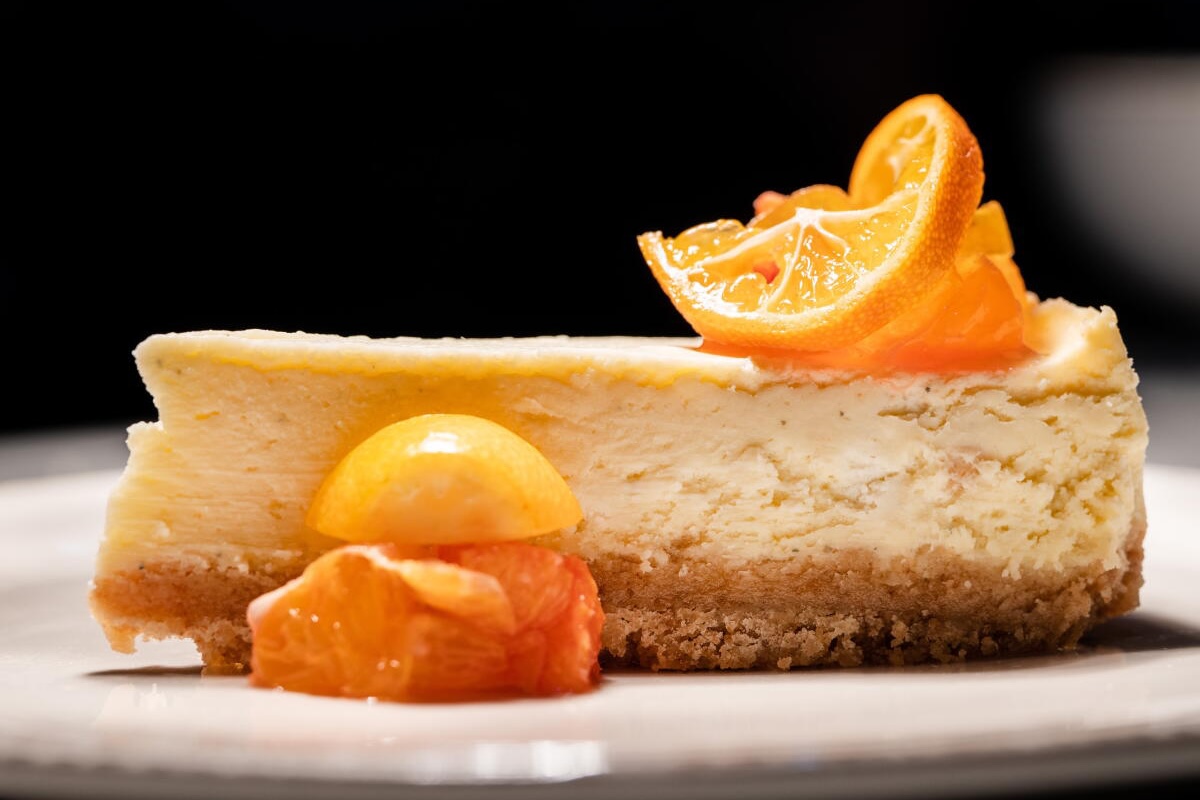
Cheesecake looks like a cake, gets cut like a cake, and has spent a very long time hanging around the cake section of dessert menus. Technically, though, it behaves much more like a custard built around cheese. That distinction matters, because once you understand what the cheese, eggs, sugar, heat, and cooling are actually doing, cheesecake becomes considerably less mysterious.
It also becomes much bigger than the tall, cream-cheese-heavy slice most Americans picture when somebody says cheesecake. Different places have made cheese-based cakes and pies from the dairy products available to them for centuries. Some are dense and rich. Some are light. Some are smooth; others keep some of the texture of the cheese. Some bake gently. Others get blasted with heat until the outside turns nearly black.
Before we separate those styles and learn their individual techniques, we need the common foundation underneath them: where cheesecake came from, why the cheese matters, how a bowl of batter turns into a set custard, and what heat is actually doing while it bakes.
Cheesecake Is Old. Like, Pre-Jesus Old.
We don’t need a twenty-stop timeline to establish that people have been making things we would recognize as relatives of cheesecake for a very long time. The surviving Roman recipes simply give us unusually good evidence of just how far back the idea goes.
That idea survived because it was adaptable. There was never one original cheesecake recipe marching unchanged through history. Cooks made versions from the ingredients and dairy traditions around them, which is how one very old idea eventually became a very large family of desserts.

Cato and Savillum
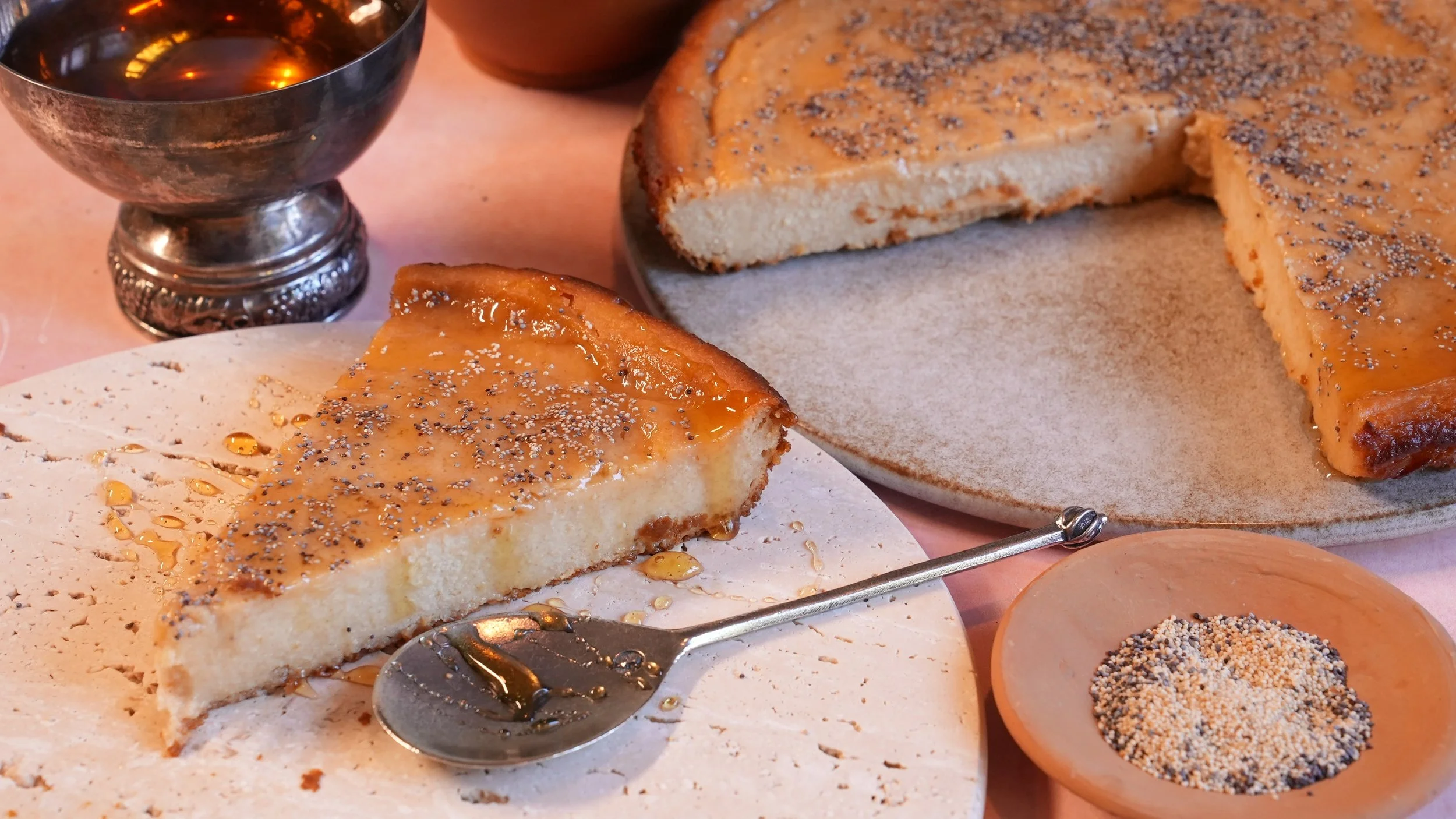
More than 2,000 years ago, the Roman writer Cato the Elder recorded a recipe for savillum: fresh cheese combined with flour and egg, baked, then finished with honey and poppy seeds. Nobody should pretend this was modern New York cheesecake wearing a toga. It wasn’t. What matters is that the basic idea is remarkably old: take fresh cheese, enrich or sweeten it, give it structure, and bake it into something worth eating.
Cheesecake Follows the Cheese
For most of cheesecake’s history, cooks didn’t start by choosing a cheesecake style. They started with the dairy products their region already made. Cheesecake followed the cheese.
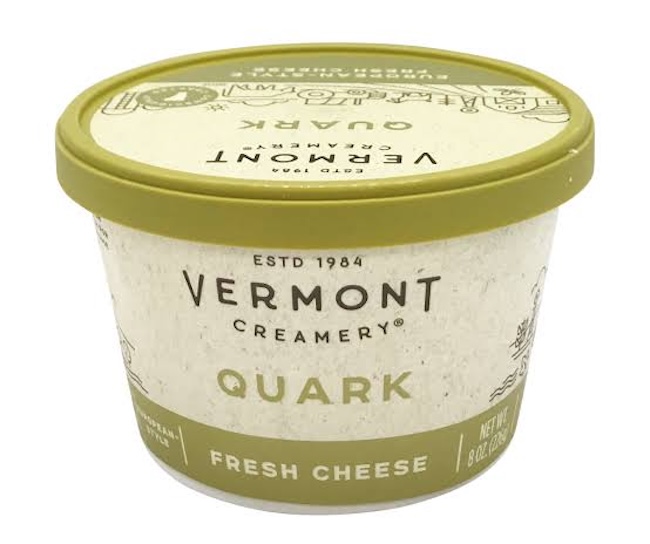
In Germany, that meant quark, a fresh cultured dairy product with a mild tang and a lighter, softer character than American cream cheese. Quark was already part of the German dairy tradition, so Käsekuchen developed around it. German bakers weren’t choosing quark because somebody had tested six cheeses and declared it the perfect cheesecake ingredient. They made cheesecake with quark because quark was their cheese.
In Italy, the answer was often ricotta. Ricotta grew out of a cheesemaking culture that refused to waste the whey left behind after making other cheeses. Heating that whey captures proteins that would otherwise be lost and produces the soft, moist curds we call ricotta. When Italian cooks made cheese-based desserts, ricotta was already there. The result is a cheesecake with a lighter, more visibly curded texture than the perfectly smooth American cream-cheese version. Different cheese, different cheesecake.
We could keep traveling. Other regions built cheese cakes and cheese pies around the fresh dairy products available to them. But the point isn’t to memorize a map of European desserts. It’s to recognize what happened: people took an old idea and made it with the cheese they had available in their town.
One Cheesecake Leads to Another
In 1969, Japanese chef Tomotaro Kuzuno encountered German Käsekuchen during a trip to Berlin. He returned to Japan and developed his own version, helping set the stage for the extraordinarily light, soufflé-like Japanese cheesecake that followed. Cheesecake didn’t spread because everybody agreed on one correct version. Cooks encountered somebody else’s idea and made it their own.
Then America Got Cream Cheese
The American story eventually took a different turn. Instead of cheesecake remaining tied primarily to a local farmhouse cheese, American cooks gained access to a fresh cheese that could be manufactured consistently, packaged, refrigerated, transported, branded, and sold on an enormous scale.
That cheese was cream cheese, and it changed American cheesecake.
So What Is Cream Cheese, Anyway?
Cream cheese starts with milk and cream. Bacterial cultures convert some of the milk sugar into lactic acid, lowering the pH and changing the behavior of the milk proteins. As the mixture acidifies, casein proteins come together to form a soft curd that holds water and fat. The result is a fresh, unripened cheese: rich, mildly tangy, moist, and soft enough to become exceptionally smooth.
Commercial cream cheese takes that basic process and makes it remarkably predictable. Homogenization and carefully controlled production create a product with consistent moisture, fat, acidity, and texture; stabilizers in many commercial versions help maintain that consistency during storage and use. For a pastry cook, predictability is enormously useful. A block of cream cheese brings water, milk protein, fat, acidity, flavor, and physical body into the recipe in a form that behaves much the same way from one batch to the next.
Philadelphia Isn’t From Philadelphia
The cheese was developed in New York. The Philadelphia name was adopted because Philadelphia had a reputation for high-quality dairy products. Sometimes food history is less romantic than we would like and considerably better at marketing.
That combination helps explain why cream cheese became so closely associated with American cheesecake. Its fat creates richness, its moisture helps produce a creamy custard, its acidity supplies the familiar tang, and its smooth body allows the finished filling to become exceptionally uniform.
But cream cheese alone does not turn itself into a sliceable dessert. Mix cream cheese with sugar and dairy and you still have a bowl of sweetened cream cheese. Something has to build enough structure for that mixture to become cheesecake. That’s where the eggs come in.
Attempted Assassination by Cheesecake
In 2016, Viktoria Nasyrova showed up at the Queens home of Olga Tsvyk—a woman who looked remarkably like her—with cheesecake. Tsvyk ate a slice, became violently ill, and lost consciousness. When she eventually returned home from the hospital, her passport, work authorization card, jewelry, and other valuables were missing.
Investigators tested residue from the cheesecake container and found phenazepam, a powerful sedative. Prosecutors said Nasyrova intended to kill Tsvyk, make it look like an overdose, and steal her lookalike’s identity. A jury convicted her of attempted murder in 2023, and she was sentenced to 21 years in prison. The cheesecake was literally evidence.
There is no pastry lesson here. Sometimes you just need to know that attempted assassination by cheesecake has happened.
The Science of Cheesecake
Cheesecake Is a Custard
Despite the name and the cake-shaped pan, cheesecake behaves more like a custard than a conventional cake. In most cakes, flour contributes starch and gluten that help build the structure. In cheesecake, eggs do most of that work.
Raw eggs contain proteins folded into complicated shapes and dispersed through water. Heat gives those proteins enough energy to unfold and begin connecting with one another. As more connections form, a three-dimensional network develops throughout the batter, trapping water and giving the cheesecake structure. This process is called coagulation.
Egg whites begin coagulating around 144–149°F, yolks around 149–158°F, and whole eggs across roughly 144–158°F. Those numbers help us understand what’s happening, but they are not automatic cheesecake pull temperatures. Cheesecake isn’t made from eggs alone. Sugar, cheese, cream, acid, starch, and water all change how the system behaves.
Start Smooth
Cream cheese straight from the refrigerator is stiff. Its fat is firm, the cheese resists movement, and getting sugar, eggs, and other dairy evenly dispersed through it requires considerably more mechanical work. That’s why recipes tell you to bring cream cheese to room temperature. What matters is the physical condition of the cheese: soft and pliable, but not melted. Properly softened cream cheese combines smoothly with the other ingredients before the mixer has to beat the batter aggressively.
Cold cream cheese creates another familiar problem: lumps. The temptation is to turn up the mixer and beat those lumps into submission. That solves one problem by creating another.
Smooth, Not Fluffy
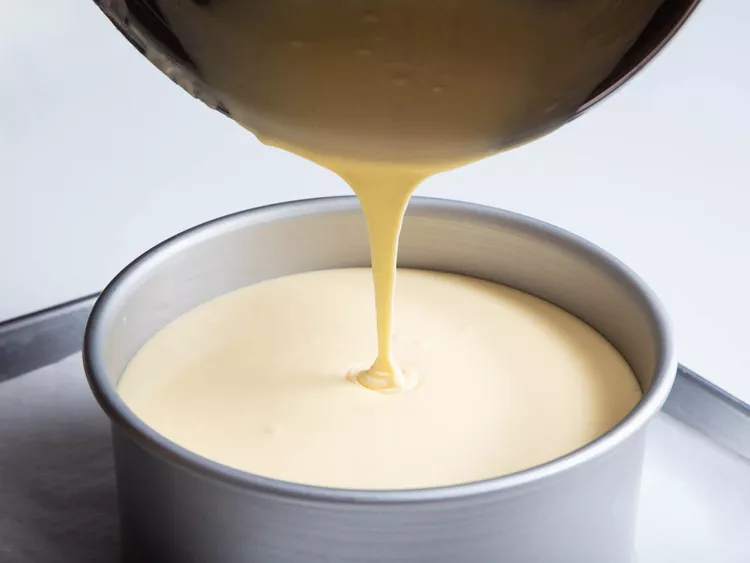
Cheesecake isn’t a butter cake. We aren’t trying to deliberately beat large amounts of air into the batter. Aggressive mixing incorporates air, and in the oven those trapped bubbles heat and expand, causing the cheesecake to puff. As the cake cools, the gases contract and the custard settles. Excessive aeration can contribute to unnecessary puffing, uneven texture, surface bubbles, collapse, and cracking.
The goal is smooth, not fluffy. Use the paddle, keep the speed under control, and scrape the bowl thoroughly—especially the bottom, where stubborn cream-cheese lumps like to hide. Get the cheese mixture smooth before the eggs go in. Once the eggs are incorporated, mix only until the batter is homogeneous. A finished batter should look smooth, glossy, and dense rather than whipped or foamy.
Heat Turns Batter Into Cheesecake
Once the batter enters the oven, coagulation begins doing the structural work. As the egg proteins unfold and connect, the loose batter gradually becomes a soft custard and eventually a custard firm enough to hold a slice. The trick is getting enough structure without continuing until that structure becomes the problem.
Think about badly overcooked scrambled eggs. They become firm, dry, and rubbery, and you may see liquid collecting around them. Cheesecake is a much richer and more complicated mixture, but the underlying protein problem is related. As the protein network continues tightening, the custard becomes increasingly firm, dry, and eventually grainy. That’s overcoagulation. Push that tightening network far enough and it can begin squeezing out water that had been trapped inside it. That expelled liquid is called syneresis.
The two are related, but they aren’t the same thing. A cheesecake can be overcoagulated without producing enough visible syneresis to soak the crust.
A Recipe Is a System
The eggs aren’t working alone. Sugar does more than make the dessert sweet: dissolved sugar interferes with egg proteins finding and connecting with one another, delaying coagulation. Fat and additional dairy affect richness, moisture, and texture, while acid changes both flavor and the environment in which proteins behave. Change the amount or type of cheese, cream, sour cream, or other dairy and you have changed the physical system, not merely the flavor.
Some cheesecake formulas also contain flour or cornstarch. When starch is heated with available water, its granules absorb moisture, swell, and thicken. That process is called gelatinization. Starch gives the cheesecake another source of structure besides the egg proteins and can make a custard somewhat more tolerant of heat. That’s why ingredient substitutions in pastry deserve more thought than “they’re both dairy” or “it’s only a tablespoon of flour.” Recipes are systems.
The Outside Doesn’t Wait for the Middle
The oven doesn’t heat the entire cheesecake simultaneously. Heat enters from the outside and moves inward, so the edges and surface heat first while the center lags behind. By the time the middle has received enough heat to begin setting properly, the outside has already been hotter for longer. That difference in temperature across the cheesecake is called a thermal gradient.
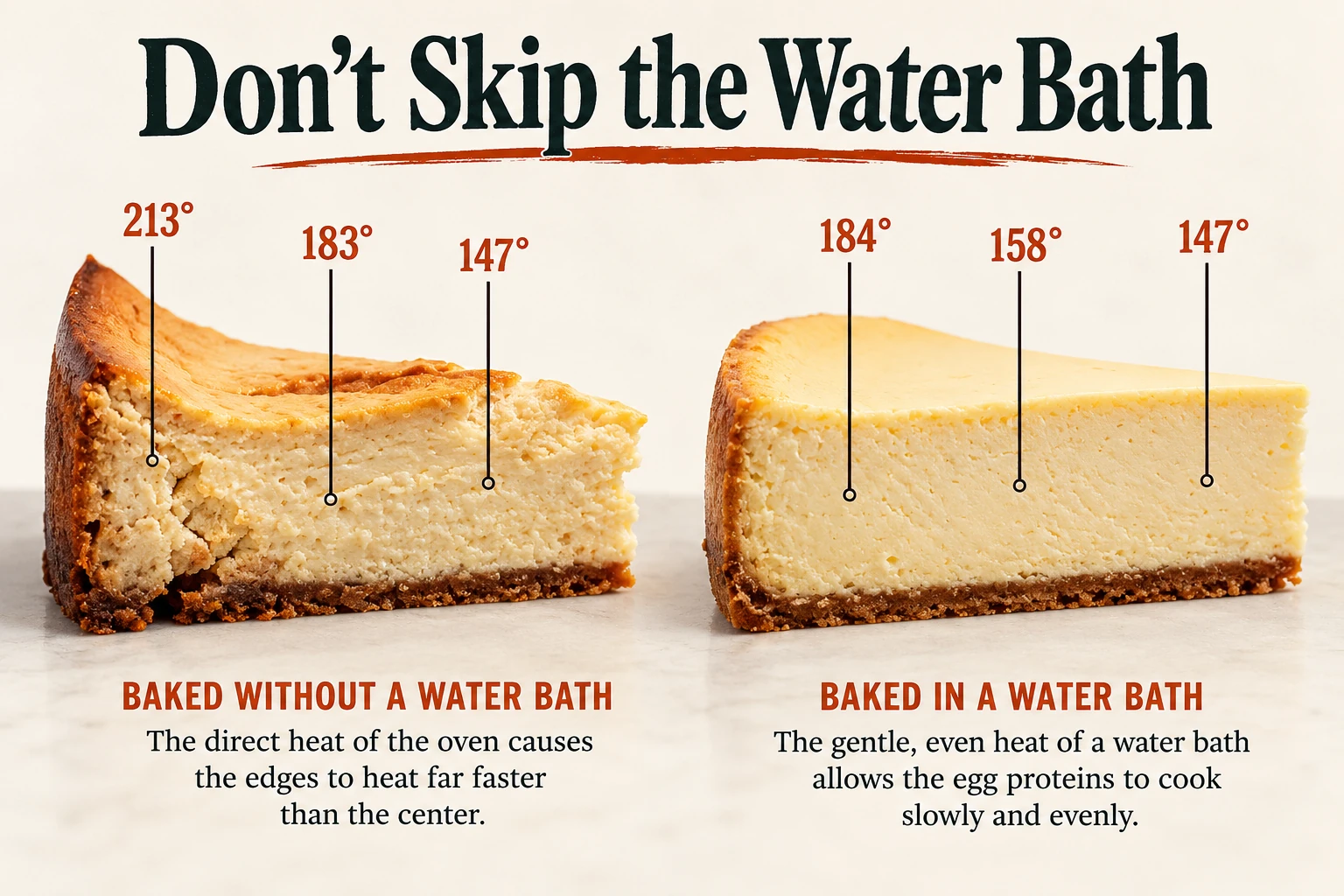
The temperatures in the image make the problem visible. Both cheesecakes can have a center near the same temperature while their outer portions are dramatically different. One technique shown here—the water bath—reduces that difference by moderating the heat reaching the outside of the cheesecake. We’ll deal with exactly how that works when we make New York cheesecake. For now, the important lesson is simpler: the edge can be much farther along than the center.
Jiggle Does Not Mean Raw
This is why cheesecake can be deceptive in the oven. The outside may look completely set while the center still moves. A beginning baker sees the movement and thinks the cake must still be raw, so it gets another ten minutes. Then another ten. Eventually the center stops moving—and the outside has been pushed far beyond where it needed to go.
A properly baked creamy cheesecake can still wobble when the pan is gently moved. The distinction is between jiggling and sloshing: a set-but-tender center moves together as one soft mass, while an undercooked liquid center ripples independently underneath the surface.
Take the temperature in the center. You’re looking for 150–155°F. Temperature gives you another piece of evidence, but it doesn’t replace your eyes. Movement, appearance, and temperature work together to tell you what is happening inside the custard.
The Oven Is Off. The Cooking Isn’t.
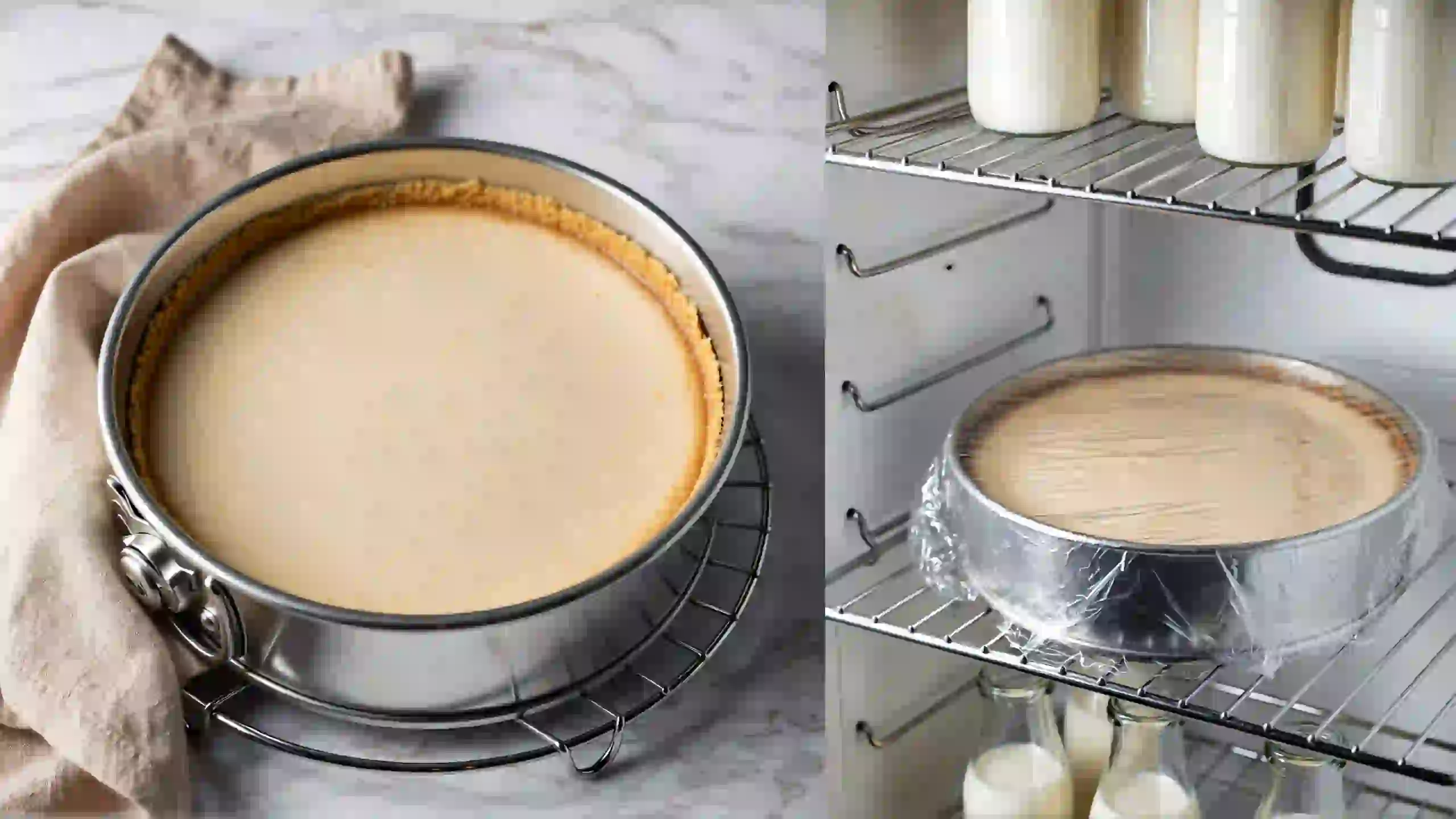
Remember the thermal gradient. When the cheesecake leaves the oven, its outside is still hotter than its center, and that stored heat doesn’t disappear because somebody opened the oven door. Heat continues moving inward toward the cooler center. This is carryover cooking, which means the center continues changing after active baking stops.
At the same time, the protein structure settles, steam escapes, the cake contracts, and the fat in all that cheese and dairy changes consistency as the temperature falls. A cheesecake straight from the oven, the same cheesecake at room temperature, and that cheesecake after several hours in the refrigerator are physically different versions of the dessert. Cooling is part of making cheesecake.
Try This Sometime
Taste a tiny piece of cheesecake while it’s still warm, another after it reaches room temperature, and another after a night in the refrigerator. You’re technically eating the same recipe, but it won’t seem like the same dessert. As the fat firms and the custard structure settles, the texture becomes denser and the eating experience changes. Cooling isn’t simply waiting until dessert gets cold; it is one of the stages that creates the final texture.
General Tips & Tricks
Cheesecake has a reputation for being difficult, but most cheesecake problems aren’t mysterious. They usually begin with temperature, mixing, or doneness. Get those three things under control and you’ve eliminated a remarkable amount of the drama before the pan ever reaches the oven.
Soft Means Soft, Not Warm Soup
When a recipe calls for room-temperature cream cheese, what you actually need is soft, pliable cream cheese. Press it with a finger and it should give easily. If it’s still hard in the center, the mixer will struggle to make it smooth. If it’s warm, greasy, or beginning to melt, you’ve gone too far. Very cold eggs or dairy can also firm the fat back up when they’re added, so starting with ingredients that aren’t fighting each other makes the job considerably easier.
Scrape the Bowl. Then Scrape It Again.
A stand mixer does not mix every part of the bowl equally well. Cream cheese loves to hide on the bottom, cling to the sides, and collect around the paddle while the batter above it looks perfectly smooth. Stop the machine and scrape the sides, bottom, and paddle before continuing, especially before the eggs go in. Finding a lump of cream cheese late and trying to beat it away is how a small mixing problem becomes an aeration problem.
Once the Eggs Go In, Calm Down
Get the cream-cheese mixture smooth first, then add the eggs gradually and mix only until everything is homogeneous. You’re not trying to build volume. If the batter looks light and foamy, that’s not evidence that you’ve done an especially thorough job; you’ve beaten air into a custard that didn’t ask for it. Smooth, glossy, and dense beats fluffy.
Don’t Let the Clock Decide When It’s Done
Recipe times are useful. Ovens are not identical. Pan material, batter depth, starting temperature, oven calibration, convection, and the actual formula all affect how quickly a cheesecake heats. If the recipe says 70 minutes, that means 70 minutes is when you should be paying very close attention, not that an alarm has legally declared the cheesecake finished. Read the cheesecake: look at the surface and edges, watch how the center moves, and take its temperature.
Take the Temperature in the Center
You’re interested in the part of the cheesecake that has received the least heat: the center. Insert a thin probe into the center of the custard and avoid burying it into the crust or touching the pan. Make the smallest hole practical and get the information you need. A tiny thermometer mark is cheaper than destroying the texture of an entire cheesecake because you were afraid to poke it.
Give It Time to Become Cheesecake
A cheesecake leaving the oven is not ready for judgment. Carryover cooking is still happening, the custard is settling, moisture is redistributing, and the fat phase becomes substantially firmer as the cake cools. Don’t cut into a warm cheesecake because you’re impatient and then diagnose the soft interior as a baking failure. Follow the cooling procedure for the style you’re making and judge the finished texture when the cheesecake has actually reached its intended serving condition.
This Is Why We Label Things in Our Fridge
In 2017, someone stole a cheesecake from a refrigerator in the BBC newsroom. The victim responded with an increasingly irritated note demanding its return. A sympathetic coworker eventually supplied a replacement cheesecake. The thief stole that one too.
More notes appeared. Accusations flew. The newsroom had a full-blown cheesecake investigation on its hands, and apparently nobody ever identified the thief.
Label and date your food, people. Although apparently at the BBC, the label may just help the thief know what they’re stealing.
Why “No-Bake Cheesecake” Is an Offense Against God and Man
A traditional baked cheesecake gets its structure from eggs setting under heat. That’s what turns a loose mixture of cheese, sugar, dairy, and eggs into a custard with enough structure to slice while remaining creamy. A “no-bake cheesecake” skips that entire process. Instead, it usually relies on some combination of whipped cream, gelatin, condensed milk, or refrigeration to make a sweet cream-cheese filling firm enough to cut.
Is it edible? Sure. It might even be delicious. Is it cheesecake? We have more than 2,000 years of people applying heat to cheese mixtures, an entire lesson about egg coagulation, and standards to maintain. Call it a cream-cheese mousse. Call it a chilled cheese dessert. Call it Gary. But “no-bake cheesecake” is an offense against God and man and must be destroyed.
Chef Bates acknowledges that the rest of the culinary world has not yet accepted this obviously correct position.
Troubleshooting
There are two parts to this section: disasters we can fix, and sad results we can’t do anything about and just want to know WHY, dear GOD WHY did you do this to me? On one side: last-minute rescues. On the other: sad cautionary tales that hopefully don’t taste too bad and teach you what to do differently next time.
Still time to do something
Apocalypse Averted
My batter is lumpy.
The most likely problem started before the eggs ever went in: the cream cheese was too cold or wasn’t completely mixed and scraped while the batter was still thick enough to deal with it easily.
If you catch lumps early, stop and scrape the bowl, bottom, and paddle thoroughly before continuing. If the eggs and liquid ingredients are already incorporated, don’t attack the batter at high speed for five minutes trying to eliminate every tiny speck. You’ll trade a few lumps for a batter full of unnecessary air.
Try this: put the mixer bowl over a pot of simmering water and whisk by hand. There’s a good chance the gentle heat will soften the cheese enough to get a smooth batter. If that doesn’t work, scrape the batter through a fine-mesh sieve. It won’t eliminate every tiny lump of cream cheese, but it will go a long way toward rescuing the disaster.
My batter is foamy or full of bubbles.
You’ve incorporated too much air. That usually comes from mixing too fast, mixing too long, or trying to beat lumps out of a batter after the eggs have been added. Some small bubbles aren’t a catastrophe, but a batter that resembles mousse is telling you that the mixer has done more than simply combine the ingredients.
Letting the batter sit briefly allows some larger bubbles to rise, and gently tapping the filled pan can help release a few more. Don’t turn that into another aggressive process. Interestingly enough, passing your foamy mess through a fine-mesh sieve will sometimes release some of those bubbles too. Give that a shot. And pray.
The center is still moving.
Good. Now look at how it’s moving. A properly set but tender cheesecake center can jiggle as one soft mass. A genuinely undercooked center behaves more like liquid beneath the surface—it ripples or sloshes rather than moving together.
Take the temperature in the center. You’re looking for 150–155°F. Remember that carryover cooking continues after the cheesecake leaves the oven. Movement by itself does not mean raw.
No, seriously. The center is liquid.
Then it needs more heat. If you’ve caught the problem while the cheesecake is still baking, continue cooking and check again rather than trying to compensate with refrigeration later. Cooling firms fat and changes texture, but a refrigerator does not finish the egg coagulation that should have happened in the oven.
If the cheesecake has already been fully cooled and the center is still genuinely unset, you’ve crossed over into the other side of this troubleshooting guide. Reheating a chilled cheesecake usually creates a poor compromise rather than restoring the intended texture cleanly.
My cheesecake is stuck to the pan.
Don’t start wrestling with it while it’s warm and fragile. Let it cool according to the recipe; a cold cheesecake is substantially firmer and easier to handle than a warm custard. Beyond that, the solution depends on the cheesecake you’re making because parchment, springform pans, greasing, crusts, and release techniques aren’t universal.
If the cake is cold and still refusing to release, gently warming the outside of the pan can soften the fat immediately against the metal and help it let go. A warm towel around the pan or a brief pass of gentle heat is enough. We’re loosening the edge, not reheating the cheesecake.
The cheesecake has spoken
The Apocalypse Occurred
The cheesecake is finished. There is no time machine. Let’s figure out what happened.
My cheesecake puffed way up and then collapsed.
First, some settling is normal. Cheesecake isn’t supposed to leave the oven at maximum height and stay there. A dramatic rise followed by a dramatic fall, however, points first toward too much air in the batter.
Air incorporated during mixing expands as it heats, causing the custard to puff. As the cheesecake cools, that gas contracts and the cake settles. More unnecessary air means more unnecessary rise—and potentially a much more dramatic trip back down.
Look at the finished center too. If the cheesecake settled but the interior is creamy and properly set, the result may be mostly cosmetic. If it collapsed around a genuinely unset center, insufficient coagulation was part of the problem as well.
My cheesecake cracked.
A crack is a symptom, not a diagnosis. Overbaking can create a firm, less flexible protein network that contracts as the cheesecake cools. Excess air can encourage extra rise followed by extra settling. A cheesecake stuck firmly to the side of its pan can also tear as the custard contracts. For styles designed around gentle, moist baking, losing that protection can contribute, and rapid temperature changes—like cooling too aggressively—can make cracking more likely.
Context matters too. A pristine surface matters much more to some cheesecake styles than others. A crack doesn’t necessarily mean you did something terribly wrong. Sometimes you simply got one part of the process slightly off.
Ask what else happened. Was it overbaked? Did it puff dramatically? Was it stuck to the pan? When did the crack appear? Those clues tell you much more than the crack alone.
My cheesecake is dry and grainy.
Your cheesecake is overcoagulated. Egg proteins need heat to unfold and connect into the network that sets the custard, but that process doesn’t simply stop when the cheesecake is done. Keep heating and those proteins continue tightening. The smooth, creamy custard becomes increasingly firm, dry, and eventually grainy.
There’s no way to loosen that protein network again after the cheesecake has cooled. This one becomes a lesson for the next bake: start checking sooner and use temperature, movement, and appearance together instead of waiting for the entire center to become completely firm.
My crust is wet—and my cheesecake is dry and grainy.
Now the overcooking has probably gone a step further. You’re looking at syneresis.
As an overcoagulated protein network continues tightening, it can begin squeezing out water that had been trapped inside the custard. That expelled moisture is syneresis. Gravity takes it from there: the liquid can migrate downward and collect at the bottom of the cheesecake or soak into the crust.
That’s why these two failures often appear together: overcoagulation gives you the dry, grainy cheesecake; syneresis gives you the expelled water. They are related, but they aren’t the same thing. You can overcoagulate a cheesecake without producing enough visible syneresis to soak the crust.
My cheesecake sank while it cooled.
How much? Some settling and contraction are normal. If the cheesecake simply lost some height as it cooled but the finished interior is creamy and properly set, nothing needs fixing. That’s cheesecake.
If it rose dramatically first and then fell dramatically, go back to “My cheesecake puffed way up and then collapsed.” That’s a different problem. If the center actually caved in and the interior underneath is wet or unset, the issue is structure: the center didn’t develop enough of an egg-protein network to support itself as the cheesecake cooled.
The important question isn’t whether it sank. It’s what the inside looks like now.

Closing Side Work
Use This Stuff to Study
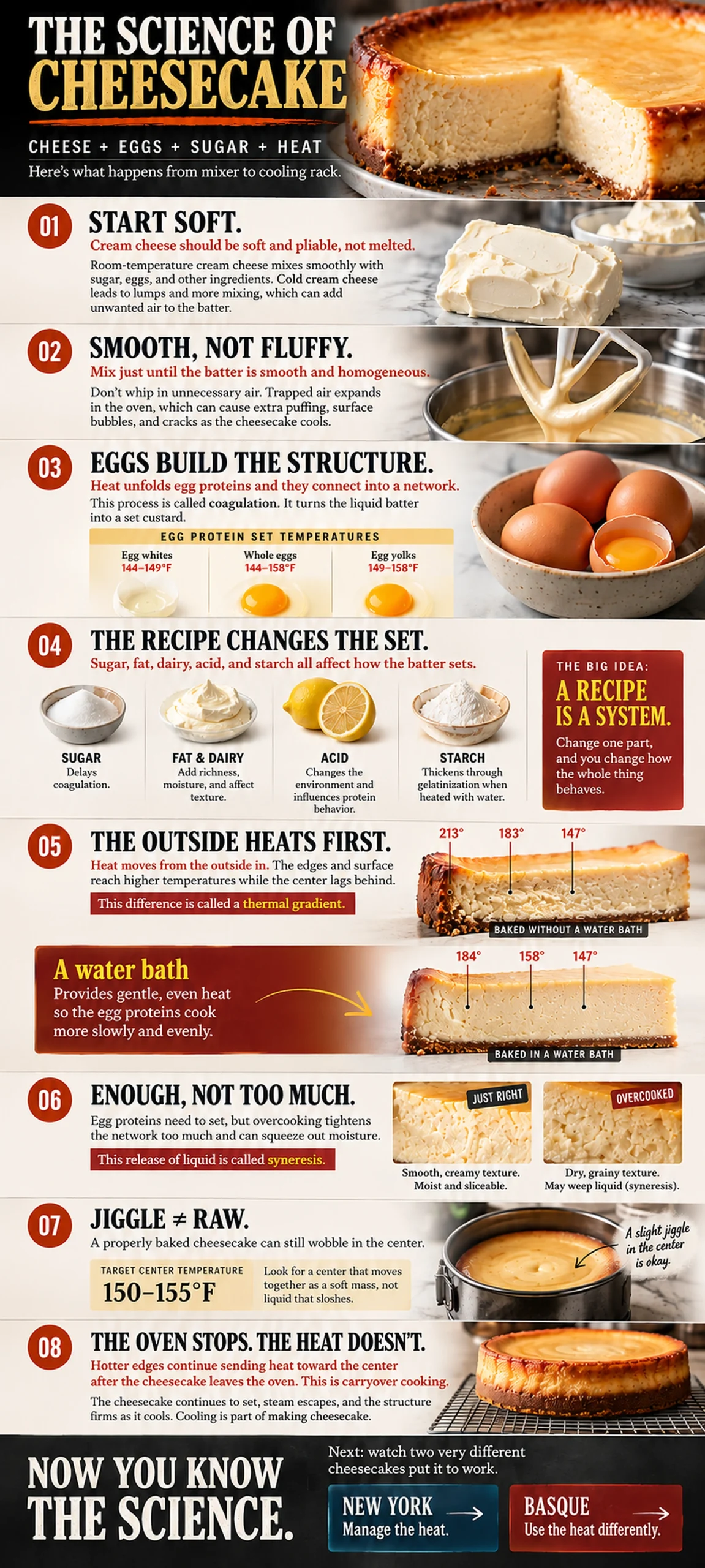
You don’t need to reread this entire lesson every time you want to review cheesecake. The materials below are designed to give you faster ways back into the important stuff. Use the Terms when the vocabulary gets fuzzy. Use the TL;DR when you need to check what you actually remember. Use the infographic when you need to see how the science fits together. If one of those exposes something you don’t understand, go back to that part of the lesson and straighten it out.
Terms
Custard
A preparation in which egg proteins provide important thickening or structure. Cheesecake may look like cake, but its basic baking behavior is much closer to custard.
Coagulation
The process in which proteins unfold and connect into a network as they are heated. In cheesecake, egg coagulation provides much of the structure that turns batter into a sliceable custard.
Overcoagulation
Protein coagulation pushed beyond the desired point. The tightening network makes cheesecake increasingly firm, dry, and eventually grainy.
Syneresis
The release of liquid from a gel or protein network as that structure contracts. In an overcooked cheesecake, expelled moisture can migrate downward and soak the crust.
Gelatinization
The swelling and thickening of starch granules as they absorb water during heating. When a cheesecake contains flour or cornstarch, gelatinization adds another source of structure.
Thermal Gradient
The difference in temperature between different parts of the same food. In cheesecake, the outside heats before the center and can become much hotter while the middle is still setting.
Carryover Cooking
Continued cooking caused by heat already stored in the food after it leaves the oven. A cheesecake continues changing after active baking stops.
Fresh Cheese
Cheese intended to be eaten without extended aging. Cream cheese, ricotta, and quark are examples, although their composition, production, and texture differ considerably.
TL;DR — The Least You Need to Know
Memorize
- Cheesecake is an egg-set custard.
- 150–155°F in the center is the general target range for a creamy baked cheesecake.
- Coagulation sets egg proteins. Gelatinization thickens starch when starch is present.
- Overcoagulation produces increasingly dry, firm, grainy custard. Syneresis is liquid expelled from a tightening network.
- Thermal gradient describes the temperature difference across the cheesecake. Carryover cooking continues after it leaves the oven.
Understand
- Cream cheese needs to be soft and pliable so the batter becomes smooth without excessive mixing.
- Cheesecake batter should be smooth, not fluffy. Unnecessary air expands during baking and contracts during cooling.
- The outside heats before the center. Managing that thermal gradient is one of the central problems in baking cheesecake.
- Cooling changes both the custard structure and the physical state of the fat. Cooling is part of making cheesecake.
Apply
- Get the cream-cheese mixture smooth before the eggs go in. Scrape instead of solving lumps with mixer speed.
- Once the eggs are incorporated, mix only until the batter is homogeneous.
- Use recipe time to know when to start checking. Use appearance, movement, and temperature to decide when the cheesecake is done.
- A tender center can jiggle as one mass. A liquid center sloshes or ripples. Movement alone does not mean raw.
The Science of Cheesecake — At a Glance
This is the whole system on one page: ingredient temperature, mixing, egg coagulation, the thermal gradient, doneness, carryover cooking, and cooling. Use it to trace what happens from the mixer to the finished cheesecake—and to find the point in the process where something went wrong.