
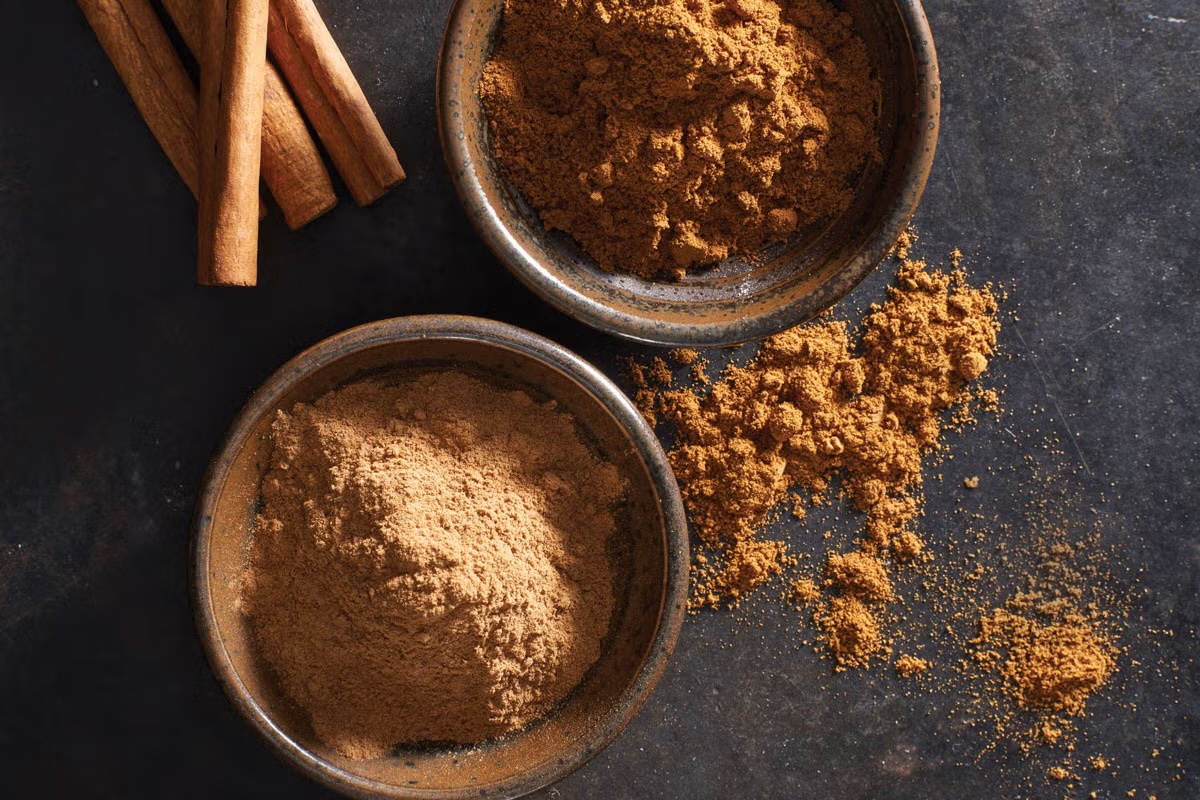
Most of us think of cinnamon as that reliable, red-brown powder sitting in the spice cabinet—the finishing touch for oatmeal or the soul of a Snickerdoodle. But if you step behind the counter of a professional kitchen or into the chemistry lab of a food scientist, you’ll find that “cinnamon” is actually a tale of two very different spices.
Whether you are aiming for the legendary aromatic punch of a Cinnabon or the delicate complexity of a Michelin-star custard, understanding the difference between Cassia and Ceylon is the first step toward culinary mastery.
The Anatomy of a Spice
Cinnamon isn’t a seed or a fruit; it’s inner bark. Cultivators shave off the rough outer layer of trees in the Cinnamomum genus and carefully peel the thin layer underneath. As these strips dry in the sun, they naturally curl into the tubes we call quills.

1. Cassia: The Rugged Powerhouse
Cassia is likely what you have in your pantry right now. Harvested primarily in Indonesia, Vietnam, and China, it is the “heavy hitter” of the spice world.
- The Look: Dark, reddish-brown, and thick. A Cassia quill is usually a single, sturdy piece of bark that is difficult to break by hand.
- The Flavor: Bold, woody, and “hot.” It contains a high concentration of cinnamaldehyde (up to 95% of its essential oil), which gives it that unmistakable spicy punch.
- The “Cinnabon” Connection: Cinnabon uses a proprietary grade of Cassia called Makara®. This specific Indonesian Korintje cinnamon is prized for its high oil content, allowing the scent to waft through an entire shopping mall and the flavor to stand up against heavy fats and sugars without fading.
2. Ceylon: The Delicate Scholar
Often called “True Cinnamon,” Ceylon is native to Sri Lanka. If Cassia is a rock concert, Ceylon is a delicate violin solo.
- The Look: Tan or pale brown. Unlike the thick rolls of Cassia, Ceylon quills are made of many paper-thin layers rolled together like a fine cigar. You can easily crush them with your fingers.
- The Flavor: Subtle, sweet, and complex. While it has less cinnamaldehyde, it contains eugenol (clove-like) and linalool (citrus/floral), creating a much more sophisticated profile.
- The Experience: Tasting Ceylon is like listening to a high-fidelity vinyl record in a leather lounge chair—it’s an investment in nuance.

The Science of the “Bake”
For culinary students, application is as important as ingredient.
- The “Schmear” Technique: In professional pastry, avoid simply sprinkling cinnamon. Mix the spice with a small amount of fat and flour to create a schmear. This prevents “gapping” (where the dough pulls away from the filling) and ensures even distribution of the volatile oils.
- Managing Browning: Cinnamon is highly susceptible to the Maillard Reaction and Caramelization. In enriched doughs, caramelization can happen faster than the protein structure sets. The Rule: Trust the probe. Pull rolls at an internal temperature of 185- 190°F. If you wait for the “look” of a dark loaf, the high sugar/cinnamon content may lead to a bitter, burnt exterior while the interior remains gummy.
Culinary Cheat Sheet: Which Should You Use?
Professional Applications
| Dish Type | Recommended Variety | Reason |
| Cinnamon Rolls / Breads | Vietnamese (Saigon) | High oil content survives high heat. |
| Custards & Mousse | Ceylon | Floral notes aren’t masked by heavy fats. |
| Apple Pie / Fruit | Indonesian (Korintje) | Mellow and warm; balances acidity of the fruit. |
| Savory Braises/Stews | Chinese (Cassia) | Strong, woody, and stands up to long cook times. |
Technical Conversion & Storage
- Sticks to Ground: Use 1/2 to 1 teaspoon of ground cinnamon for every 1 cinnamon stick.
- Oxidation: Volatile oils in cinnamon dissipate quickly once ground. For peak aromatics in a professional setting, grind your quills fresh for each service.
SIDE BAR #1 : Why Cinnamon Rules the Holidays
For the modern chef, the “holiday spice” phenomenon is more than just tradition—it is a convergence of economic history, food science, and sensory biology.
1. The “Luxury” Legacy Historically, cinnamon was a rare, high-cost import from Sri Lanka and Indonesia. Because of its staggering price during the Middle Ages and Renaissance, it was reserved exclusively for the most significant feasts of the year. This created a lasting cultural “flavor memory” that links the scent of cinnamon to celebration and wealth.
2. Natural Preservation Before refrigeration, cinnamon’s high essential oil content was a functional necessity. Its antimicrobial properties helped preserve winter stores, such as minced meats and dried fruits. While the meat eventually left many of these recipes, the heavy spice profile remained as the signature flavor of the season.
3. The Trigeminal “Warmth” Cinnamon is chemically classified as a warming spice. The compound cinnamaldehyde triggers the trigeminal nerve—the same sensory pathway that perceives physical heat. In the cold winter months, humans are biologically primed to seek out these “thermogenic” flavors to provide a psychological and physiological sense of warmth.
4. The Q4 Marketing Effect In professional foodservice, cinnamon is a high-impact aromatic. Its scent has a unique “reach,” making it a powerful tool for driving seasonal sales. Studies show that the aroma of cinnamon can increase a consumer’s “willingness to buy” during the winter, though this effect diminishes significantly in the summer heat.
SIDE BAR #2: How Safe is the Coumarin in Cinnamon?
Beyond taste, there is a biological reason to know your cinnamon. Both varieties contain coumarin, a natural hepatotoxin and blood thinner that can be toxic to the liver and be damaging in high doses.
| Feature | Cassia (The Common Type) | Ceylon (The “True” Type) |
| Coumarin Content | High (~1.0%) | Negligible (~0.004%) |
| Safety Threshold | 1–2 teaspoons can exceed daily limits | Virtually impossible to exceed limits |
The Takeaway: if you use cinnamon daily for health benefits (or eat 5 cinnamon buns each morning), Ceylon is the safer choice.
Whether you’re reaching for the “Steve’s 1993 Honda Civic” intensity of Cassia or the “High-End Stereo” elegance of Ceylon, you’re now equipped to choose the right bark for the bite.