
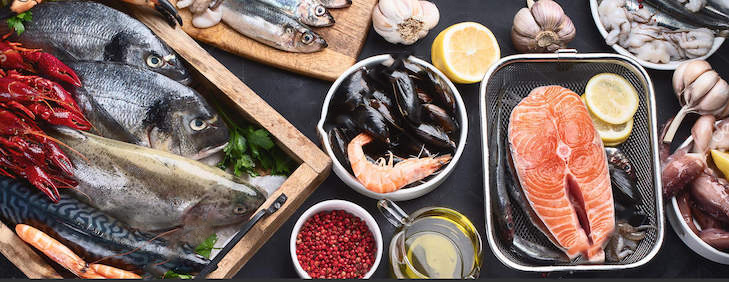
Think of mastering seafood as the ultimate culinary playground where speed, precision, and incredible flavor collide. From the satisfying sizzle of a scallops’ perfect golden crust to the artistic challenge of slicing sashimi, seafood offers a level of variety and creativity that meat simply can’t match. It’s an invitation to experiment with vibrant global flavors—think zesty ceviches, buttery lobster tails, and spicy grilled octopus—that turn every service into a high-energy masterclass. Learning to handle the ocean’s best isn’t just a career move; it’s your ticket to creating show-stopping, delicious dishes that are as exciting to cook as they are to eat.
Section 1: Integrity and Quality Control
Before a single fish is dipped in batter and fried up golden brown and delicious, it must pass through a rigorous system of inspections and grading.
Inspections
- FDA: The U.S. Food and Drug Administration monitors interstate shipments and requires processors to follow HACCP (Hazard Analysis and Critical Control Point) programs.
- USDC: The FDA does not inspect seafood when it is caught. Instead, many processors participate in the voluntary seafood inspection program conducted by the U.S. Department of Commerce. They PAY for the right to have a USDC inspector at their facility and earn the right to smack the PUFI (Processed Under Federal Inspection) mark on what they want to sell, signifying the product is safe, wholesome, and packed in a sanitary environment required by the National Marine Fisheries Service (NMFS)-a division of the USDC.
Grading
The National Marine Fisheries Service (NMFS) grades seafood as A, B, C, or Below Standard. These grades are determined by a specific set of sensory and physical factors.
- Grade A: The gold standard. Excellent appearance, good flavor, no odor, and zero blemishes. Only Grade A seafood is marked with a stamp and ALL high-end restaurants exclusively use Grade A.
- Grade B: Good quality but may have minor blemishes. Suitable for applications where appearance is less critical.
- Grade C: Relatively good quality, but intended for dishes where the seafood is not the visual centerpiece (e.g., stews or fillings).
Section 2: How Chefs Classify Seafood
In the culinary world, seafood is broadly divided into two categories: Shellfish (no backbone, outer shell or exoskeleton) and Finfish (internal skeleton/backbone).
The Shellfish Family
Cooking mollusks is a masterclass in sensory awareness and technical precision. Because these creatures are highly perishable and prone to rubbery textures, success depends on your ability to judge freshness and manage aggressive heat.
Mollusks: Three Culinary Categories
In a professional kitchen, you will typically work with three distinct types of mollusks, each requiring a different approach:
- Bivalves (Clams, Mussels, Oysters, Scallops): These have two hinged shells. Most are steamed just until they pop open, while scallops are prized for a high-heat pan-sear to create a golden crust.
- Cephalopods (Squid, Octopus): These lack external shells (except the nautilus). They follow the “hot and fast” or “low and slow” rule: sear them quickly for tenderness, or braise them for a long time to break down tough connective tissues.
- Gastropods (Snails, Whelks, Abalone): These single-shelled mollusks often require tenderizing via pounding or extended poaching (sometimes up to 40 minutes for large sea snails) to avoid a “chewing gum” texture. While they are TECHNICALLY seafood, we actually cook them in an entirely different section of the culinary curriculum. You can forget about them till later. Mostly.
Critical Food Safety & Selection
Mollusks are “high-risk” foods. They all have the capacity to spread some pretty terrible illness and toxins… so we HAVE to be careful. Memorizing these indicators is essential for any ServSafe-certified professional:
- The “Closed Before, Open After” Rule: Live clams, oysters, and mussels should be tightly closed when raw. If one is open, tap it; if it doesn’t snap shut, discard it. Conversely, if a shell remains tightly closed after cooking, it was likely dead before it hit the heat—toss it out.
- Receiving & Tags: In a restaurant, you must keep the shellstock tags for every bag of mollusks for 90 days after the container is emptied. This is a legal requirement for traceability in case of a foodborne illness outbreak.
- Storage: Never store live mollusks in airtight bags or submerged in fresh water, which will kill them. Store them in a high-humidity environment, such as a perforated pan over ice, covered with a damp cloth.
Preparation Techniques
- Purging: Many clams and mussels contain sand. Soak them in cold, salted water for 20–30 minutes before cooking to encourage them to “spit out” grit.
- Debearding: Mussels often have a “beard” (byssus threads) used to attach to rocks. Pull this toward the hinge of the shell to remove it just before cooking.
- Gentle Steaming: Use a shallow amount of flavorful liquid (wine, aromatics, or stock). The goal is to steam, not boil, to preserve the delicate “liquor” inside the shells.
Crustaceans: Shrimp, Lobster, Crab, and Crayfish
For my culinary students, shrimp is a “triple threat” ingredient: it requires an understanding of market terminology, precise sizing, and split-second cooking. Because shrimp is expensive, mastering these areas is essential for controlling food costs and maintaining quality in professional kitchens. And if you can’t make a shrimp scampi, what good are you?
Market Forms & Sizing
Shrimp is sold in specific formats that determine both your labor time and your final yield. Here are the Common Market Forms you’ll find at the store:
- Green Headless: Raw, shell-on shrimp with the head removed. This is the industry standard for “fresh” shrimp.
- P&D (Peeled & Deveined): The shell and intestinal tract are already removed. This is the most expensive but lowest-labor option.
- PUD (Peeled, Undeveined): Shelled but still contains the “sand vein.”
- IQF (Individually Quick Frozen): Shrimp frozen separately rather than in a solid block, allowing you to thaw only what you need.
- The “Count” System: Shrimp size is measured by how many pieces make up one pound. The lower the number, the larger the shrimp.
- U/10: “Under 10” per pound (colossal).
- 16/20: 16 to 20 per pound (jumbo).
- 31/40: 31 to 40 per pound (medium-large).
Shrimp Varieties
Different species offer distinct textures and flavor profiles, making them better suited for specific dishes.
| Variety | Profile | Best Culinary Use |
|---|---|---|
| White Shrimp | Mild, sweet, very tender. | Versatile; ideal for scampi, stir-fries, and poaching. |
| Brown Shrimp | Robust, “ocean-fresh,” slightly salty. | Holds up to bold flavors like gumbo or Cajun boils. |
| Pink Shrimp | Very sweet and delicate. | Shrimp cocktail or light seafood salads. |
| Tiger Shrimp | Firm, meaty, and mild. | Grilling or curries where a “steak-like” bite is needed. |
| Rock Shrimp | Hard shell; flavor like lobster. | Deep-frying or as a budget-friendly lobster substitute. |
Professional Cooking Techniques
Shrimp lacks heavy connective tissue, meaning it can turn from succulent to “rubbery” in seconds.
- Visual Indicator: The “C” vs. “O” Rule
- The “C”: A perfectly cooked shrimp curls into a loose “C” shape. It should be opaque and pink.
- The “O”: An overcooked shrimp tightens into a closed “O.” This indicates the proteins have contracted too much, resulting in a tough texture.
- Essential Methods:
- Sautéing: Use high heat and a thin layer of fat. Pat shrimp bone-dry first to ensure a sear rather than a steam.
- Poaching: Use flavorful liquid at a low simmer (155-160*F). This is the best method for shrimp cocktails to keep them “silky”.
- Grilling: Skewering shrimp makes them easier to flip simultaneously, ensuring even doneness across the batch.
LOBSTER
Mastering lobster is a high-stakes test of technical precision and cost management. You’ll primarily work with two categories: the True Lobster (like the Maine or European Blue), prized for its sweet, meaty claws, and the Spiny Lobster (or Rock Lobster), which lacks claws and is valued for its versatile, robust tail meat. For refined small plates, you may also encounter Langoustines (Dublin Bay Prawns or the “Norway” Lobster)—delicate, slim crustaceans that look like tiny lobsters but offer a much sweeter, more elegant flavor profile. While you CAN buy lobster frozen or canned, it’s much more common to buy it live because lobsters possess aggressive digestive enzymes that begin to decompose their own bodies almost immediately after death. Keeping them alive is the only way to ensure the meat remains firm and safe for consumption until the moment of cooking.
What’s more, lobsters naturally harbor bacteria in their flesh and shells and their death triggers a dangerous biological clock.
- Bacterial Proliferation: Once the lobster’s immune system stops functioning, bacteria like Vibrio can double every 15 minutes, rapidly reaching dangerous levels.
- Toxin Release: These bacteria can release toxins that are NOT destroyed by the heat of cooking.
- The Ammonia Sign: Spoiled lobster often emits a strong ammonia-like odor, which is a clear signal that the meat is no longer safe to eat.
Lobsters are classified by weight:
- chicken lobsters weigh approximately l pound;
- quarters lobsters weigh approximately 1.25 pounds;
- select lobsters weigh approximately l.5 – 2.5 pounds;
- jumbo lobsters weigh over 2.5 pounds.
In the industry, you’ll also hear chefs talk about Hard Shell versus Soft Shell (or “New Shell”) lobsters. Hard shells are the heavyweights—they are packed with dense meat and are great for shipping. Soft shell lobsters have just molted and are still growing into their new outfit, so-to-speak. While they have less meat inside, it is often sweeter and easier to get out of the shell.
As a student, your biggest challenge is the yield: only about 20% to 30% of that heavy lobster is actually edible meat. This means every ounce is gold. If you overcook it by even a minute, that “gold” turns into rubber, and you’ve just wasted a high-dollar ingredient. Mastering the lobster means learning to respect the price tag by using the tails for entrees, the claws for salads, and the shells for a rich, world-class bisque.
CRAB
When you step into the world of crab, you’re handling some of the most expensive “gold” in the kitchen. To master it, you first have to know your players. You’ll likely work with the sweet, delicate Blue Crab from the Atlantic—famous for its “soft-shell” phase—or the massive King and Snow crabs, whose legs are the stars of high-end seafood towers. If you’re on the West Coast, the Dungeness is your go-to for its rich, buttery body meat, while the Stone Crab is unique because we typically only harvest its dense, lobster-like claws.
In a professional kitchen, you aren’t just buying “crab meat”; you’re buying specific grades. As a chef, you have to know when to use the pricey, unbroken Jumbo Lump for a stunning cocktail versus using the shredded Special or Claw meat for a flavorful bisque or stuffing. Using Jumbo Lump in a dip where it just gets broken up is a “rookie move” that wastes the restaurant’s money.
- Colossal/Jumbo Lump: The largest unbroken pieces of white meat from the swimming legs. Use this for high-end cocktails or where the visual “wow factor” matters.
- Lump: Smaller broken pieces of jumbo lump. Ideal for high-quality crab cakes.
- Backfin: A mix of small lump pieces and body meat.
- Special: Shredded flakes from the body; best for dips, bisques, or stuffings.
- Claw Meat: Darker, more “seafood-forward” flavor. It’s the least expensive but has the most robust taste
The biggest technical trap with crab is overcooking. Most of the King and Snow crab you’ll receive arrives pre-cooked and frozen, so your job isn’t to “cook” it—it’s to gently reheat it. If you get too aggressive with the heat, that sweet, tender meat turns into rubbery strings. Finally, never forget the yield: in a whole crab, only about 15% to 20% is actual meat. This means every ounce you extract represents a massive part of your food cost. Treat every flake like a luxury, because to your bottom line, it absolutely is.
The Finfish Family
Finfish are categorized by their shape, which dictates how they are fabricated (cut).
- Roundfish: Round body, eyes on both sides of the head, swim upright. Examples: Cod, Sea Bass, Tuna, Trout.
- Flatfish: Oval and flat, swim on their side, both eyes on the upper side. Examples: Flounder, Halibut, Turbot.
Section 3: Market Forms and Fabrication
When you move from shellfish to finfish, you’re entering the world of high-speed technical precision. To a chef, a fish isn’t just “seafood”; it’s defined by its skeleton and its fat content. You’ll first learn to distinguish between round fish (like salmon or bass), which have eyes on both sides of their heads and yield two thick fillets, and flatfish (like flounder or sole), which swim on their sides and give you four thin, delicate fillets. This distinction isn’t just trivia—it dictates exactly how you’ll hold your knife during fabrication.
The second thing you must master is fat content, because it tells you exactly how to cook the fish. Lean fish, like cod or tilapia, have almost no fat in their flesh; if you look at them sideways on a grill, they’ll dry out. These are your candidates for moist-heat methods like steaming or poaching. On the other hand, fatty fish like salmon, tuna, or mackerel are “bulletproof” on the grill or in a hot pan because their natural oils keep the meat succulent and help you achieve that prized, crispy skin.
The most important skill you will develop, however, is your sensory “BS detector” for freshness. Because finfish are highly perishable, you can’t just trust a delivery date. You have to look for clear, bulging eyes (not cloudy or sunken), bright red gills, and flesh that springs back when you poke it. If it smells like the “ocean,” it’s gold; if it smells “fishy” or like ammonia, send it back. In this industry, your reputation is only as good as the freshness of your protein, and with finfish, there is nowhere to hide an old product.
Common Market Forms
When you’re standing at the loading dock at 5:00 AM, you aren’t just looking for “fish”—you’re looking for the specific market form that fits your menu’s labor budget and food cost. As a chef, you have to decide if you want to pay for the fish’s weight in bones and guts or pay a premium for someone else to do the butchery for you.
The most basic form is Whole or Round, exactly as it came out of the water. While this gives you the best price per pound, it requires the most labor and generates the most waste. Many kitchens prefer Dressed fish, where the scales, fins, and internal organs are removed, or Pan-Dressed, which goes a step further by removing the head and tail so it’s ready for the heat. If you’re running a high-volume steakhouse, you’ll likely order Fillets—the boneless sides of the fish—which are the industry standard for fast, consistent service.
For larger species like Tuna or Swordfish, you’ll work with Steaks (cross-section cuts that include a piece of the backbone) or Wheels/Loins, which are massive, boneless prime cuts. Every choice is a trade-off: buying “Whole” allows you to use the bones for a world-class fumet (fish stock), but buying “Fillets” ensures your line cooks can plate a dish in minutes without picking out bones. Mastering these forms means knowing exactly how much yield you’ll get from each—because in a professional kitchen, you don’t just cook the fish, you account for every ounce of it.
- Whole or Round: Exactly as caught.
- Drawn: Viscera (guts) removed.
- Dressed: Viscera, scales, fins, and usually the head removed.
- Fillets: Boneless pieces cut from the sides. Roundfish yield two fillets; flatfish yield four.
- Steak: Cross-section cuts, typically from large fish like Salmon or Swordfish.
Section 4: The Cold Chain: Receiving and Storage
Seafood is highly perishable. The “Cold Chain” must never be broken.
Receiving Standards
When a delivery arrives, you must inspect it immediately.
- Fresh Finfish: Look for bright red gills, shiny skin, firm flesh that springs back, and clear, full eyes. Reject if you smell ammonia, the gills have turned gray, the skin is dry, or see cloudy, red-rimmed, or sunken eyes.
- Fresh Shellfish: Receive live shellfish on ice and at an air temperature of 45°F or lower and an internal temperature no greater than 50°F. Then cool the shellfish to 4l°F or lower within four hours. Receive shucked shellfish (shellfish that has been removed from its shell) at an internal temperature of 4l°F or lower. Shellfish must have shellstock identification tag attached to the bag or box. Look for mollusks with closed, unbroken shells; if open, they should close when tapped. Look for a mild ocean smell. Reject if the shellfish is stinky, sticky, or slimy; if the shells are broken or muddy; if frozen: check for signs of freezer burn.
Storage Requirements
Fish items are highly perishable, so proper storage is very important. If a delivery is accepted, use the following criteria for safe and proper storage.
- Temperature: Store fresh fish at an internal temperature of
41F5C
- or lower.
- Method: Pack whole fish in self-draining beds of crushed or flaked ice. Crushed ice is superior because it packs tightly, eliminating air pockets. Ice beds must be self-draining, and the containers should be cleaned and sanitized regularly, then relined with fresh ice. Mollusks must be stored in the same container they were shipped in.
- Traceability: Keep shellstock identification tags on file for 90 days after the last item is served. This is a legal requirement for tracking foodborne illness. Shellstock identification tags document when and where and by whom the shellfish were harvested.
Section 5: Fabricating Seafood
Finfish fabrication techniques consist of scaling, trimming, gutting, and filleting the fish. Scaling methods are the same for both roundfish and flatfish, but the way you gut and fillet them is sligh~y different. The tools needed for finfish fabrication are a sharp, flexible filleting knife and a clean, sanitized cutting board. When fabricating finfish, put much of the trim to use in a filling, canape, soup, or sauce.
When scaling finfish, scrape off the scales from tail to head. Once the fish has been scaled and trimmed, it should be gutted. When gutting roundfish, make a slit in the fish’s belly and pull out the guts, or insides. Gutting a flatfish is a bit easier. Make the cuts around the head. As the head is pulled away from the body, the guts come away with the head. Filleting a fish is the step that separates the flesh of the fish from the bones. Flatfish produce four fillets, and roundfish produce two fillets. It is important to remove all of the bones from the fillet.
Shellfish Unlike finfish, shellfish do not have bones or a skeletal system. They do, however, need to be fabricated.
Mollusks, such as clams and oysters, are often served on the half shell, so it is important not to destroy the shell when shucking. Shucking is the opening or removing of a mollusk’s shell. Scrub all mollusks well under cold running water before opening them to remove sand and grit.
When fabricating lobsters, removing the meat from the shell is easier when the lobster has been partially or fully cooked. Blanching the lobster lightly in a steam bath, in boiling water, or in a hot oven is all that is necessary to make removing the meat easier.
Shrimp are cleaned by removing the shell and deveining: removing the shrimp’s digestive tract.
Section 6: Culinary Application and Doneness
The best way to pair a fish with a cooking technique is to consider the flesh of the fish. For example, mackerel (an oily fish) cooks best with a dry-heat cooking technique, such as grilling or broiling. Prepare tuna and salmon, which contain a moderate amount of fat, using any cooking method. Very lean fish, such as sole and flounder, have the most flavor when they are poached or sauteed.
| Fish Type | Best Cooking Methods | Examples |
| Fatty Fish | Dry-heat (Baking, Broiling, Grilling) | Salmon, Mackerel, Tuna |
| Lean Fish | Moist-heat (Poaching, Steaming) or Dry-heat with fat (Sautéing) | Sole, Flounder, Cod |
| Shellfish | Quick Sauté, Steaming, or Deep-frying | Shrimp, Scallops, Lobster |
Section 7: Cooking Methods
Dry-Heat Cooking Fatty fish cut into fillets or steaks are the best cuts to bake, broil, and grill. Mostfish are baked between 350°F and 400°F. Bake larger fish at the low end of this range so they cook evenly. To retain moistness, coat fish with bread crumbs, crushed nuts, or thinly sliced vegetables or meat, such as prosciutto, and bake it on an oiled or buttered baking sheet. When grilling or broiling fish, remember to oil the grill or broiler so the fish will not stick to the cooking surface.
Dry-Heat Cooking with Fat and Oil Lean finfish and shellfish are best when using dry-heat cooking with fat and oil, such as sauteing, stir-frying, pan-frying, and deep-frying. Coat fish with flour or a breading before cooking in either clarified butter or oil. Small items, such as shrimp and scallops, are extremely delicate and must be quickly sauteed, stir-fried, or pan-fried over very high heat. Larger items require lower heat for even cooking.
When deep-frying, the fish should be very fresh, the fat used to deep-fry should be of high quality, and the item should be served immediately after cooking. Breading the fish before cooking will protect it from the hot fat and provide a crispy coating. It is necessary to follow sanitation rules when working with the batter.
Moist-Heat Cooking Moist-heat cooking techniques-poaching, simmering, and steaming-are excellent ways to cook fish, especially the lean varieties. To enhance the flavor of the fish, poach it in court bouillon (cort boo-YON), a stock made of vegetables and an acid such as vinegar or wine. Also poach fish in fumet (foo-MAY), a rich fish stock made with wine, or simmer it in its own juices with a little added liquid. Often the liquid used makes an excellent base for a sauce that is then served with the fish.
Another method is poaching in olive oil or butter, which may or may not be infused with other flavorings. The principles for poaching in olive oil or butter are the same as for poaching in other liquids regarding time and temperature.
Shallow-poached fish and shellfish should be opaque. The flesh of oysters, clams, and mussels should show curling on the edges. No white deposits should show on the flesh of finfish or shellfish, as this indicates cooking at too high temperature or for too long. The finished item should be moist and extremely tender. Any stringiness, dryness, or excessive flaking indicates that the food was cooked too long or at too high a temperature.
En papillote (en paw-pee-YOTE) is one classical moist-heat cooking technique that is especially suited to fish. In this cooking method, encase the fish, herbs, vegetables, and/or sauce in parchment paper and steam in a hot oven. Fish cooked en papillote should be naturally tender. Sear thicker cuts of fish first to ensure even cooking. Modern versions of this technique include wrapping the fish in banana leaves.
Combination Cooking The combination cooking methods, stewing and braising, use both dry and moist heat. These methods have produced some very popular fish recipes over the years. Some of the best-known recipes include
- bouillabaisse (BOO-ya- base), a French seafood stew made with assorted fish and shellfish, onions, tomatoes, white wine, olive oil, garlic, saffron, and herbs
- cioppino (cho-PEE-noh), a San Francisco version of seafood stew made with local seafood; and
- jambalaya (jam-bo-LIE-ah), a Creole stew from Louisiana made with rice, shellfish, and vegetables, and sometimes andouille sausage as well
Section 8: Determining Doneness
Overcooking seafood is a cardinal sin in the kitchen. Almost all finfish and shellfish are naturally tender, so take GREAT CARE to not undercook or overcook fish for tenderizing purposes. Cook all fish just until done, which is verified by using a thermometer that should read 145°F. Use these five indicators:
- Opacity: Translucent raw flesh becomes opaque.
- Firmness: Flesh springs back to the touch. Raw fish is somewhat mushy. As the flesh cooks, it becomes firmer and springs back to the touch when done.
- Separation: Flesh pulls easily away from the bone. As the fish cooks, the flesh loosens and con be effortlessly separated from the bone when done.
- Flaking: Muscle fibers begin to separate (flake) as connective tissue breaks down and muscle fibers begin to separate from each other, or flake. The fish is done as soon as flaking starts to occur.
- Temperature: Internal temperature reaches at least
145F63C
Finfish
Salmon en Papillote (Salmon in Parchment)
Ingredients
- 1.5 lbs Salmon cut into 4 pieces
- 1 Small zucchini thinly sliced
- 1 Head fennel thinly sliced
- 1 Lemon thinly sliced
- 1 Frond Fresh Dill
- 1 tbsp Olive oil
- 1 tsp Salt
- 1/2 tsp Pepper
Instructions
- Cut parchment into 4 large ovals 15” by 10” inches. And fold in half.
- On half of each parchment layer on ¼ of the zucchini, ¼ the fennel, 1 piece of salmon, sprinkle with ¼ tsp salt, ¼ pepper, ¼ tsp dill, lemon slices, drizzle with ¼ cup olive oil and a few pieces of fennel fronds. Repeat with the three remaining salmon fillets.
- Close the parchment by folding the other half over the prepared salmon and carefully roll the open edges toward the center.
- Set pouches on a baking sheet and bake on the center rack for 15 minutes.
- Open carefully using a fork and serve.
Notes
- A note on seasonality. May-October is salmon season in the U.S., and that is when you can expect to find the best stuff most widely available.
- Variety. From Coho to King, to super-meaty Copper River salmon, most any variety of wild salmon that looks bright pink and marbled with at least a little fat will be delicious in the salmon in parchment recipe.
- Wild vs farmed. Wild salmon is usually better than farmed—better tasting, better for you, better for the environment. However, responsibly farmed salmon can be a better choice than irresponsibly caught wild salmon.


Tuscan Broiled Trout
Ingredients
- ¼ cup olive oil
- 1 clove garlic cut into thin slices
- ½ teaspoon dried sage
- ½ teaspoon dried rosemary crumbled
- 2 tablespoons white wine vinegar
- ½ teaspoon salt
- ¼ teaspoon fresh-ground black pepper
- 4 trout fillets about 1 pound total
Instructions
- Preheat the broiler. Combine the oil, garlic, sage, and rosemary in a sauce pan. Cook over moderately low heat until the garlic just starts to color, about 2 minutes. Remove from the heat and immediately stir in the vinegar, 1/4 teaspoon of salt, and the pepper.
- Put the trout fillets on a foil-lined half sheet pan. Sprinkle the fish with the remaining 1/4 teaspoon salt. Add half of the oil-and-vinegar mixture and turn to coat. Grill or broil the fish skin-side DOWN for 2 minutes. Turn and cook until just done, about 2 minutes longer for 1/4-inch-thick fillets.
- To serve, whisk the remaining oil-and-vinegar mixture and drizzle some over the hot fish. Serve with any remaining vinaigrette on the side.
Notes

How to Fillet a Roundfish
Instructions
- Before you fillet a whole fish, it should be scaled. Doing the job yourself isn’t difficult, but it’s messy because the scales tend to fly all over and you find them in weird places around the kitchen for days. Scale the whole fish submerged in water or inside a plastic bag to make cleanup easier. Hold the fish firmly by the tail and scrape the knife from the tail to the head of the fish removing the scales in a stroking motion – they should flake off quite easily.
- Rinse the fish under running water and pat dry. Position it on a cutting board with its back towards you. Using a sharp knife held behind the gills and side fin, cut straight down halfway through the fish to the backbone, being sure to include the meaty spot right behind the top of the head.

- Turn the knife parallel to the board (at a 90-degree angle to your first cut) and cut along the spine from head to tail, removing the belly flap with the fillet. You’ll need to apply a fair amount of pressure at first to break through the rib bones. As you cut, press down firmly on top of the fish to steady it.
- Finish removing the fillet by cutting all the way through the skin at the tail. Repeat steps 1 through 3 on the other side of the fish.
- Remove the rib bones and belly flap by cutting under the top of the rib bones to the bottom of the fillet at a 45-degree angle. There is some meat here, but on small fish it is minimal. (On larger fish like tuna, this fatty belly is thicker and very flavorful.)
- Finally, check for pin bones. Some fish have little bones that run along the midline of the fillet and are nearly impossible to see. To remove them, feel along the fillet to locate each bone and then pluck it out with a pair of clean needle-nose or fish pliers. Pull the bones out in the direction they are pointing, as you would a splinter.


Shellfish

Shrimp Scampi
Ingredients
- 1 lbs peeled and deveined shrimp
- 4 tbsp butter
- 2 tbsp EVO
- 6 cloves garlic minced
- ½ cup unsweetened white grape juice
- 2 tablespoon white wine vinegar
- 2 tbsp lemon juice freshly squeezed
- pinch crushed red pepper
- Salt and pepper to taste
- ¼ cup Chopped parsley for garnish
Instructions
- Heat EVO and two tablespoons of butter in a saute pan over medium-high heat.
- Add minced garlic and cook until fragrant but not browned – about 1 minute.
- Add white grape juice, vinegar, crushed red pepper, and half the lemon juice. Scrape up fond. Cook until reduced by half.
- Add shrimp and cook for 2-4 minutes. DO NOT OVERCOOK!!!
- Remove from heat. Add remaining butter, cut into small pieces. Stir to melt.
- Taste and add more lemon juice, salt, and pepper if necessary. Garnish with Parsley. Serve immediately.
Notes
- “Scampi” is the Italian word for langoustine, a type of crustacean that’s common in Europe (scampi are also called Norway lobsters and Dublin Bay prawns) and is much bigger than even jumbo shrimp. In Italy, a quick sauté in butter, olive oil and garlic (and sometimes white wine) is the traditional way to serve them.
- Italian Americans called it “Shrimp Scampi” because it refers to cooking SHRIMP the same way they used to cook SCAMPI.

How to Peel and Devein a Shrimp
Instructions
- First pull off the legs: This isn’t strictly necessary and you can pull off the shell without removing the legs, but it's best to get them out of the way

- Break open the shell along the underside and peel off: Work your thumbs underneath the shell and crack it open. As the shell cracks, you’ll be able to peel it away from the shrimp.
- The tail can often be left on for cooking, if you like.
- If you’d like to take off the tail now, pinch the tail where it meets the body of the shrimp and gently pull. The rest of the shrimp should pull cleanly out of the tail.
- To devein the shrimp, first score the shrimp along its back with a paring knife: Gently run your paring knife along the back of the shrimp. DO NOT cut very deeply — a shallow cut is fine.

- Look for the vein: The vein will look like a long gritty string. You may not find a vein in every shrimp — that’s ok. The size of the vein depends on the diet of the shrimp.
- Pull out the vein with your paring knife: Gently pull up the vein with the tip of your paring knife, starting near the top and continuing to the bottom. It’s fairly elastic, so it usually doesn’t break. If it does, try rinsing it out with cool water.


Mollusks

Steamed Clams with Garlic and Butter
Ingredients
- 25 littleneck clams in shell scrubbed
- 2 tablespoons extra virgin olive oil
- 6 cloves garlic minced
- 3/4 cup white grape juice unsweetened
- 1/4 cup white wine vinegar
- 2 tablespoons butter
- 1/4 cup chopped fresh parsley
Instructions
- Wash clams to remove any dirt or sand. In a large pot, heat oil over medium heat.
- Add garlic; saute for 1 minute, or until tender. Pour in the juice and vinegar. Boil until reduced to half its original volume.
- Add clams, cover, and steam till clams start to open. Add butter, cover, and cook till most or all of the clams open.
- Discard any clams that do not open. Transfer clams and juice to a large bowl for sharing. Sprinkle with parsley. Serve.
Notes
- All clams are a special type of shellfish called a mollusks, an animal with a two-part, hinged shell. Most of the hard-shelled clams we eat are actually called quahogs (pronounced coe-hog).
- Quahogs are a species of hard-shelled clam and the one we most commonly enjoy in our chowders and po boys. All the other names for clams – littleneck, cherrystone, top neck or count neck, and quahog – are this same species of clam and just refer to how large the clam has grown
- Which type of clam to buy depends on how you want to prepare them. The clams get tougher and chewier as they get larger, making these sizes ideal for chowders, stuffing, frying, and other cooked preparations. Choose smaller sizes when quickly steaming, grilling, or eating raw.
Cephalopods

Fried Calamari
Ingredients
- 1 pound squid slice the squid bodies into rings and reserve the tentacles
- 3 cups peanut oil or amount needed for frying
- 4 medium eggs
- 2/3 cup all-purpose flour
- 4 tablespoons semolina flour
- Fine sea salt to taste
- 1 lemon for garnish (cut into wedges)
Instructions
- Rinse the squid pieces in running water and pat completely dry with paper towels.
- In a large high-walled, heavy-bottomed pot over medium-high heat, heat several inches of oil to 350 F or until a small cube of bread dropped into the oil browns in about 30 seconds.
- Place the flour in a shallow bowl. Lightly beat the eggs in a large mixing bowl. Place the semolina in a small bowl.
- Dredge the calamari rings in the flour, shaking them to remove excess. Dip the floured rings in the egg and then in the semolina.
- Fry dredged calamari in several batches to avoid overcrowding, until crisp and lightly golden, about 1 to 2 minutes.
- Using a fine-mesh spider or a slotted spoon, transfer the fried calamari to a paper towel-lined plate to drain.
- Season to taste with salt and serve immediately with lemon wedges.
I no longer eat octopus. They are smart, emotionally sensitive, and I can’t bring myself to do it anymore. Which is sad, since grilled octopus used to be my favorite seafood. If you want to learn how to cook an octopus…. learn it from someone else.
Chef