
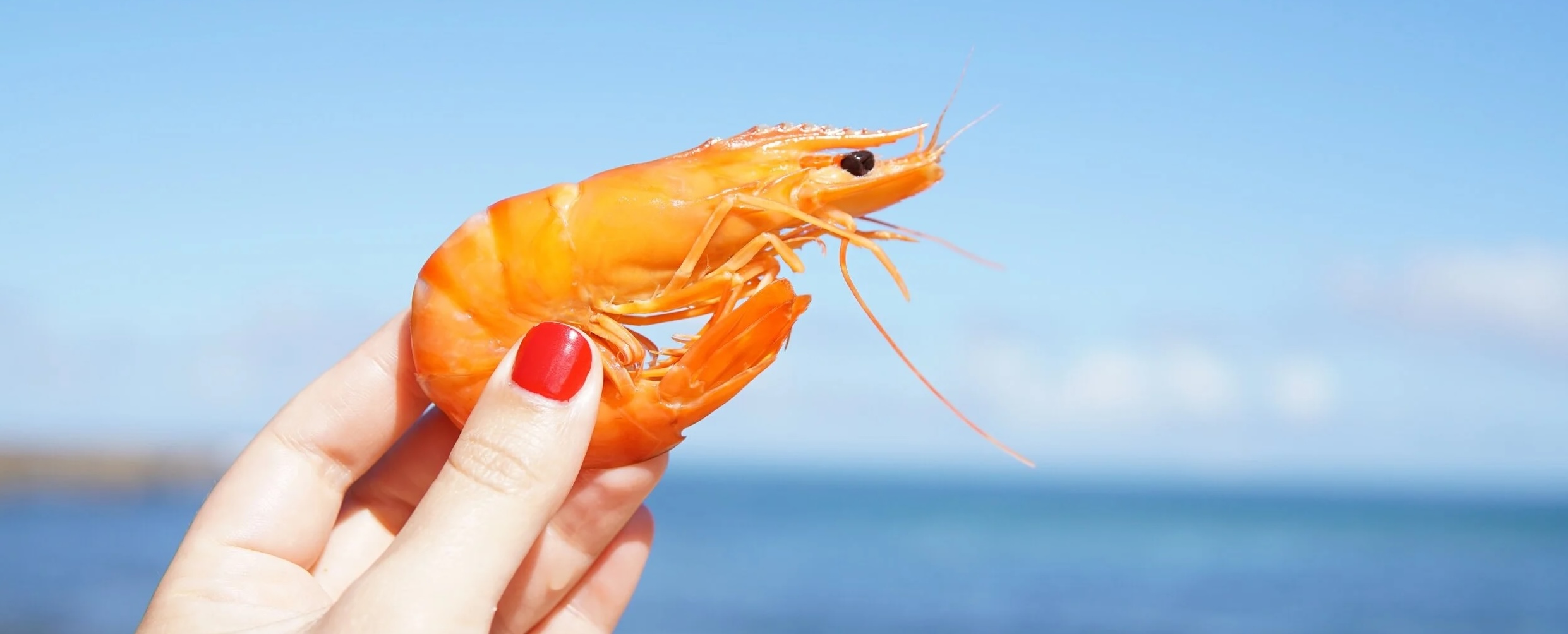
For my culinary students, shrimp is a “triple threat”: it requires an understanding of market terminology, precise sizing, and split-second cooking. Learning to cook shrimp is a fundamental skill for any culinary student because of the ingredient’s incredible versatility and high demand in professional kitchens. As a mild, slightly sweet protein, shrimp acts as a blank canvas that can adapt to a vast range of global flavor profiles, from spicy stir-fries to delicate buttery scampis. However, its small size and lean nature make it an unforgiving teacher; mastering shrimp requires you to command the nuances of sizing and count systems, the efficiency of mise en place (including deveining and utilizing shells for stocks), and the precision of timing to avoid the common pitfall of a rubbery, overcooked texture. By perfecting these techniques, you develop the control and speed necessary to handle one of the most popular and profitable proteins in the industry.
Market Forms & Sizing

Shrimp is sold in specific formats that determine both your labor time and your final yield. Here are the Common Market Forms you’ll find at the store:
- Green Headless: Raw, shell-on shrimp with the head removed. This is the industry standard for “fresh” shrimp.
- P&D (Peeled & Deveined): The shell and intestinal tract are already removed. This is the most expensive but lowest-labor option.
- PUD (Peeled, Undeveined): Shelled but still contains the “sand vein.”
- IQF (Individually Quick Frozen): Shrimp frozen separately rather than in a solid block, allowing you to thaw only what you need.
- The “Count” System: Shrimp size is measured by how many pieces make up one pound. The lower the number, the larger the shrimp.
- U/10: “Under 10” per pound (colossal).
- 16/20: 16 to 20 per pound (jumbo).
- 31/40: 31 to 40 per pound (medium-large).
Shrimp Varieties
Different species offer distinct textures and flavor profiles, making them better suited for specific dishes.
| Variety | Profile | Best Culinary Use |
|---|---|---|
| White Shrimp | Mild, sweet, very tender. | Versatile; ideal for scampi, stir-fries, and poaching. |
| Brown Shrimp | Robust, “ocean-fresh,” slightly salty. | Holds up to bold flavors like gumbo or Cajun boils. |
| Pink Shrimp | Very sweet and delicate. | Shrimp cocktail or light seafood salads. |
| Tiger Shrimp | Firm, meaty, and mild. | Grilling or curries where a “steak-like” bite is needed. |
| Rock Shrimp | Hard shell; flavor like lobster. | Deep-frying or as a budget-friendly lobster substitute. |

Labelling Laws (and lack thereof)
Fun Fact: There are dozens of commonly sold varieties of shrimp, and, crucially, almost no enforced rules about what a fishmonger, packager, or retailer has to reveal about them. “All of the seafood that’s sold in the US is supposed to be labeled with the country that it’s from, whether it was farmed or wild,” says Santi Roberts, the science manager at the Monterey Bay Aquarium Seafood Watch program and the most widely accepted guide to sustainable seafood.
There are dozens of commonly sold varieties of shrimp, and, crucially, almost no enforced rules about what a fishmonger, packager, or retailer has to reveal about them. “All of the seafood that’s sold in the US is supposed to be labeled with the country that it’s from, whether it was farmed or wild,” says Santi Roberts, the science manager at the Monterey Bay Aquarium Seafood Watch program and the most widely accepted guide to sustainable seafood.

Professional Cooking Techniques
Shrimp lacks heavy connective tissue, meaning it can turn from succulent to “rubbery” in seconds. Let’s not do that.
- Visual Indicator: The “C” vs. “O” Rule
- The “U”: Underdone. This little fella needs more time on the heat
- The “C”: A perfectly cooked shrimp curls into a loose “C” shape. It should be opaque and pink.
- The “O”: An overcooked shrimp tightens into a closed “O.” This indicates the proteins have contracted too much, resulting in a tough texture.
- Essential Methods:
- Sautéing: Use high heat and a thin layer of fat. Pat shrimp bone-dry first to ensure a sear rather than a steam.
- Poaching: Use flavorful liquid at a low simmer (155-160*F). This is the best method for shrimp cocktails to keep them “silky”.
- Grilling: Skewering shrimp makes them easier to flip simultaneously, ensuring even doneness across the batch.
- Hints and Techniques
- Carryover Cooking: Shrimp continue to cook after being removed from heat. Remove them just before they look “finished” to account for this residual heat.
- Cold-Start Poaching: For the plumpest cocktail shrimp, start them in cold seasoned water and slowly bring it up to temperature. This ensures even cooking and prevents the tough exterior caused by boiling water.
- Dry Brine: A quick dry brine with salt and baking soda works wonders: the salt helps keep the shrimp nice and moist as they cook, while baking soda delivers a crisp, firm texture. Use 1 teaspoon of kosher salt and 1/4 teaspoon of baking soda for every pound of shrimp; give it a quick toss and rest the shrimp in the fridge for anywhere from 15 minutes to about an hour. Rinse well before proceeding with your recipe.
- Acid Sensitivity: Acidic marinades (lemon, vinegar) will “cook” the shrimp protein like ceviche. Do not marinate for more than 20 minutes to avoid a mushy texture.
How to Thaw Frozen Shrimp
Frozen shrimp should always be thawed before cooking. To thaw frozen shrimp take them out of their bag and place them in a bowl under cold (not warm) running water. They’ll be good to go in just a few minutes. If you don’t want to let the water run, place them in a bowl of cold water and let them rest until defrosted (it’ll take about twice as long using this method). For most recipes, it’s a good idea to thoroughly dry your shrimp on paper towels before proceeding.


How to Peel and Devein a Shrimp
Instructions
- First pull off the legs: This isn’t strictly necessary and you can pull off the shell without removing the legs, but it's best to get them out of the way

- Break open the shell along the underside and peel off: Work your thumbs underneath the shell and crack it open. As the shell cracks, you’ll be able to peel it away from the shrimp.
- The tail can often be left on for cooking, if you like.
- If you’d like to take off the tail now, pinch the tail where it meets the body of the shrimp and gently pull. The rest of the shrimp should pull cleanly out of the tail.
- To devein the shrimp, first score the shrimp along its back with a paring knife: Gently run your paring knife along the back of the shrimp. DO NOT cut very deeply — a shallow cut is fine.

- Look for the vein: The vein will look like a long gritty string. You may not find a vein in every shrimp — that’s ok. The size of the vein depends on the diet of the shrimp.
- Pull out the vein with your paring knife: Gently pull up the vein with the tip of your paring knife, starting near the top and continuing to the bottom. It’s fairly elastic, so it usually doesn’t break. If it does, try rinsing it out with cool water.


Poached Shrimp
Ingredients
- 6 extra large shrimp
- 2 teaspoon salt
- 1/2 lemon
- 8-10 peppercorns
- 1 bay leaf
- large handful of fresh parsley stems
Instructions
- Fill a 2 quart saucepan 3/4 full of water.
- Add salt. Squeeze the juice of the lemon into the pot and add the peel and flesh once squeezed. Add the peppercorns, parsley, salt, and bay leaf..
- Bring the pot to a rapid boil over high heat. Reduce heat and simmer for ten minutes.
- Remove from the heat.
- Add the shrimp. Stir. Put the lid on the saucepan. Cover the pot. Let sit for 4 minutes, until shrimp are opaque, pink, and semi-firm.
- Meanwhile, prepare an ice bath: In a large bowl put two cups of ice cubes and fill halfway with cold water.
- When shrimp are cooked, drain off the hot liquid and transfer shrimp (but not the aromatics) to the ice bath. Let them sit in there for a few minutes to fully cool off before draining.
- Peel and use in shrimp cocktail or in salads (or wherever you might want to use cooked, chilled shrimp).

Shrimp Scampi
Ingredients
- 1 lbs peeled and deveined shrimp
- 4 tbsp butter
- 2 tbsp EVO
- 6 cloves garlic minced
- ½ cup unsweetened white grape juice
- 2 tablespoon white wine vinegar
- 2 tbsp lemon juice freshly squeezed
- pinch crushed red pepper
- Salt and pepper to taste
- ¼ cup Chopped parsley for garnish
Instructions
- Heat EVO and two tablespoons of butter in a saute pan over medium-high heat.
- Add minced garlic and cook until fragrant but not browned – about 1 minute.
- Add white grape juice, vinegar, crushed red pepper, and half the lemon juice. Scrape up fond. Cook until reduced by half.
- Add shrimp and cook for 2-4 minutes. DO NOT OVERCOOK!!!
- Remove from heat. Add remaining butter, cut into small pieces. Stir to melt.
- Taste and add more lemon juice, salt, and pepper if necessary. Garnish with Parsley. Serve immediately.
Notes
- “Scampi” is the Italian word for langoustine, a type of crustacean that’s common in Europe (scampi are also called Norway lobsters and Dublin Bay prawns) and is much bigger than even jumbo shrimp. In Italy, a quick sauté in butter, olive oil and garlic (and sometimes white wine) is the traditional way to serve them.
- Italian Americans called it “Shrimp Scampi” because it refers to cooking SHRIMP the same way they used to cook SCAMPI.