
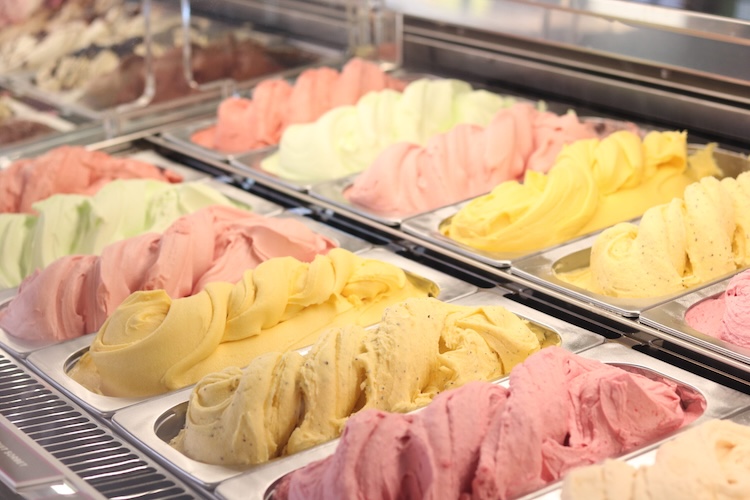
Gelato is like the cool Italian cousin of ice cream. It’s rich, smooth, and bursting with flavour – making your taste buds do the tango. When you just want the basics of WHAT and HOW (without any of that pesky learning or expertise)… this is the post for you.
What Is Gelato?
Gelato is a frozen dessert made with specific ratios of water, fats, sugars, stabilizers, lean milk solids, and other solids, known for its dense texture and creamy taste. There are many unique qualities about gelato that make it different from ice cream and other popular frozen treats:
- It has limited overrun (the amount of air incorporated into the gelato base) – 25% or less (compared to the 75-100% overrun in American-style ice cream).
- It’s stored around 5°F to 10.4°F – much warmer than the 0°F to -15°F used to store ice cream.
- It uses less fat than classic American ice cream: 10-15% compared to 15-20% fat.
- To serve, it’s swiped with a pallet and then smashed down to remove the air.

Gelato: The Ingredients
Depending on the recipe formula, gelato can be made from a mixture of a variety of ingredients. Here’s an overview of the components of gelato:
- Additional Flavorings: Optionally, to add more flavor, you can use ingredients like cocoa, coffee, fresh fruits, or hazelnut paste.Gelato History
- Sugars: The ratio of sugar helps to determine how quickly the gelato will melt as well as lowers the freezing temperature of the mixture. The most common types of sugars include sucrose (granulated sugar), dextrose, glucose, honey, and fructose.
- Milk: The milk products help with the texture and structure of gelato. Milk (whole, partially skimmed, skimmed), powdered milk (skimmed, whole), and condensed milk are commonly used.
- Fats: Although gelato has less fat than ice cream, there still is a portion of the recipe that needs to include fat. These ingredients help with the flavor. Oftentimes milk, cream, butter, egg yolks (popular mostly in Northern Italy), extra virgin olive oil, cocoa powder, or nut butter are used.
- Stabilizers: Stabilizers help to thicken the gelato. Popular options include guar gum, locust bean gum (carob), agar-agar, carrageenan, xanthan gum, or gelatin.
- Water: Water is found in ingredients like milk and cream.
- Air: While not technically an “ingredient”, air gives gelato a creamy and soft texture as it churns.

Cooking: The Process
An important part of making gelato is the cooking process. Different ingredients need to be added in at various times. However, there is a basic guide:
- Cook the milk in a heavy bottom saucepan over medium heat until it reaches 105°F (40°C) on an instant read thermometer.
- Once it reaches temperature, whisk in granulated sugar and nonfat milk powder.
- Next, whisk dextrose, guar gum, and locust bean gum in a small mixing bowl. Once the granulated sugar and nonfat milk powder are dissolved, you can whisk in the dextrose mixture.
- Continue cooking the gelato base over medium heat, stirring often to ensure it doesn’t burn, until it reaches 195°F (90°C) on an instant read thermometer. This is the pasteurization process.
- Remove the saucepan from the heat. Then, whisk in the heavy cream.
- Strain the gelato base, and allow it to rest in the refrigerator for 24 hours.

Churning: Gelling Gelato
After the gelato has had time to cool and rest in the refrigerator for at least 24 hours, it’s time to gel (churn) the gelato.
- Gelato machines are different than ice cream machines in both the design and how much air they incorporate into the gelato.
- As the machine turns, it starts to gel the gelato that’s on the outer edge of the canister. The blades help to keep a consistent flow and gel the entire gelato base throughout this process.
- Extract the gelato into a chilled container, fold in swirls or inclusions, and set the mix using a blast chiller (15-20 minutes) or VERY cold freezer (2-8 hours).
